Thompson pushes effective, transformational farm bill. Whole Milk for Healthy Kids Act included!

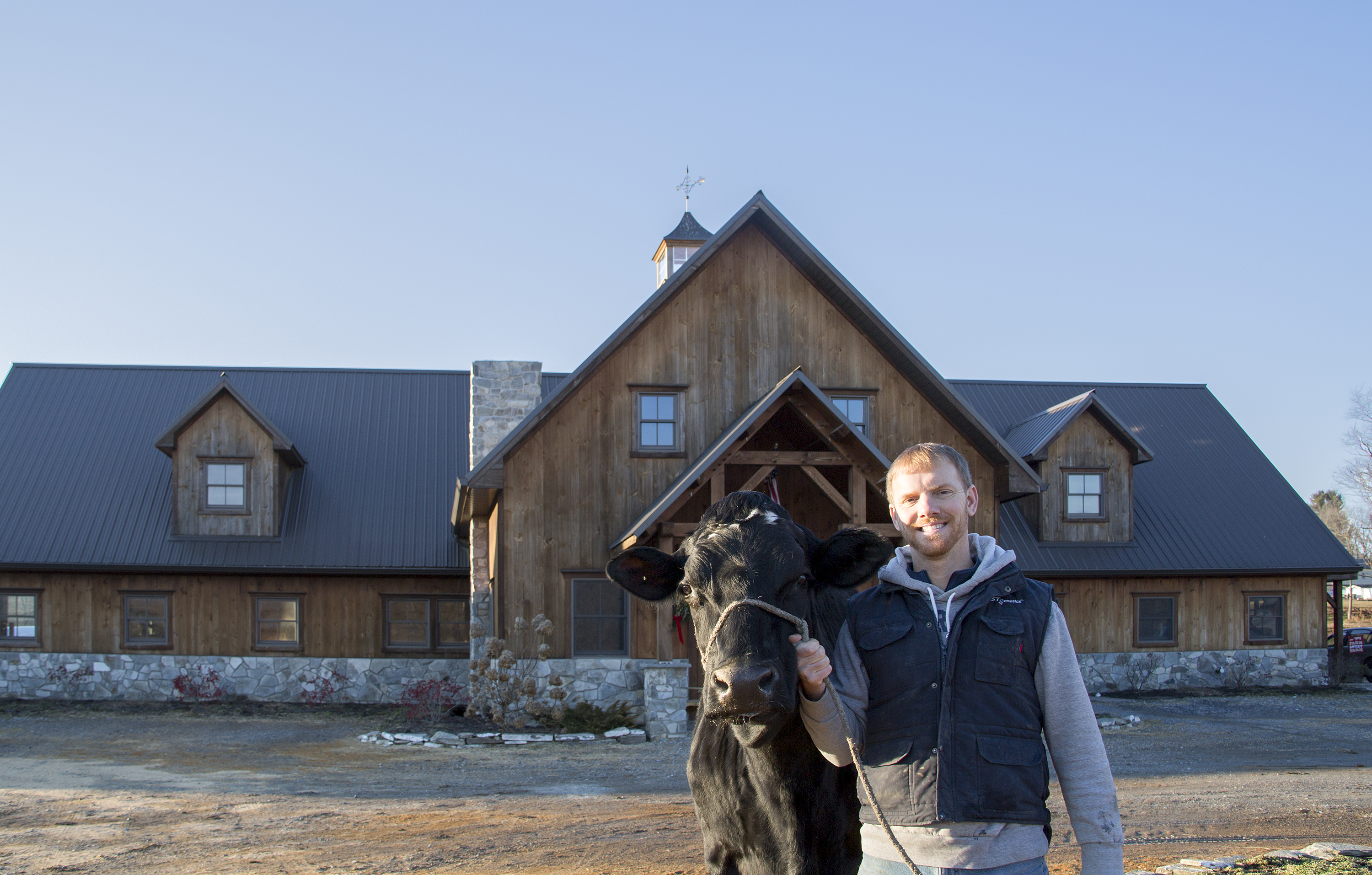
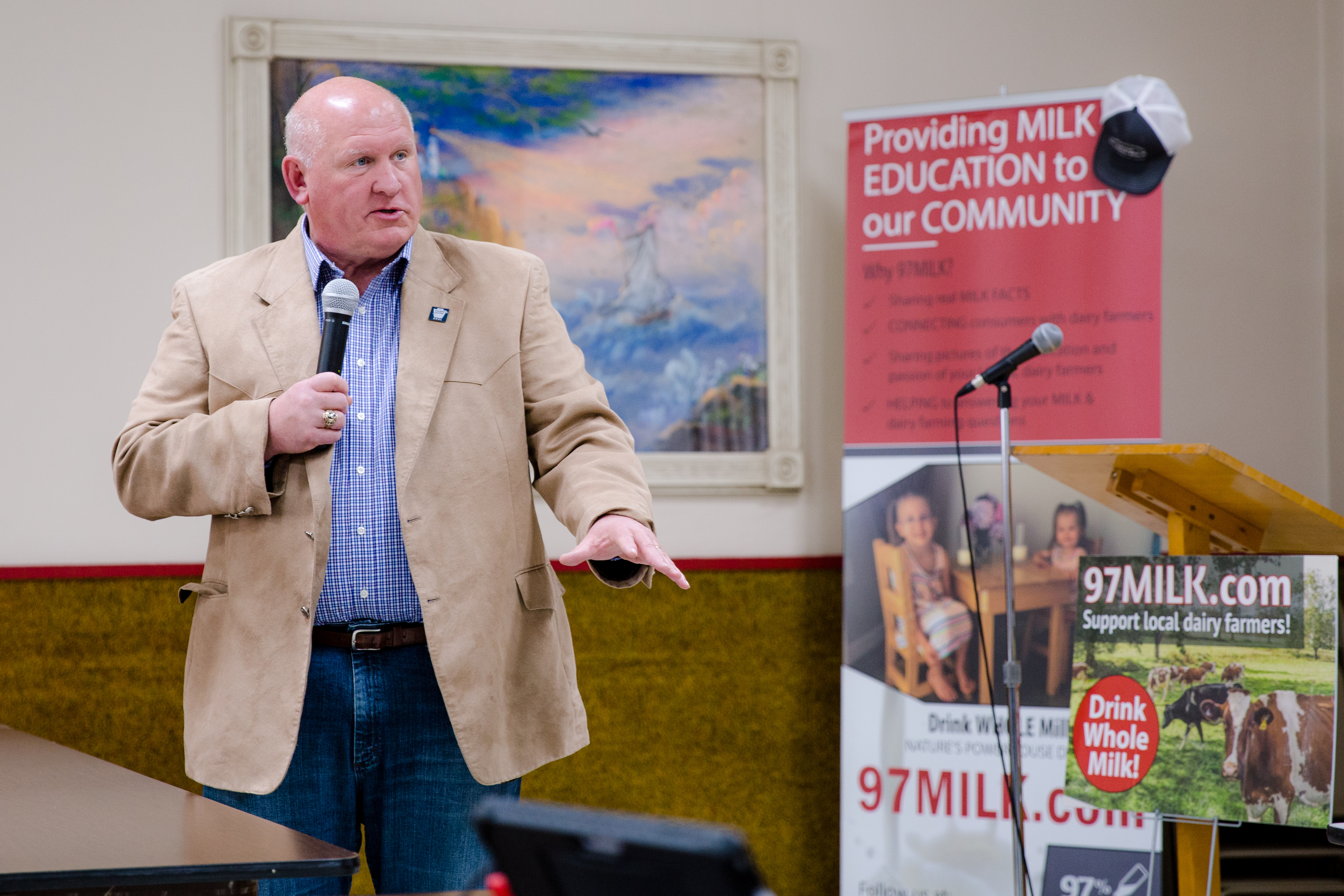
Representative GT Thompson of Pennsylvania once told a group of farmers gathered for a 97 Milk meeting that he has gone by a lot of titles and been called a lot of things over the years, and while it’s an honor to be the Chairman of the House Agriculture Committee, his favorite title is ‘Representative’ because, he said “that’s what we do. We are representing The People.” True to form, GT led the House 2023-24 farm bill process with representation in mind by making the bipartisan endeavor ‘tripartisan’ — going to great lengths to bring grassroots farmers into the process. One thing he heard repeatedly at the 85 listening sessions in 40 states was ‘bring whole milk choice back to schools,’ even though school meal rules fall under the childhood nutrition reauthorization led by the Education Committee, not the farm bill. But now he’s done that too. Bolstered by the overwhelmingly bipartisan 330 to 99 passage of H.R. 1147 on Dec. 13, 2023, he found a way to make Whole Milk for Healthy Kids part of his proposed farm bill that heads to House Ag Committee markup next week. He says he is intent on getting the whole milk legislation through the Senate blockade and “over the finish line.” File photo by Sherry Bunting

By Sherry Bunting, Farmshine, May 17, 2024

WASHINGTON – House Ag Committee Chairman Glenn ‘GT’ Thompson (R-Pa.) says the bipartisan farm bill has reached a milestone and holds the potential for being transformational.

The chairman’s mark, released ahead of committee markup set for May 23, demonstrates the listening that went on in his busy schedule traveling to 40 states and one territory for 85 listening sessions over the past two years.

“We are hopeful that the House Ag Committee markup of this chairman’s mark legislation helps feed the momentum to get this farm bill done,” said Chairman Thompson in a May 14 Farmshine phone interview.

There are important highlights here, including reforms to the Dietary Guidelines process for greater transparency and accountability with new checks and balances, as well as language to expand the reach, funding and impact of the dairy incentive and school meal programs by including full fat fluid milk, flavored and unflavored, as seen in H.R. 5099 and H.R. 1147 (Whole Milk for Healthy Kids Act).

“I was able to work with Dr. Virginia Foxx (chair of the House Education and Workforce Committee), and they will be providing a waiver after we mark this bill up, so we will be able to include Whole Milk for Healthy Kids in the farm bill,” Thompson shared.

He has previously stressed that, “This is about our kids and the outdated and harmful demonization of milkfat.”

“When we get to conference (with the Senate), it could be an issue, but Whole Milk for Healthy Kids passed the House by a 330 vote. I am intent on getting this provision over the finish line. 

“It may be the most important thing we do out of many things in this farm bill for dairy farmers,” he said.

Other dairy subtitle provisions

The dairy subtitle includes language to return the Class I ‘mover’ price to the ‘higher of’ calculation instead of the ‘average plus 74 cents’ that was implemented in May 2019.

“We obviously recognize that USDA has now gone through an extensive hearing process, and will honor what USDA comes up with, which will supersede what we’re doing,” Thompson reported. “But it was the Ag Committees in the Congress through the 2018 farm bill that eliminated the ‘higher of’ language, which has been followed by significant unanticipated losses.”

Language has also been included to mandate biennial cost of processing surveys. This also appears in the Senate farm bill.

Processors making products used in Federal Milk Marketing Order (FMMO) formulas would participate in processing cost surveys every two years. In addition to reporting costs for those products, the Dairy Pricing Opportunities Act language that is rolled into the farm bill proposal states that the cost and yield information for all products processed in the same facility be included. (Note: This would ensure accurate allocation of plant costs that apply just to the products that are actually used in the FMMO pricing formulas so that the costs to process other value-added products that are not included in FMMO pricing, but are made in the same plant, do not influence future ‘make allowance’ hearings.)

These cost surveys would be published for the purposes of informing the regulatory or administrative (hearing) process for the establishment of pricing rules (such as determining how to use that published information to set ‘make allowance’ levels that are embedded in FMMO pricing formulas).

The dairy subtitle also expands the Dairy Margin Coverage (DMC) tier one cap on annual milk production history from 5 million pounds to 6 million pounds, similar to the Senate bill.

It also includes language for updating DMC production history and provides a 25% discount in premium costs for any producer signing up for all five years of DMC coverage.

“That’s quite a savings,” Thompson observed.

IRA funds included without ‘climate sideboards’

In the Conservation Title, the chairman’s mark brings Inflation Reduction Act (IRA) conservation funds into the farm bill baseline without the ‘climate sideboards’ and arbitrary measures that ride along in the Senate version.

“All conservation programs, as long as they are locally-led and voluntary, contribute to climate and carbon sequestration. What the IRA legislation did is make it overly prescriptive with a lot of practices we know are successful not being eligible for these conservation dollars.

“We believe that the principles of locally-led and voluntary are a huge part of what has made conservation programs so successful. Agriculture sequesters 6.1 gigatons of carbon annually, over 10% more than we emit,” said Thompson.

Timelines matter

There are a couple reasons timelines matter in getting this farm bill done. The IRA funding is one of them.

“Number one is the American farmer is struggling right now. The chairman’s mark, as we prepared it in the House Committee, will be of great service to them as producers of food, and to struggling families as consumers of food, quite frankly,” said Thompson.

“The other reason timelines matter is these IRA dollars. As the Secretary of Agriculture continues to push those dollars forward, the original $19 billion – between what he already spent and what the CBO projects he will not be able to spend – that number is now down to $14 billion,” Thompson explained. “That’s opportunity lost for the future, unless and until we pass and reauthorize the farm bill and roll those dollars into its baseline.”

Thompson continued, explaining that, “Every dollar in IRA conservation funds spent between now and the passage of the farm bill is a dollar lost to the baseline for the future. One of the flaws of the IRA is these conservation dollars expire in 2031. Whatever we bring into the farm bill – into the baseline – is there for perpetuity. It will be there for the 2050 and 2055 farm bills. That’s smart, and it’s good for agriculture and great for conservation.”

The Senate proposal also brings IRA conservation funds into the farm bill baseline, but puts climate requirements on these funds, especially in regard to methane.

Tripartisan effort produces nutrition cost-savings, not cuts

“My chairman’s mark is built on solid tripartisan input from Republicans and Democrats and the hardworking people of American agriculture,” Thompson affirmed. “The Senate proposal is a partisan proposal. They did not bring Senate Republicans to the table.”

In his May 10 open letter, Chairman Thompson stated that his door is always open.

“There exists a few, loud armchair critics that want to divide the Committee and break the process. A farm bill has long been an example of consensus, where both sides must take a step off the soapbox and have tough conversations,” he wrote. “The 2024 farm bill was written for these precarious times and is reflective of the diverse constituency and narrow margins of the 118th Congress. Each title takes into consideration the varying opinions of all who produce as much as those who consume. It is not one-sided, it does not favor a fringe agenda, and it certainly does no harm to the programs and policies that feed, fuel, and clothe our nation.”

Case in point, the CBO has scored the House farm bill chairman’s mark to save $28 to $29 billion in the Nutrition Title.

“Some would have you believe we are cutting $28 to $29 billion from feeding struggling families, but we are not,” Thompson declared. “There are no cuts to individual SNAP benefits in this bill. My Democratic colleagues say we are cutting by that much, but the CBO score on my proposal reflects cost savings from increased efficiencies, reduced fraud, and things that better meet the needs of families struggling in poverty.”

Justifiably proud of the intense work he and his committee have done on the nutrition programs lightning rod that makes up more than 80% of the farm bill baseline, Thompson said his proposal actually “creates a fire wall so that a future right-leaning administration would not be able to arbitrarily cut benefits either. It exercises our Article I prerogative on how we do market basket analysis, keeps the variables and the cost of living. These things are significant factors.”

His proposal also expands access to a couple populations not eligible for SNAP in the past, including families with adult children in school up to age 21 (not 18). In the past, their part-time jobs affected family eligibility.

Putting the farm back in the farm bill

The Commodities and Crop Insurance Titles also engaged input from farmers, farm groups and industry. On reference prices, Thompson said the Senate bill picks three crops and puts in a 5% increase for base acreage.

“In our proposal, we’ve worked with the stakeholders. We’ve done the math, the financial and risk analysis on what is needed.”

This includes a more commodity-specific update to reference prices and granting the Secretary of Agriculture authority to expand base acres.

“We have been committed to putting the farmer back into the farm bill commodities title,” he said.

This scratches the surface of what is included in the farm bill chairman’s mark. An overview and title by title summary are available at https://agriculture.house.gov/farmbill/

When asked about what other dairy topics could come up during markup, Thompson said he wouldn’t be surprised to see other amendments in committee.

“There are some labeling issues that are not in our purview or jurisdiction but come under the Energy and Commerce Committee. We could get the ball rolling, but we would need them to get on board for that to go forward,” he said.

Reflecting on the milestone this week, Thompson answered our question about what he’s most proud of to this point.

“The fact that this farm bill was built using the input of American farmers, ranchers, and foresters, and it reflects what their priorities are and what their needs are, and the fact that as I look at the chairman’s mark and all 12 titles according to the goal placed early on, two years ago as I started my leadership of this process: 

“This will be not only a highly effective farm bill for our producers, processors and all of us who consume food, it will be transformational,” he said.

-30-
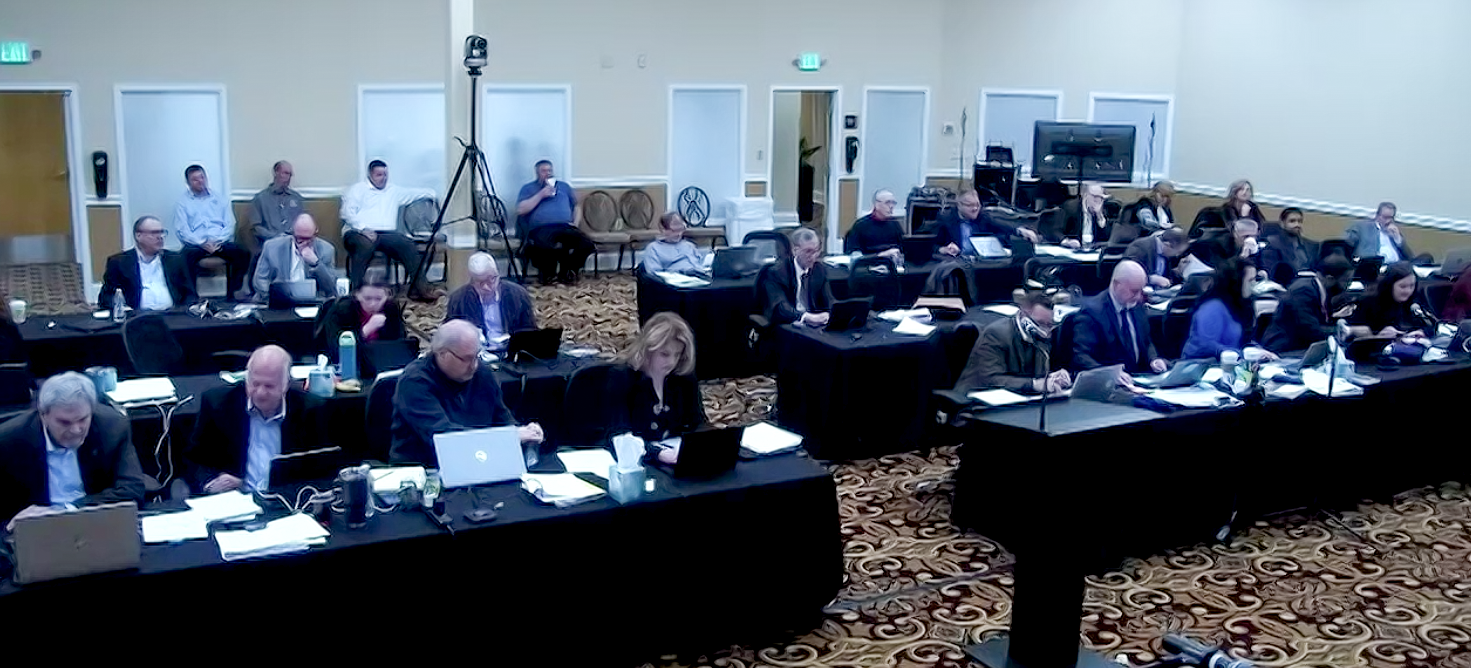
USDA FMMO hearing resumes, Dr. Stephenson testifies for MIG proposal to end $1.60 Class I base differential

USDA’s cross examination reveals possible flaw in simulator model result

By Sherry Bunting, Farmshine, Jan. 19, 2024

CARMEL, Ind. — Shadow pricing, demand elasticity, commoditized loss of prior incentives, balancing cost, give-up cost, base differential, uniform differential, market-clearing price…

These terms ruled the day when the USDA National Hearing on Federal Milk Marketing Order (FMMO) proposals resumed in Carmel, Indiana this week after a more than four-week recess.

The hearing began in late August. It did not conclude by Fri., Jan. 19, so it will again recess until Jan. 29. 

American Farm Bureau estimates that another 270 days of post-hearing processes must follow before a USDA decision could be implemented, and even this is subject to proposals that seek a 15-month delay between decision and implementation due to potential impacts on CME futures-based risk management tools, such as Dairy Revenue Protection (DRP).

This is far from over, and hanging in the balance is the Class I price calculation, now based on an averaging method, under which farmers have lost more than $1.02 billion since May 2019 vs. the previous ‘higher of’.

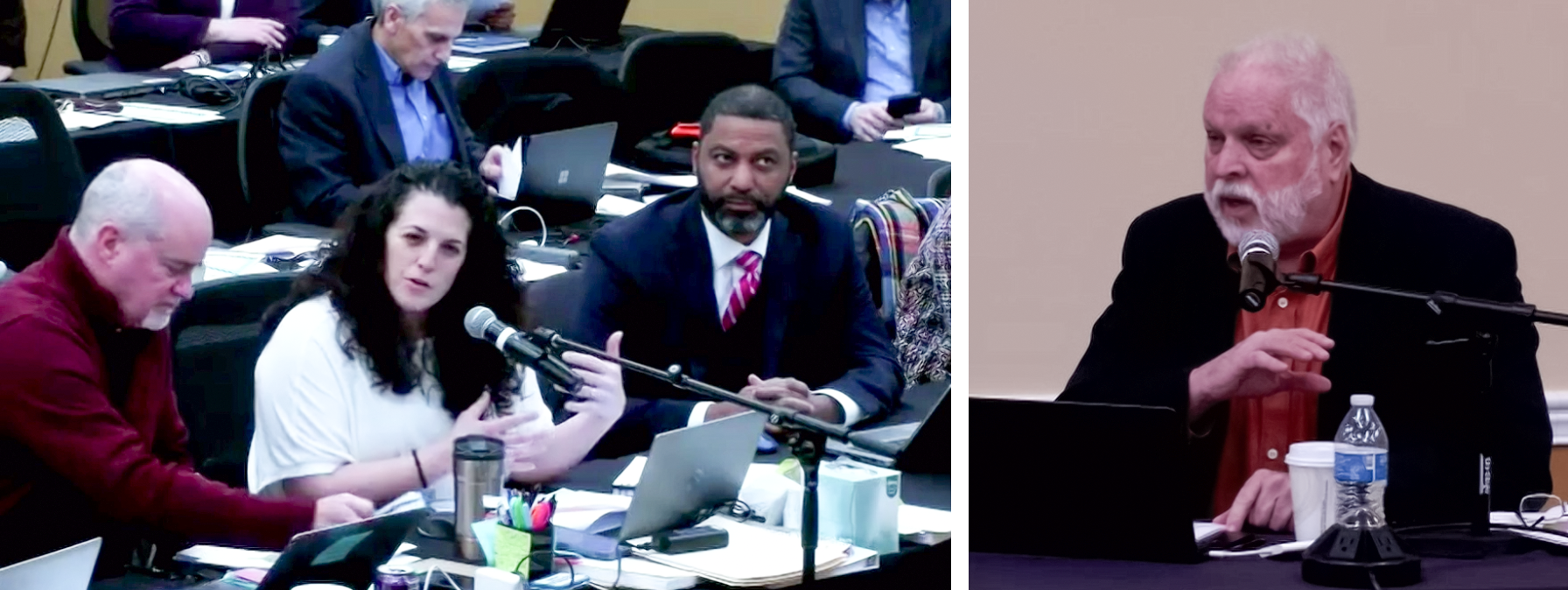
Testimony Tues., Jan. 16 included Dr. Mark Stephenson, retired UW-Madison dairy economist on behalf of Milk Innovation Group (MIG), made up of ‘innovative’ and branded fluid milk processors, including fairlife, HP Hood, Anderson-Erickson, Danone North America, Shamrock, Organic Valley, Aurora Organic, and Pennsylvania’s own Turner Dairy Farms.

Dr. Stephenson delivered his bombshell for MIG that was based on analysis he did using 2016 data in a simulator model, from which he made “certain discoveries.”

First, Stephenson suggested that fluid milk is shifting to become price-elastic vs. the long-held belief that fluid milk sales are price-inelastic. This was followed up by fluid milk processor representatives showing post-Covid fluid milk sales volumes declined as prices rose.

Stephenson cautioned USDA to refrain from setting regulated prices too high, saying this would reduce returns to producers by reducing total fluid milk sales. 

This suggestion was challenged in cross examination. In fact, AFBF chief economist Dr. Roger Cryan noted the FMMO focus on fluid milk was originally partly predicated on its “public good” as a food staple, almost akin to a “public utility.”

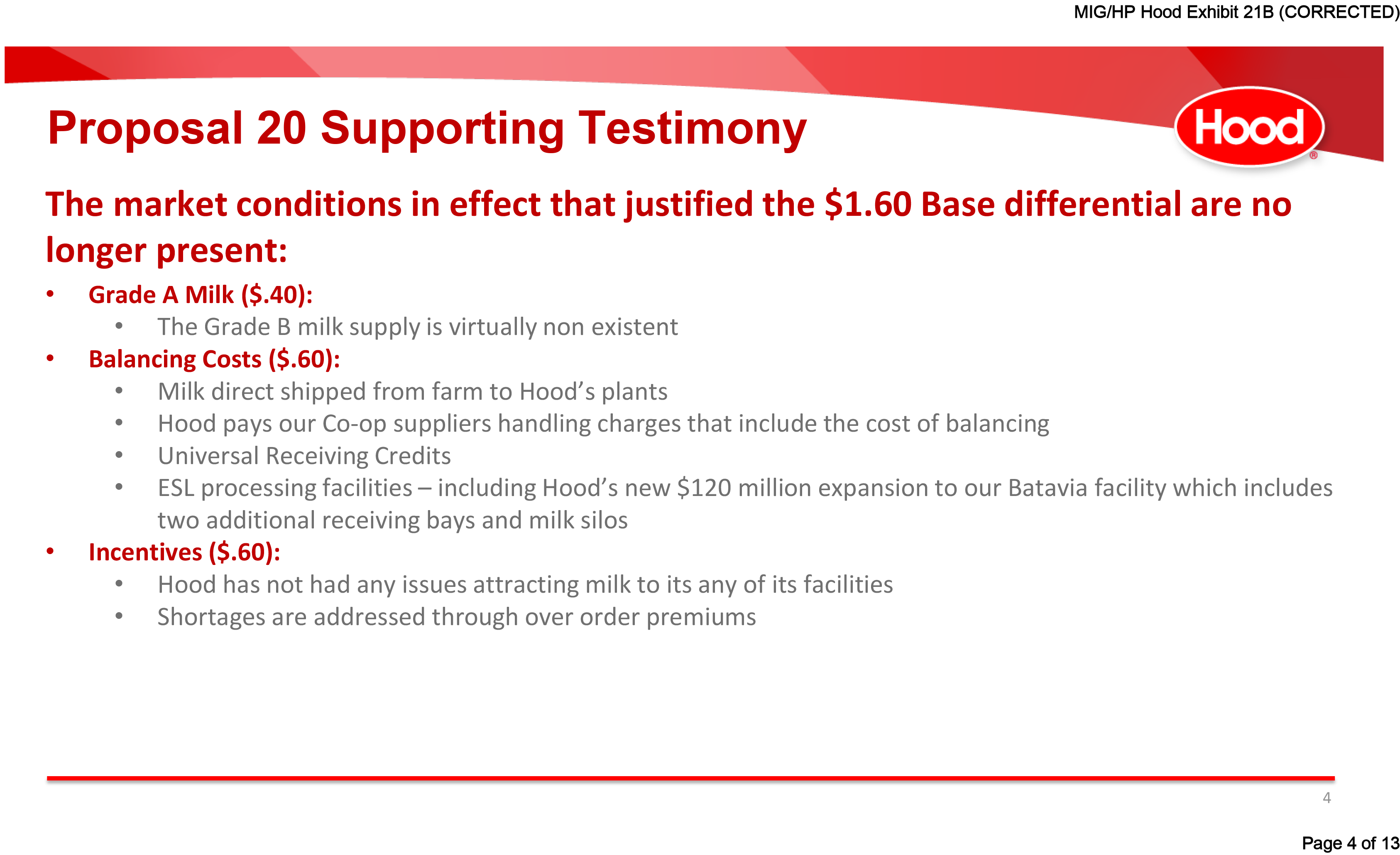
In cross examination on Jan. 17, Stephenson also revealed he was paid by MIG to analyze the $1.60 base differential, and his work began before MIG finalized its proposal to remove the $1.60 per cwt. base differential all the way down to zero for all Class I milk, nationwide.

Currently, the $1.60 base differential is built uniformly into the Class I price for every regulated county across all FMMOs. The varied location differentials are added to the base differential and spread across the revenue-sharing pools.

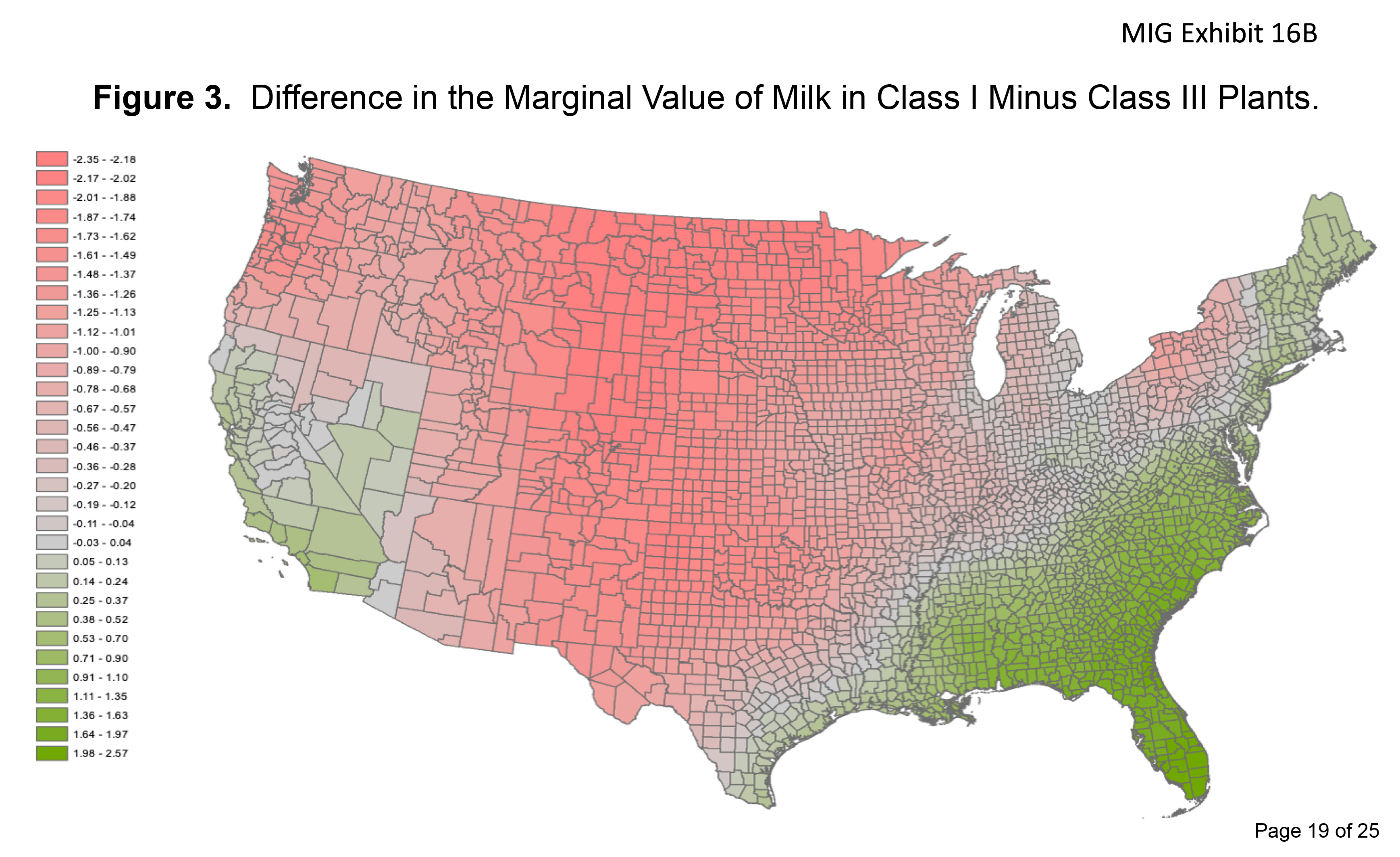
Stephenson used the U.S. Dairy Sector Simulator Model (USDSS) to develop a map as though a “milk-dictator” could efficiently “move milk to its highest global use” through various constraints. 

In the marginal value map result, Stephenson said the U.S. average value of the differences was minus-38 cents, indicating on a national average, it is more valuable (cost saving) to the model to have milk in a cheese plant than in a fluid plant in most counties. The range goes from somewhat more than $2 per cwt more favorable to a cheese plant (in red) to somewhat more than $2 per cwt more favorable to a fluid plant (in green) in the Southeast. From this “potent revelation,” Dr. Stephenson concludes that, “The model result bolsters the argument to not dilute the value of the $1.60 into the pool if that value represents a balancing cost for fluid and an opportunity cost (give-up) for manufacturing plants. Rather, require the fluid plants to pay the $1.60, but let the fluid plants pay that directly to the farms, cooperatives or manufacturing plants who supply the milk” to the fluid plant.

The map showed the incremental differences in ‘Class I minus Class III “shadow pricing,” across the country.

These marginal value differences, said Stephenson, reflect the opportunity costs of getting manufacturing plants to give up milk to fluid plants in the Central U.S., where milk production exceeds population vs. the cost to balance fluid milk markets in the East, particularly the Southeast, as well as in California and southern Nevada, where population exceeds milk production.

It was the questioning from USDA AMS administrator Erin Taylor on the ‘shadow pricing’ figures in various anchor cities that prompted Stephenson to concede: “You may have caught a major flaw in what I have done here, so I would want to look at this more carefully.”

Yes, he will be back to address such questions when the ever-lengthening hearing resumes on January 29.

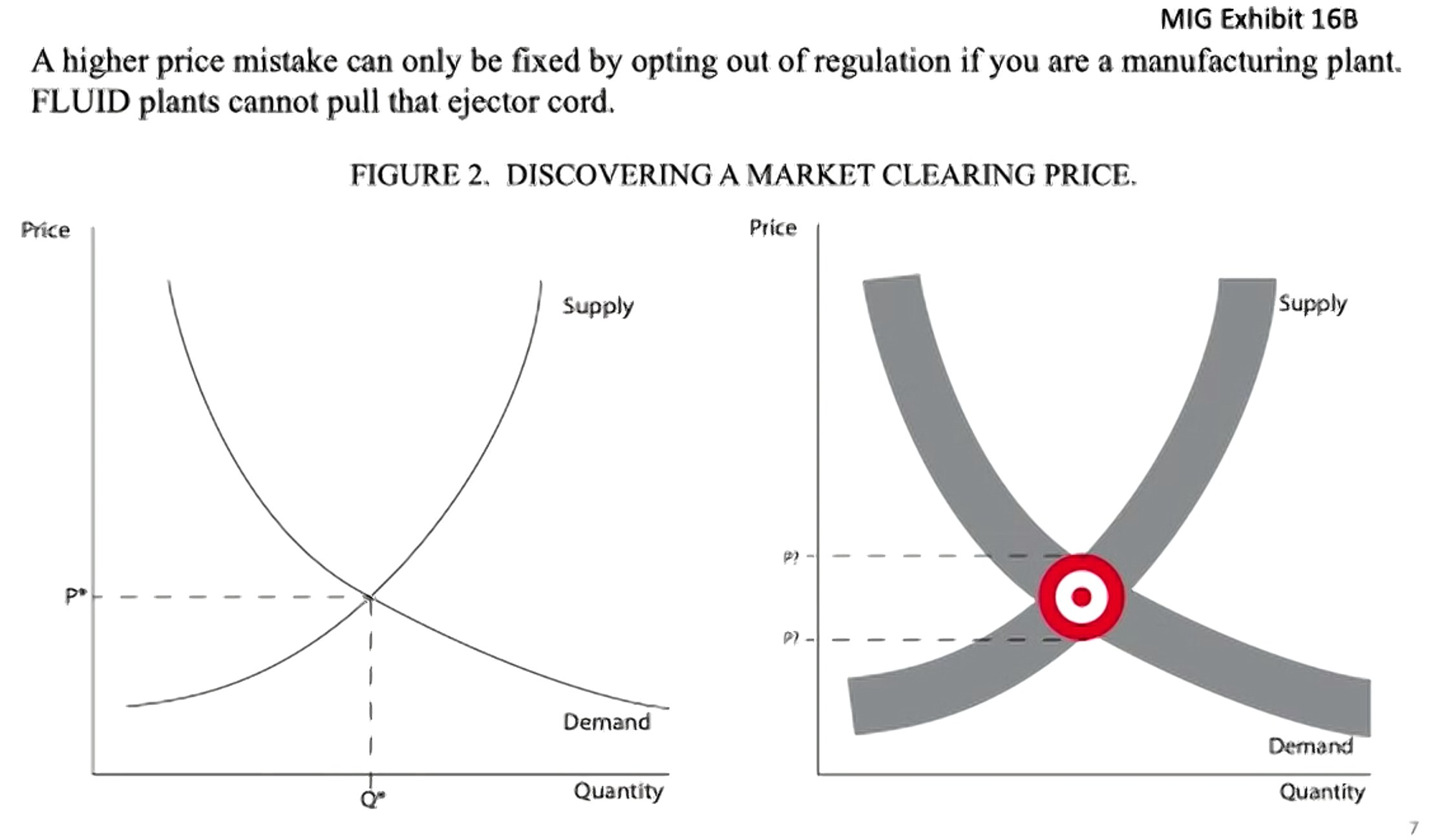
Notwithstanding exposure of a possible flaw in the simulator analysis, Stephenson said the ‘market-clearing’ price is the target to aim at, and the system of setting regulated minimum prices “should err on the side of being too-low instead of too-high.”

He said processors will pay premiums in the breach of a ‘too-low’ minimum price, but there are few options for processors to deal with a ‘too-high’ minimum price — other than to opt out of regulation for manufacturing plants (de-pool), but that fluid milk plants have no ability to opt out. They are required to remain regulated by FMMOs.

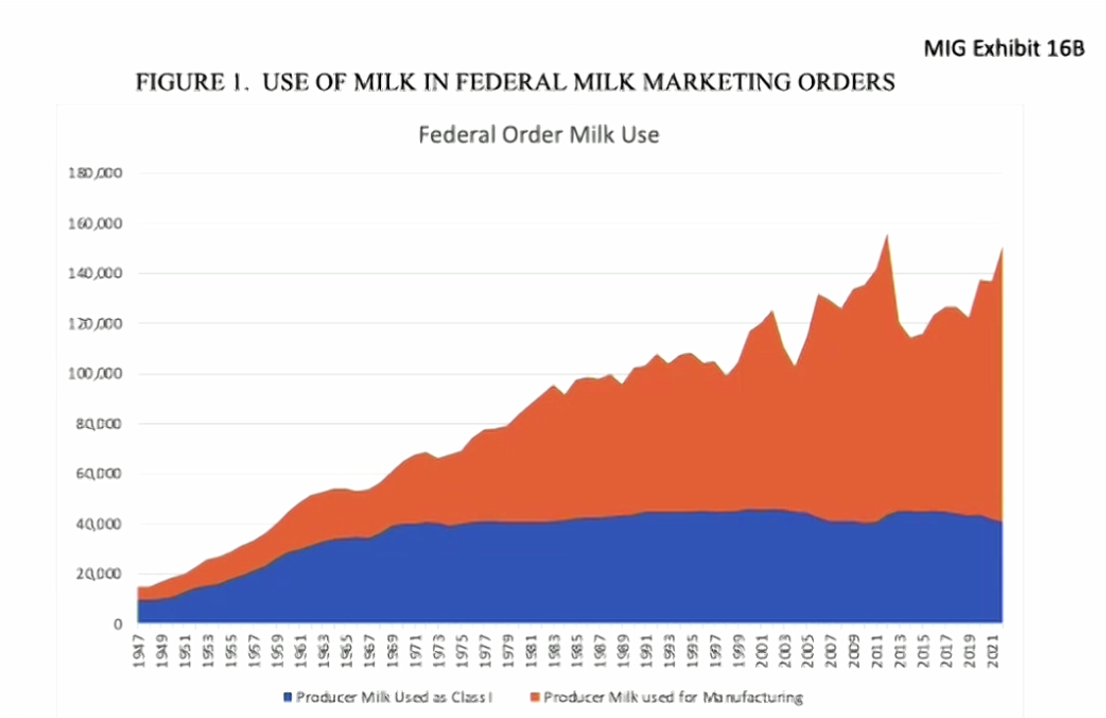
“Manufacturing is by far the largest use of milk in our dairy industry,” he said, noting that Class I fluid use at 18% of total U.S. milk production (regulated and unregulated). Therefore, he said, manufacturing use should no longer be treated in the FMMO system as “the trailing spouse in the marriage.”

On MIG’s behalf, he introduced a new way of looking at the marginal value between Class III and Class I, and a mechanical change that could be made in how the $1.60 base differential is paid as needed directly to producers, cooperatives and plants that actually supply milk to Class I plants, instead of being paid to the FMMO pools.

The $1.60 became a uniform part of the Class I price in the 1999 Order Reform. About 40 cents of this $1.60 was included to represent the cost of farmers transitioning from Grade B to Grade A. The rest represents ‘give up’ costs from manufacturing to Class I and balancing costs to serve the fluid market.

Stephenson backed up MIG’s assertion that farmers don’t need any of this $1.60 base differential because virtually all milk produced today is now Grade A. During cross examination, NMPF attorneys brought up the cost farmers have to maintain Grade A status. Don’t their costs count here?

Undeterred, Stephenson suggested that these costs are accounted for in the classified pricing since all milk for all uses is Grade A, today. He said that USDA uses ‘minimum pricing’ as a tool so that the regulated price leaves space for voluntary premiums that processors can pay to “incentivize something else.”

“Being chronically above the market-clearing price creates a surplus product, which the market can’t clear,” said Stephenson. “Our dairy markets have always walked on a knife’s edge. Being plus or minus 1% on milk supplies can cause some pretty big swings in prices as the markets do attempt to clear that.”

As for removing the $1.60 uniform price differential either from the price or the pool, Stephenson said it is like “other premiums” that have become “commoditized.” 

He likened it to the rbST premium and milk quality premiums, saying those premiums have also become “commoditized.” 

For example, when farmers were first asked to give up rbST and sign pledges, a premium was offered. Now, that premium is not paid, he said, because the practice of abandoning rbST is now “commoditized.” 

Likewise, said Stephenson: “Milk quality (low SCC) has improved so much that those premiums are not there anymore. They have also become commoditized.”

So, the better dairy farmers get, the more their incentive premiums — and even big chunks of their regulated minimum price — are at risk to be cannibalized by milk buyers because the farmers have now done what they’ve been incentivized to do, so they don’t need to be paid to do it.

MIG also seeks to stop NMPF’s proposal to tweak and raise location differentials across the Class I surface map, putting on the stand some of their members to show how unfair competition arises between independent bottlers and cooperatively owned fluid milk plants in the same region.

For his part, Stephenson noted the concept of pulling the $1.60 base differential out of the pool may discourage non-productive distant pooling.

This week was certainly eye-opening as MIG is all about the processor costs with zero regard for producer costs. They even put an HP Hood representative on the stand who included the $120 million recently announced for expanding the Extended Shelf Life (ESL) plant in Batavia, NY as a “balancing cost,” that somehow justifies giving back the base differential to processors even though processors can pass their costs on to consumers, whereas farmers cannot. 

Under cross examination, Hood’s representative admitted that plant-based beverages are also bottled in those so-called ESL ‘milk balancing’ facilities, along with premium products like Lactaid.

Meanwhile farmers continue to incur costs associated with a whole host of improvements that were at one time incentivized. It appears the processors expect farmers to forgo being paid for those costs simply “because everyone’s doing it” and incentives are no longer needed.

The idea here is to deflate regulated minimum prices as much as possible in search of the elusive and not-well-defined Holy Grail: the market-clearing price. 

Processors want cheaper milk, and they’ve got multiple proposals to accomplish that. They want to deflate the regulated minimum milk price to free up their ability to pay premiums for “something else.”

In fact, in his testimony, Stephenson admitted that as these costs and premiums are “commoditized,” space is freed up to “pay premiums for something else.”

What is the “something else” that processors will pay to incentivize after they potentially succeed in reducing the regulated minimum price in multiple ways through multiple proposals?

Are climate premiums the next thing coming once the milk price is deflated far enough? Will USDA buy what MIG and IDFA are selling?

Stay tuned.

-30-

New Year, New Hope: 2024 will be year of reckoning, Part One

From whole milk in schools to farm bill to climate-warped food transformation, scientists and lawmakers are getting busy, farmers need to get busy too


In the global anti-animal assault, real science must lock horns with political science and defend American farmers — the climate superheroes that form the basis of our national security. Photo by Sherry Bunting

By Sherry Bunting, Farmshine, Jan. 5, 2024

EAST EARL, Pa. – It’s a New Year, and we have new hope on several fronts that are all linked together, in my analysis.

Top 2023 headlines for dairy farmers revolved around dairy markets that underperformed, successes and challenges in the quest to get Whole Milk choice back in schools, a plethora of draft USDA and FDA proposals that dilute real dairy, farm losses and governmental hearings on federal milk pricing, negotiations and extensions for the farm bill, and acceleration of ‘climate-smart’ positives and negatives buckling down for business in an area where political science is trumping real science on the rollercoaster ride ahead.

All of these headlines are inextricably linked. There is a global anti-animal assault underway, but people are wising up to the not-so-hidden agenda that is grounded in climate transitions and food transformation that give more power and control over food to global corporations while diminishing what little power farmers have in Rural America where our national security is at risk.

Real science locks horns with political science

As we head into 2024, a bit of good news is emerging as scientists are mobilizing to defend the nutritional, environmental and social honor of livestock — especially the much-maligned cow.

After an international summit of scientists in October 2022, work has been underway to bring together an international pact.

Dubbed the Dublin Declaration of Scientists, experts around the world have authored and are getting colleagues to sign-on to this document that calls for governments, companies, and NGOs to stop ignoring important scientific arguments when pushing their anti-animal agendas in the name of climate, transformation, and the Global Methane Pledge.

To date, nearly 1200 scientists have signed the Dublin Declaration, aimed foremost at the Irish government’s proposal to slaughter cows to meet methane targets. The Dublin Declaration represents the work of scientists across the globe for a global audience beyond Ireland.

Here in the U.S., we are sitting on the cusp of Scope 3 emissions targets of global milk buyers that have been hastily formulated based on the science of greed, not the science of greenhouse gas emissions. It’s time for the dairy organizations and land grant universities that represent, serve and rely on farmers to drink up on their milk and strengthen their spines.

Farmshine has brought readers the news about what has been happening in Europe, such as in the Netherlands and Ireland, regarding proposed farm seizures and cow slaughter, and the response of farmers there has been to challenge the political establishment.

The U.S. is not far behind. At COP28 recently, American cattle industries were criticized, and even Congressional Ag Leaders are miffed by what they heard. 

Still, some of our dairy organizations brag about being at COP26, 27, 28 and taking part. Even the dairy farmers’ own checkoff program is caught flat-footed. They’ve already caved to the Danone’s, the Nestles, the Unilevers, and such.

In fact, DMI’s yearend review touted its increase in U.S. Dairy Stewardship Commitment adopters to 39 companies representing 75% of the milk supply with membership in the Dairy Sustainability Alliance standing at 200 member companies and organizations. But what are they doing with those relationships to STAND UP ON SCIENCE FOR THE COWS?

The Stewardship Commitment includes DMI’s Net-Zero Initiative, where the cyclical short-lived nature of methane and the role of cattle in the carbon cycle is still not appropriately accounted for and is one of the points made in the Dublin Declaration of Scientists.

In the U.S. dairy industry, the trend on GHG revolves around DMI’s Innovation Center for U.S. Dairy, which placates large multinational corporations in the development of voluntary programs, telling farmers they are in control with their organizations as a sort of gatekeeper. That is, until those programs become mandatorily enforced by those milk buying corporations, while the science on methane and the cow’s role in the carbon cycle as well as U.S. data vs. global data continue to be ignored when they are sitting in the midst of UN Food Transformation Summits, COP26, 27 and 28, and the WEF at Davos.

In fact, during the annual meeting webinar of American Dairy Coalition in December, U.S. House Ag Chairman G.T. Thompson of Pennsylvania was asked his thoughts on some of the statements that came out of COP28 recently criticizing American dairy and livestock consumption.

“My first response was to find it laughable because it really shows you the difference between political science and real science,” he said. “It’s sad when people are so illiterate about the industry that provides food and fiber that they don’t understand how livestock contribute to carbon sequestration.

“We have a real battle,” Thompson said, adding that those putting out such statements criticizing American livestock “don’t even know which end the methane comes from. The world needs more U.S. farmers and less UN if we want a better world. The facts and the science are on our side. Let’s not let the other side control the narrative.”

Bottomline for Thompson is this: “The American farmers are climate heroes sequestering 10% more carbon that we emit. No one does it better anywhere in the world. Let’s be speaking up and speaking out. We can push it back with the facts and the science. I would encourage each of us to do that and become effective just telling that story,”

In the same ADC webinar in December, Trey Forsythe, professional staff for Senate Ag Committee Ranking Member John Boozman of Arkansas agreed.

“The language coming out of COP28, a likely European-led effort, shows what we are up against from people with no background on the role of dairy and livestock. We have to keep beating that drum on the efficiency of U.S. dairy and livestock farms,” he said.

In the same accord, scientists are getting busy, and we all need to get more involved.

In a dynamic white paper released last year, scientists made 10 critical arguments on this topic of livestock greenhouse gas emissions (GHG). Here’s what the scientists behind the Dublin Declaration are saying and why it’s so important for our land grant university scientists to sign on.

“Livestock agriculture creates GHG emissions, which is a serious challenge for future food systems. However, arguing that climate change mitigation requires a radical dietary transition to either veganism or vegetarianism, or the restriction of meat and dairy consumption to very small amounts is overly simplistic and possibly counterproductive,” the scientists wrote in a recent description of the Dublin Declaration.

“Such reasoning overlooks that dietary change has only a modest impact on fossil fuel-intensive lifestyle budgets, that enteric methane is part of a natural carbon cycle and has different global warming kinetics than CO2, that the rewilding of agricultural land would generate its own emissions and that afforestation comes with many limitations, that global data should not be generalized to evaluate local contexts, that there are still ample opportunities to improve livestock efficiency, that livestock not only emit but also sequester carbon, and that foods should be compared based on nutritional value. Such calls for nuance are often ignored by those arguing for a shift to plant-based diets,” they continued, listing these 10 Arguments with scientific explanations for each one.

Here is how the growing number of international scientists, including Dr. Frank Mitloehner of UC-Davis, situate the problem:

Argument 1 – Global data should not be used to evaluate local contexts

Argument 2 – Further mitigation is possible and ongoing

Argument 3 – Only a relatively small gain can be obtained from restricting animal source foods

Argument 4 – Dietary focus distracts from more impactful interventions

Argument 5 – Nutritional quality should not be overlooked when comparing foods

Argument 6 – Co-product benefits of livestock agriculture should be accounted for

Argument 7 – Livestock farming also sequesters carbon, partially offsetting its emissions

Argument 8 – Rewilding comes with its own climate impact

Argument 9 – Large-scale afforestation of grasslands is not a panacea

Argument 10 – Methane should be evaluated differently than CO2  

These arguments take nothing away from the technologies that are being developed to help dairy and livestock producers further reduce emissions and sequester carbon. Technology has a role in amplifying the cow’s position as a solution, not to cure a problem she does not have! And farmers deserve to get credit for what they’ve already achieved.

Farm, food, and national security interdependent

The 2018 Farm Bill was extended for another year at the end of 2023, but the urgency to complete a new one continues as a big priority for House Ag Committee Chairman G.T. Thompson. In the recent ADC annual meeting webinar, he said: “You don’t want us writing farm bill legislation — or any legislation — just listening to voices inside the Beltway in Washington. It would not work out well.”

He thanked and encouraged farmers for being part of the process, saying there’s more to do.

“We’re building this farm bill listening to your voices, the voices of those who produce, those who process, and those who consume — all around the country,” said Thompson, noting nearly 40 states were visited for nearly 80 listening sessions over 2.5 years on the House side.

“This farm bill is about farm security. It’s about food security. And it’s about national security – all three of those are interdependent,” he added.

The extension and funding of the current farm bill for another year — while Congress works on the new one — means programs like Dairy Margin Coverage will continue for 2024, but the enrollment announcement has not yet been made by USDA.

In past years, the enrollment began in October of the previous year and ended at the end of January for that program year. When DMC first replaced the precursor MPP, enrollment was announced late and continued into March of the first program year (2019). At that time, farms could sign up for five years through 2023 or do it annually.

In 2023, DMC paid out a total of $1.27 billion in DMC payments for the first 10 months of the year.

Chairman Thompson noted that effective farm policy is the key, and the extension means no disruptions, he said: “We attached good data for dairy with policy changes, including for DMC, and some positive changes for the nutrition title within the debt ceiling discussion.”

On DMC, the supplemental production history was added in the legislation extending the current farm bill that was signed by the President at the end of November.

“It provides our dairy farmers the certainty that their additional production will be covered moving forward,” Thompson confirmed, adding that they are looking at moving up the tier one cap to be more reflective of the industry.

The farm bill is also being crafted to use no new tax dollars by reworking priorities, looking at the Inflation Reduction Act (IRA) funds, administrative funds and shoring up funds from the Commodity Credit Corporation (CCC) priorities to secure the farm bill baseline for the future.

The $20 billion in IRA funds being thrown about for conservation and environmental programs as well as ‘climate-smart’ grants is already down to $15 billion without spending a dime because of how it is designed to phase down and go away in 2031 and the fact that USDA is believed to not have the authority to keep these funds outside of the farm bill, Thompson explained. Negotiations are considering bringing this into the farm bill baseline so that it is there – and used for farmers – now and in the future.

“(The IRA) is not a victory if agriculture does not get the full benefit of these dollars. We can make that happen in this farm bill,” said Thompson. “Reinvesting the IRA dollars into the farm bill baseline will allow us to perpetually fund conservation in the future.”

Conservation programs are historically oversubscribed and underfunded.

Thompson expects crafting and advancing of the next farm bill to continue in earnest. He hopes to have a chairman’s mark of the bill released by the end of January and have it before the House by the end of February. Much of this timeline depends on House leadership, and the Senate has its own time frame, said Thompson.

He urged dairy farmers to spread the word to their members of Congress that farm security and food security are national security.

He also noted that the nutrition title had some of its toughest elements ironed out during the continuing resolution process in which the farm bill was extended. 

“I’ve managed this in such a way that we’ve accomplished already the hard things in that title,” said Thompson.

Deploying dairy farmers on legislative efforts

“Passage of the Whole Milk for Healthy Kids Act is good for kids good for the dairy industry, and good for the economy. It simply restores the option, the choice, of whole milk and flavored whole milk, and holds harmless our hardworking school cafeteria folks by making sure the milkfat does not count toward the meal recipe limitations,” Thompson reported.

He wanted well over 300 votes for H.R. 1147 in the House to send a strong message to the Senate. On Dec. 13, the House gave him 330 ‘yes’ votes for Whole Milk for Healthy Kids.

“I would like to deploy you now on the Senate. The bill in the Senate (S. 1957) has the same language and it is tri-partisan with Republican Senator Roger Marshall, a medical doctor, Democrat Peter Welch and Independent Angus King as original sponsors,” said Thompson to dairy farmers gathered virtually for the ADC annual meeting webinar.

“There are other co-sponsors as well (12), and from my state of Pennsylvania, Senator John Fetterman is a cosponsor. Our other Senator (Bob Casey, Jr.) has not cosponsored and seems to be in opposition to it,” he said. “We need you to weigh in with your senators that this is about nutrition and health of our kids and the health of our rural communities. You are in a good position to tell the story of what happened in 2010 when fat was taken out of the milk in schools.”

Thompson noted that, “As you are doing that, you are developing relationships that will help us in the farm bill also. On the farm bill, talk about return on investment, the number of jobs and economic activity and taxes from agribusinesses, about the food security and national security and environmental benefits, science, technology and innovation in agriculture,” he said. 

“Less than 1.75% of what we spend nationally is the farm bill. That’s a big return on investment, again, for food security and national security.”

Questioned about the milk labeling bill of Pennsylvania Congressman John Joyce, a doctor, Thompson said it is a strong bill. He confessed his dismay with USDA caving on this question and called FDA “a problem child” on milk labeling. 

“This bill is not self-serving for dairy. This is about consumers having the information to make proper decisions on their nutrition,” he said.

To be continued

Bishop family starts new chapter at Bishcroft Farm, large herd dispersal of 1500 head Sept. 1 and 2

With mixed emotions as they transition away from dairy at Bishcroft Farm are Herman and Marianne Bishop flanked on the left by Tim and Anne and their children (from left) Thomas, Esther, Jim and Elizabeth and on the right by Rich and Nikki and their children (from left) Peter, George, and Bethany (not pictured).

By Sherry Bunting, Farmshine, August 19, 2022

ROARING BRANCH, Pa. — It is likely to be the largest dairy herd dispersal in the Commonwealth of Pennsylvania when the Bishop family has their two-day auction of 1500 head on September 1st and 2nd at Bishcroft Farm here in Roaring Branch, Tioga County.

The sale is managed by Fraley Auction Company, Muncy.

The Bishops have been dairying 83 years across three generations. Herman and Marianne are in their 75th year of membership with Land O’Lakes and were recently recognized for that milestone. They operate the farm in partnership with sons Tim and his wife Anne and Rich and his wife Nikki and are transitioning toward a more flexible future, while leaving open the option that another generation may want to milk cows on a smaller scale someday.

The closed commercial herd of sire-identified, AI-bred Holsteins is attracting interest with 580 first and second lactation out of the 750 total milking and dry cows selling Thursday (Sept. 1) and the 750 heifers selling Friday (Sept. 2), ranging 4 months old to springing, with 100 heifers due from sale time through December.

The herd makes an RHA of 26,146M 1021F 797P with somatic cell count averaging 138,000 on the sale cattle.

The sale list will note whether cows are bred to beef or sexed semen Holstein.

They started with Angus beef-on-dairy three to four years ago, primarily on the cows that weren’t settling — resulting in those genetics leaving the herd, Rich explains.

They use Holstein sires on the cows that are daughters from higher net merit bulls, and all bred heifers are due to Holstein sires with 90% to sexed semen, the Bishops confirm. Two-year-olds are also bred first service to sexed semen with a high percentage due to sexed-semen.

The Bishops are keeping all crossbred cattle and all calves under four months of age to raise and sell at breeding age, as they have forage to use up.

“We’re also keeping the bottom end of the cows to continue milking 100 to 150 head for a while,” Rich explains. That is until their valuable production base with Land O’Lakes is sold. 

“Our base is listed on the Land O’Lakes website and must transfer through their system, but they don’t set the prices,” he explains. “The buyer and seller negotiate the price and quantity with a 1000-pound daily base minimum transaction.”

Bishcroft currently ships a trailer load of milk every 21 hours. They have worked hard to manage their production to their daily base of 64,352 pounds of milk, which can only be sold to existing Land O’Lakes members.

During a recent Farmshine visit, Rich’s son Peter, 13, was the one to say he’ll really miss the dairy cows.

“He’s never known anything different,” says Nikki. “He fed the calves with me since he was a toddler.”

At the time of the sale, the Bishops are milking 750 cows 3x, having peaked in January milking 820. They have always milked 3x, even experimenting with 4x, seeing 7 to 8 pounds of additional milk per cow, but finding it unsustainable in terms of labor.

The Bishops observe that smaller dairies and more diversified farms have more flexibility to navigate changes in weather patterns, markets, labor and policies.

“I don’t see ever going back to milking a large herd here,” says Rich. “Maybe a small herd. Maybe Peter will want to do something like that with direct-to-consumer sales. But I don’t see going back to what we have today.”

At Ag Progress Days last week, a panel of experts said Pennsylvania is the state with the second largest volume of direct-to-consumer sales of farm products. A relationship with consumers holds some appeal for the Bishops as they transition into cash cropping with some beef on the side and a limited amount of pork as well.

The Bishops have always strived to be near the top of the dairy pack. Progressive and forward-thinking, the brothers participated in industry conferences and geared decisions toward cow comfort, productivity, quality and efficiency.

In fact, that’s something they’ll miss most — the friends they would regularly see at dairy industry meetings. 

“Things aren’t what they used to be,” says Tim.

“We see this developing to where larger herds like ours have to be in the top 10 to 20% or we are going backward,” Rich observes. “Dad is almost 77, and he’s doing the majority of the feeding. Tim and I want to spend more time with our families off the farm, and it’s getting harder to attract and keep employees that are willing to work these hours or to make enough money in dairy here to pay the wages and overtime competing with what is happening in New York State.”

The milk price jump of 50% this year was welcome relief after six years of tight margins and uncertainty. That’s when the Bishops really took stock of their position and decided to invest differently.

When asked how it feels to see the herd being sold, Herman, the patriarch, replied: “This is no different than what I did in 1970 when I increased my dad’s herd.

“It’s the way it goes. We made a change in 2004 and 2005 for another generation, not for me. I had a registered herd of 150 cows. We did a lot of research. The boys went and looked at 60 farms. They built this and expanded the herd (from 150 to 350 and from 350 to 650 and from 650 to 800). We changed things for the times, and that’s what’s happening now, a change for another generation,” Herman explains.

Rumors have run rampant, but the simple truth is this: The families are transitioning to options they see as more flexible and less stressful. 

They began transitioning their cropping this spring, knowing they wouldn’t need the same mix of crops and forages. They had already been doing trial work for Syngenta. They started looking into utilizing the freestall facilities for beef to some extent, maybe converting to a bedded pack. They’ll still make some hay, but their investments now are in equipment for cash cropping the 1450 acres of land they own and rent.

They planted soybeans for the first time and handled the cover crops differently, harvesting some as small grains, and burning a lot of it down as ‘green manure’ fertilizer to minimize their need for purchased fertilizer.

This will also be their first year combining corn, Tim explains, noting that on-farm grain storage is something they are looking at as they planned to go to Empire Farm Days the day after our visit.

In fact, the brothers note the higher milk price this year allowed them to make some crop equipment investments from cash flow.

As the Bishops raise and feed-out their beef-on-dairy crossbreds, they realize they have a learning curve ahead of them if they move further into beef production.

“We hope to do some direct-to-consumer sales,” says Tim, “feed some of these cattle and bring in a few pigs, even look at doing a truck patch (garden).”

Nikki says the family has always taken time to educate and advocate with the community of consumers around them. Tim’s youngest daughter is a Little Miss U.S. Agriculture, and Nikki fields questions constantly from her colleagues where she works at a local hospital. They want to know where their food comes from.

“People are curious. I have explained cattle rations, comparing it to the ‘ages and stages’ diets we have for kids (at the hospital). The response I would get is ‘that sounds like complicated hard work, why don’t you just buy milk at the store like everyone else?’” Nikki relates.

“These are educated people, and they didn’t quite get it until I explained that if they went to Weis Markets, the milk they were buying might be ours!”

She also tells the story from a few years back when fellow nurses saw the rBST-free pledge on the little milk chugs in the hospital cafeteria and started asking what it was because they thought they were going to win a ‘free rBST.’

While young Peter said several times that he’ll miss the cows, others in the family said they’ll miss the fresh milk.

“We might have to keep a few to milk for ourselves and to have milk to feed to the pigs,” says Tim.

“Excited and nervous” were the two words he used to describe the transition ahead.

“It is nerve-wracking but also feels a little like seeing a bit of light at the end of the tunnel,” Rich adds, noting the stress that comes with price volatility and labor issues will now flip to adjusting to managing cash flow without the regularity of a milk check.

The children are still adjusting to the news, having learned of the decision just a few weeks before our visit.

Some have favorite cows they’ve grown and shown that will have to stay, but Rich also notes none of the kids were “dying to milk cows,” and if they decide they want to do that, some assets are here they can put to use on a smaller scale.

“We have ideas and thoughts about how to utilize what we have differently, but we want to walk before we run,” he says.

Toward that end, the brothers are participating in seminars and looking at beef programs that are coming along. Their main focus will be low input, feeding the current beef-on-dairy crossbreds, raising the 120 heifer calves under 4 months of age they are retaining to breeding age, seeing how the sale goes, maybe looking at buying some feeder cattle… Time will tell as they look and learn and adjust.

“When you realize what a huge world God has created and we’re out here trying to feed the world, you realize how fortunate you are to live here and to be farming,” says Tim.As Herman affirms, this is another chapter in the story:

“The farm and the family are here. As for the future, we never know what it brings.”

-30-

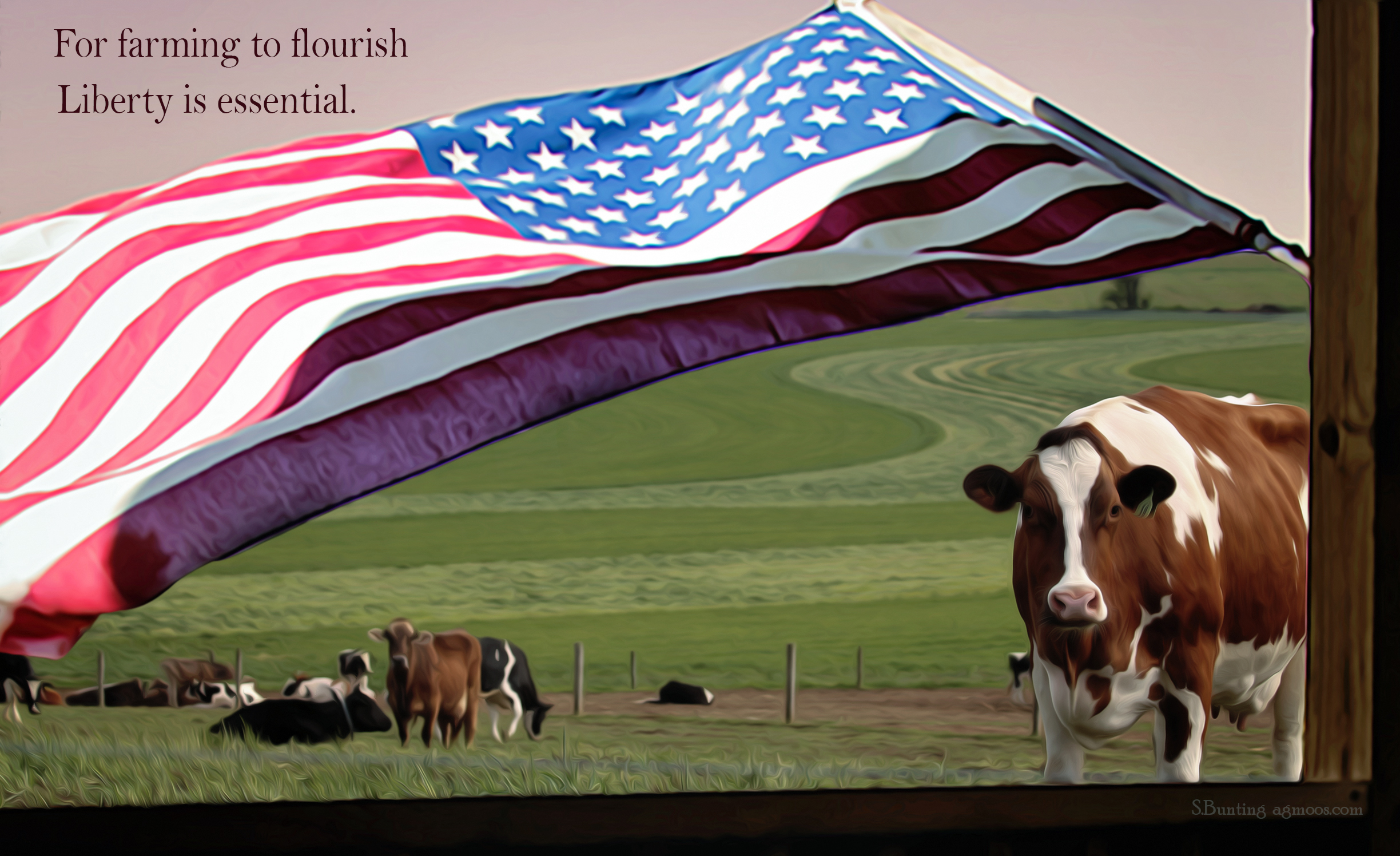
For farming to flourish, liberty is essential

By Sherry Bunting, Farmshine, July 1, 2022

As our nation commemorates Independence Day, we think of America’s agrarian roots and how an agrarian himself, Thomas Jefferson, the primary architect of the language so carefully chosen in our Declaration of Independence, wrote much on the subject of agriculture.

With all that is happening in the world, and in agriculture, now is the time to really ponder our nation’s birth. Liberty has proven for almost 250 years to be more than an ideal worth fighting—even dying—for. It is a condition of life in America that can be misunderstood and taken for granted.

The battle of Gettysburg, the turning in the tide of the Civil War marks this same spot on the calendar. This too is remembered every July 4th weekend with re-enactments on sacred ground where freedom was further fortified for all, lest we forget that our unity stood the test of valor and dignity from both sides—an internal struggle to recommit our nation to the freedom and responsibility of true liberty so that…

As President Abraham Lincoln said: “These dead shall not have died in vain—that this nation, under God, shall have a new birth of freedom and that government of the people, by the people, for the people, shall not perish from the earth.”

From East to West and North to South, the diverse beauty of both the land and people of our United States of America move us to do the work, the caretaking.

Diversity, too, is a key attribute of liberty.

Across the long rural stretches of prairie from the Midwest through the Great Plains—where one can go hours without seeing another vehicle—the bigness of this land and its call of freedom is, itself, liberating.

Whether it is the eastern patchwork of small farms living at the fringes of suburbia with subdivisions often sprinkled between them or the western stretches of uninterrupted farmland—we have a duty to protect America’s agriculture, the quiet essential role of family farms as the backbone of our nation’s liberty.

We can’t allow global business interests and elitists to dictate from afar, to turn our rural networks that need restoring and rebuilding into food deserts.

Thomas Jefferson once said that, “The earth is given as common stock for man to labor and live on.” He also held high the value of agriculture to the nation’s economy, which remains true centuries later in 2022.

“Agriculture is our wisest pursuit because it will, in the end, contribute most to real wealth, good morals and happiness,” Jefferson wrote.

These are not idle words. In today’s times of rapidly advancing technology, many of us lack a full understanding of how advancing technology can coexist with the essential simple goodness of the sustainability we need—that of families farming for generations in the U.S. being able to choose their path instead of having it chosen for them, with new generations staying in farming or leaving to do other important work even as new and beginning farmers are drawn to the land.

Liberty is essential for agriculture to be that beacon. No other profession sustains our communities like agriculture, multiplying earnings throughout local communities.

The billionaires at Davos know this. The global corporations taking over all sustenance, they also know this. Real riches begin with the soil, the land, the work, the families, the food that sustain us.

Ralph Waldo Emerson observed: “The glory of the farmer is that, in the division of labors, it is his part to create. All trade rests, at last, on his activity. He stands close to nature; obtains from the earth the bread, the meat. The food which was not, he causes to be.”

Science, itself, is being misused, along with our faith in doing good, feeding the hungry, caring for the earth and for others, giving God the glory. The challenge is to retain our independence, remember our nation’s birth and what it stands for and never take for granted our agrarian roots, so essential for our future.

-30-
Round bale art gets noticed at Thiele Dairy Farm: ‘I enjoy putting a smile on someone’s face.’

THIELE_MUST_StatueOfLiberty (1)

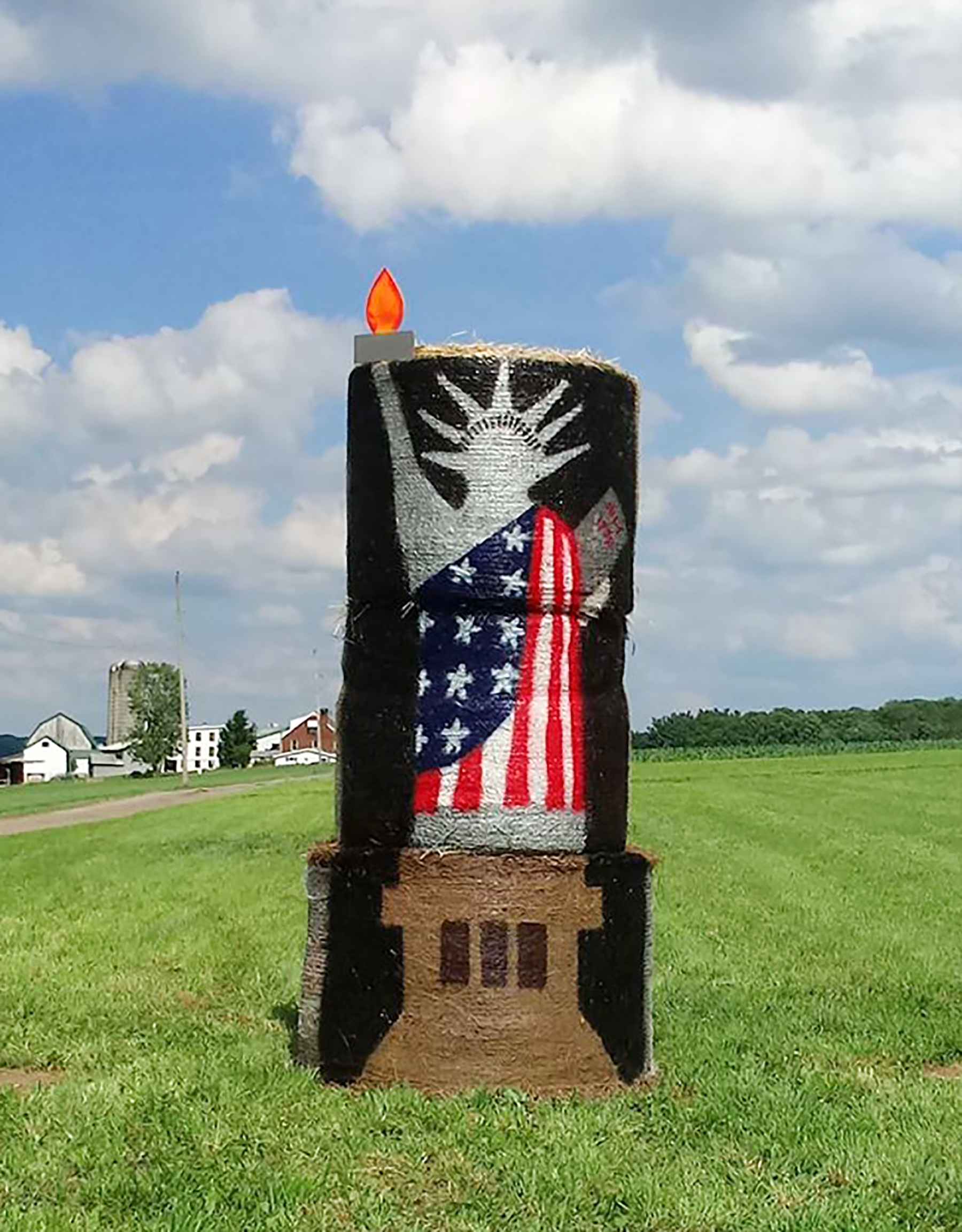
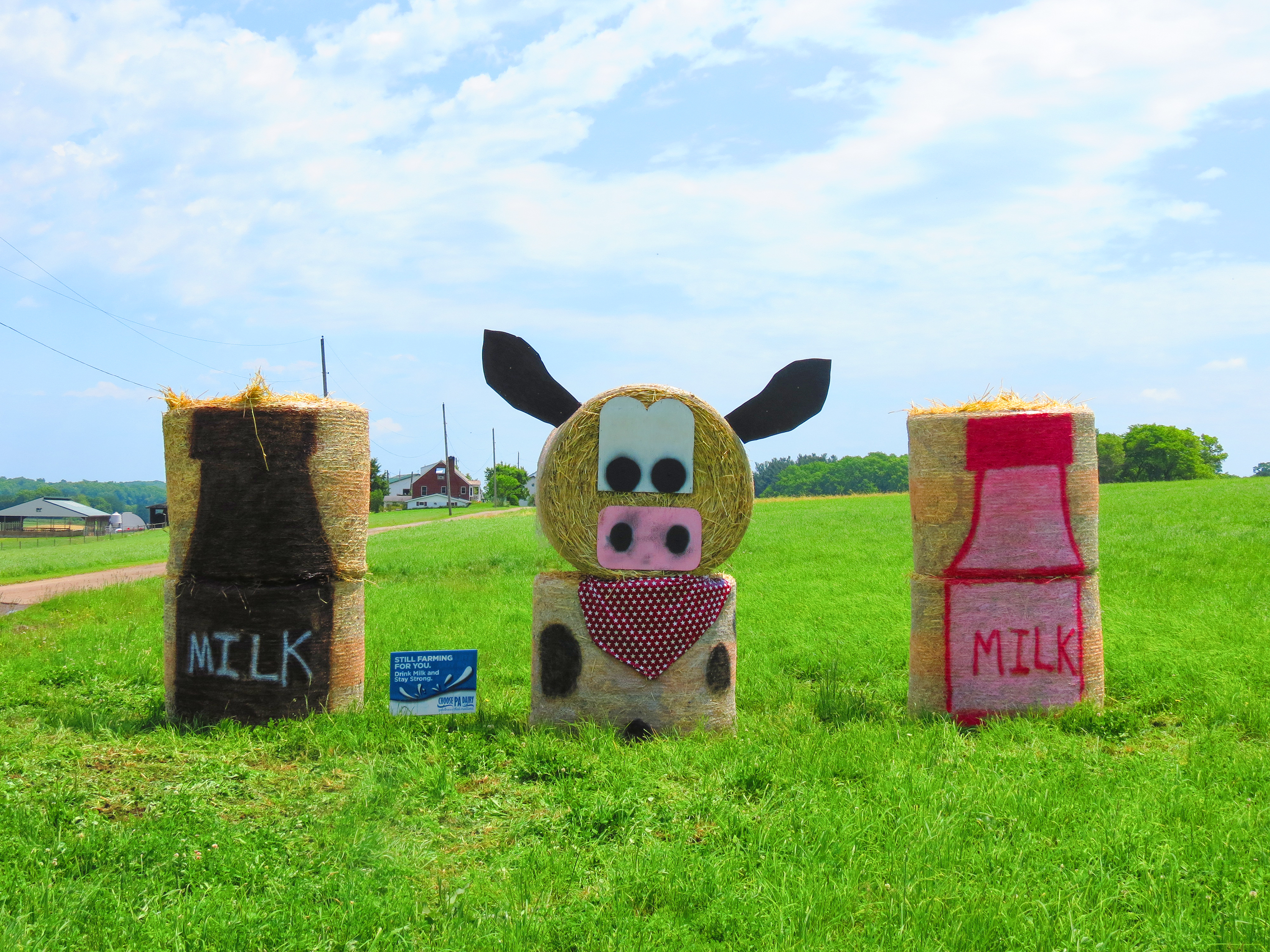
Lorraine Thiele went with the Statue of Liberty theme this week for the farm’s patriotic round bale art display ahead of July 4th. It’s attracting a lot of attention on state route 356 at the end of the farm lane just outside of Cabot, Pa. Photo by Lorraine Thiele

Round bale art gets noticed at Thiele Dairy Farm

By Sherry Bunting, Farmshine, July 3, 2020

CABOT, Pa. — The flag-draped Statue of Liberty round bale artwork at the end of the long lane leading to Thiele Dairy Farm in Butler County, Pennsylvania is attracting attention. The Thiele family placed it on their farm alongside state route 356 just outside of Cabot this week ahead of Independence Day.

“Everybody just loves it, especially in a time like this with what our country is going through, with the turmoil we are in,” says Lorraine Thiele when asked in a Farmshine interview about the community’s response. A photo of it has also created a lot of activity on the farm’s facebook page.

“We get a kick out of seeing people drive by, stop, back-up, and take their pictures with it,” she adds. “I enjoy putting a smile on someone’s face, to have something that can make people smile on their way to work or wherever they are going.”

THIELE_Family(MarburgerPic) (1)

James, William, Lorraine and Edward Thiele at their sixth-generation dairy farm in Butler County, Pa. Photo courtesy Marburger’s Dairy

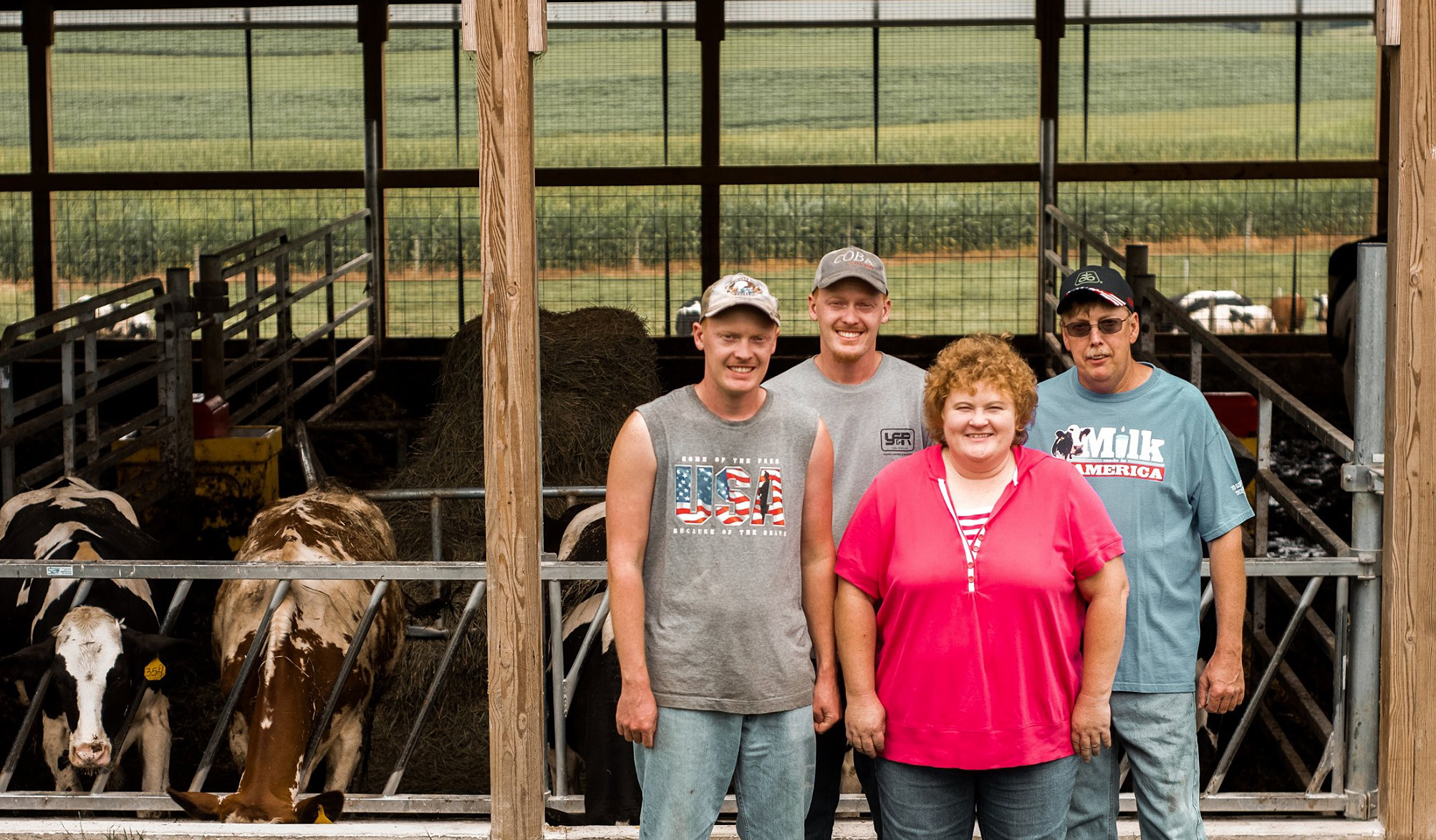
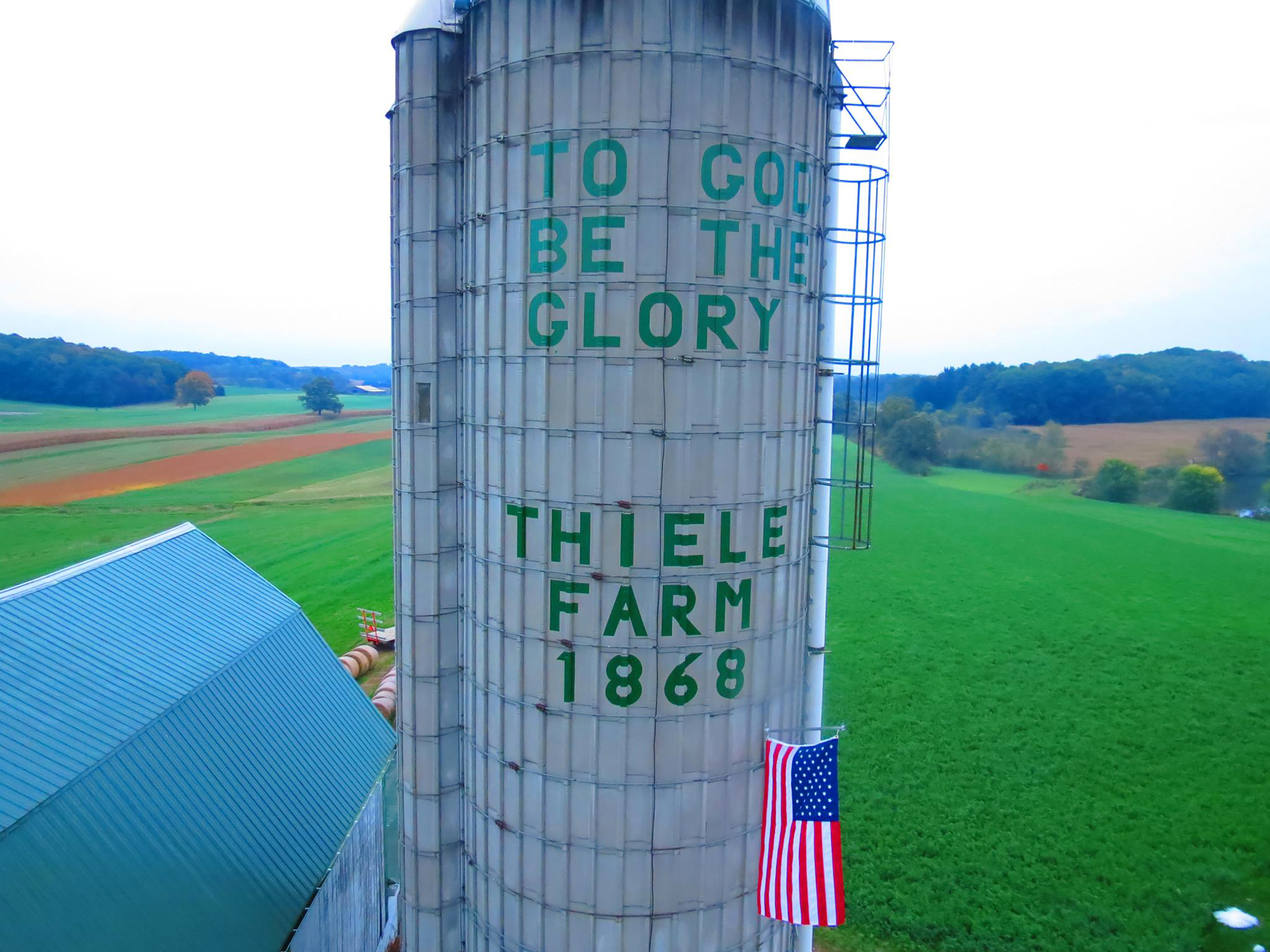
Edward and Lorraine Thiele and their twin sons William and James farm 300 acres of corn, soybeans, hay and oats and milk 40 cows at the sixth-generation Dairy of Distinction, established in 1868. Lorraine does the bookkeeping and all the feeding. She hops on the tractor and helps with other things when needed, although she doesn’t milk much anymore.

Lorraine is also the artist behind the series of round bale portraits that have been created over the past several years. She credits her husband and sons for helping with some of the technical strategy and by providing custom-sized round bales when she asks for them.

“When Ed sees me with the skid loader stacking and piling round bales, he’ll get involved and we’ll draw it out. He likes to help with the more technical side,” she adds.

Her Statue of Liberty this year was painted on three large round bales. Last year she did just the American Flag on six. She’s been doing the round bale art projects for several years now – ranging from turkeys and pilgrims at Thanksgiving, to cows and milk jugs for June Dairy Month, and from tractors with wagons full of pumpkins in the fall, to Santa Claus, reindeer, Christmas trees (with lights) and a Nativity last Christmas.

“I try to do something different every year,” she says, explaining how she “googled” for some patriotic ideas to see what struck her fancy for the 2020 July 4th rendition. She came up with the Statue of Liberty.

“I can’t do faces, so I found a silhouette for the design. I also found a ceramic statue with the flag draped over and figured I would try that.

“I’m not an artist,” Lorraine states humbly. To guide what she calls her ‘graffiti style’ spray painting, she used big baler twine pinned to the stacked bales. If her design gets too big, she tailors it down with a background color.

She admits she has been surprised by how relatively easy it is to paint round bales. Their straw bales are not plastic wrapped, so they take a lot more paint than one would imagine.

“Always buy more spray paint than you think you need,” she suggests, adding that painting it on the net-wrapped side holds the paint better than painting the face of the bale of hay or straw, which “really sucks up the paint.”

She also likes to get creative, using items that are laying around. One year, Lorraine painted wood planks in different colors for the feathers on the Thanksgiving turkey.

One year, for June Dairy Month, she used black drain tile pipe and painted the tip white for the cow tail after Ed drilled-in a rod to hold it.

Once she gets an idea in her head, and thinks about it for a while, it comes together.

“It’s fun, and something different to do. It looks harder than it really is.

“Don’t be afraid to try something,” Lorraine encourages. “The nice thing is, if it doesn’t work out, throw it in for bedding and no one will ever know!”

While the Independence Day Statue of Liberty is creating the buzz right now. It was the reaction to the June Dairy Month art that really surprised Lorraine.

THIELE_JuneDairyMonthArt (1)

For June Dairy Month, the painted milk pints had many people turning into the farm lane to buy milk, but the Thiele family explained that all of their raw milk goes to the Marburger Farm Dairy plant in Evans City — a great local brand.  Photo by Lorraine Thiele

“I painted milk chugs — chocolate and strawberry milk pints — to put beside the bale-painted cow,” she explains. “You would not believe how many people turned in the lane and came up to the farm wanting to buy milk. I never would have thought just a straw bale done up as a milk pint would do that!”

In fact, the response was so great, Lorraine had to put a post on the Thiele Dairy Farm facebook page (and a sign by the artwork), explaining that the family does not sell milk right off the farm and that their raw milk all goes to Marburger Farm Dairy in Evans City — a great local brand.

The Statue of Liberty took about a week to finish, but she only works on round bale art when she has the time. After a painting is complete, they haul it down the lane to position it by the main road.

THIELE_Farm02 (1)

Faith, family and farming are alive and well on the Thiele family’s dairy farm.

The Thiele Dairy Farm facebook page is also something Lorraine enjoys. She started it almost 10 years ago through her love of photography and her desire to promote agriculture in a positive light.

“There’s a lot of negative out there,” she says. “Our son (William) has a drone, and he videos the baling, mowing, and planting. The average person doesn’t have a clue what we are talking about or how it is done or what is involved, so our sons love to show it, to do things like that to educate people about what we do.”

Each family member is a steadfast advocate for agriculture, and they are active in Butler County Farm Bureau and Dairy Promotion Committee. They participated in the Butler County milk donation drive-through back in April before the CFAP program. It was coordinated by Community Action Partnership with Farm Bureau, the Butler County Dairy Promotion Committee, Marburger Farm Dairy, AgCoice Farm Credit, and others, where 1200 gallons of milk were distributed along with a bag of groceries and a box of frozen products.

Lorraine is a positive person, and that was demonstrated in this interview and throughout her connections to the community in person and through social media. People appreciate it, even putting gifts or thank you notes to the family by the round bale Christmas tree at holiday time.

As difficult as things can be in the dairy business at times, Lorraine loves the farm and the cows and is thankful her family is farming together — where everyone in the family does everything on the farm.

As for the round bale art? If she can make someone else smile for even just a second. It is worth it.

THIELE_Farm (1)

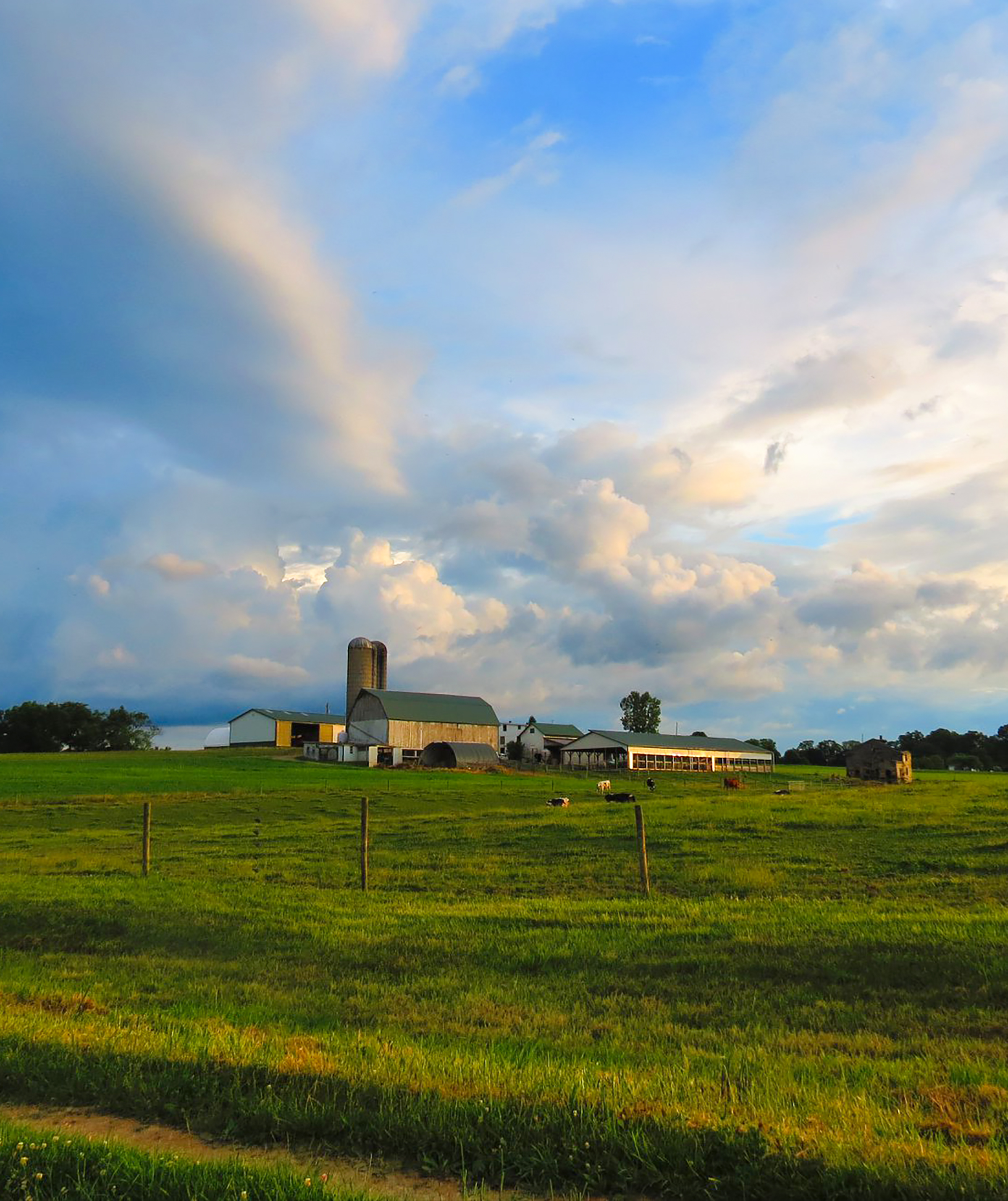
Summer sunset this week at Thiele Dairy Farm in Butler County, Pennsylvania. 
Lorraine loves taking photos on the dairy farm and the Thiele Dairy Farm facebook page is full of her photos as well as drone videos by her son William.  Photo by Lorraine Thiele

-30-
Decision made, faith shared as his beautiful Lancaster County farm auction is set for Feb. 9

By Sherry Bunting, Farmshine, February 1, 2019

RustyHerr01

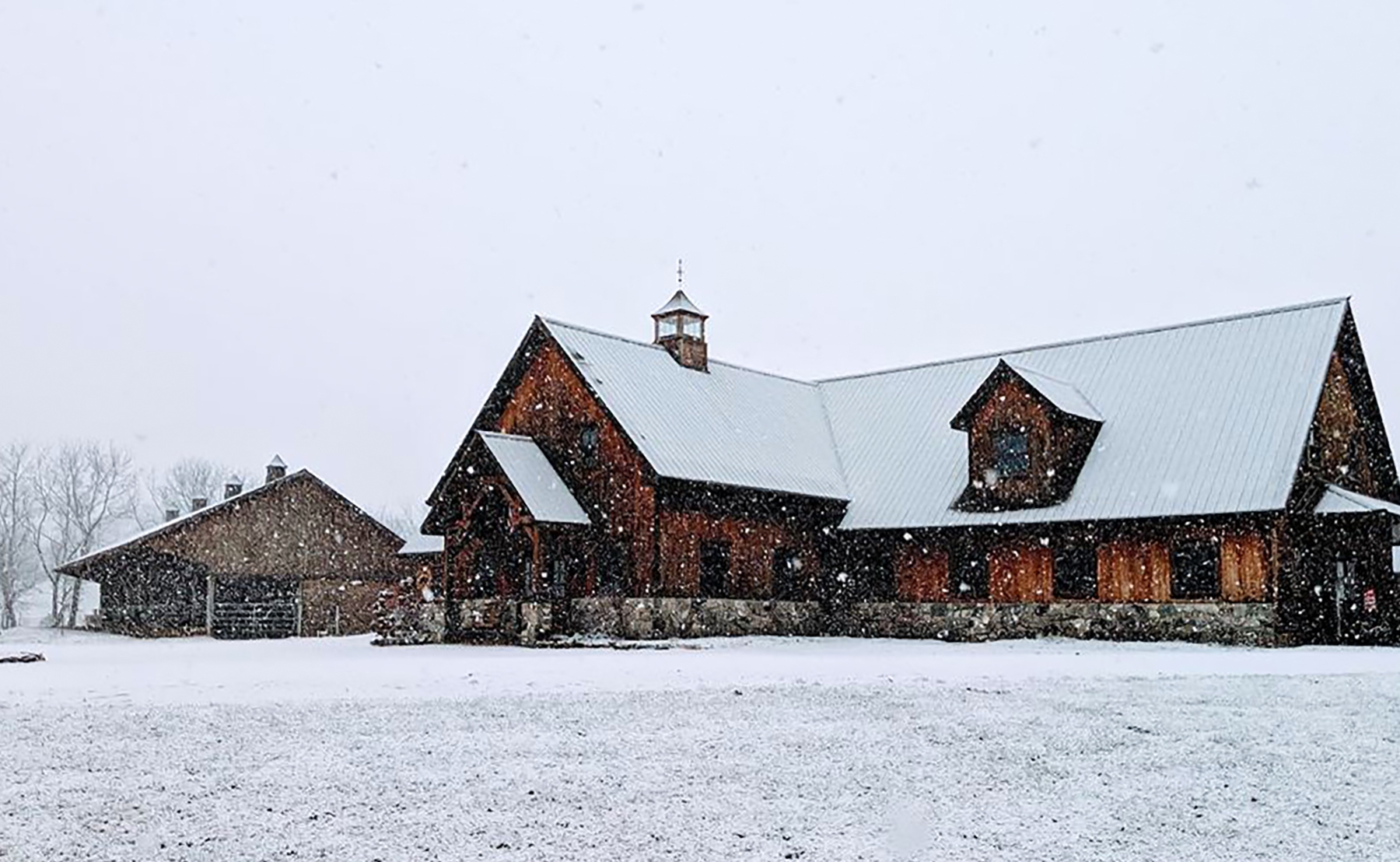
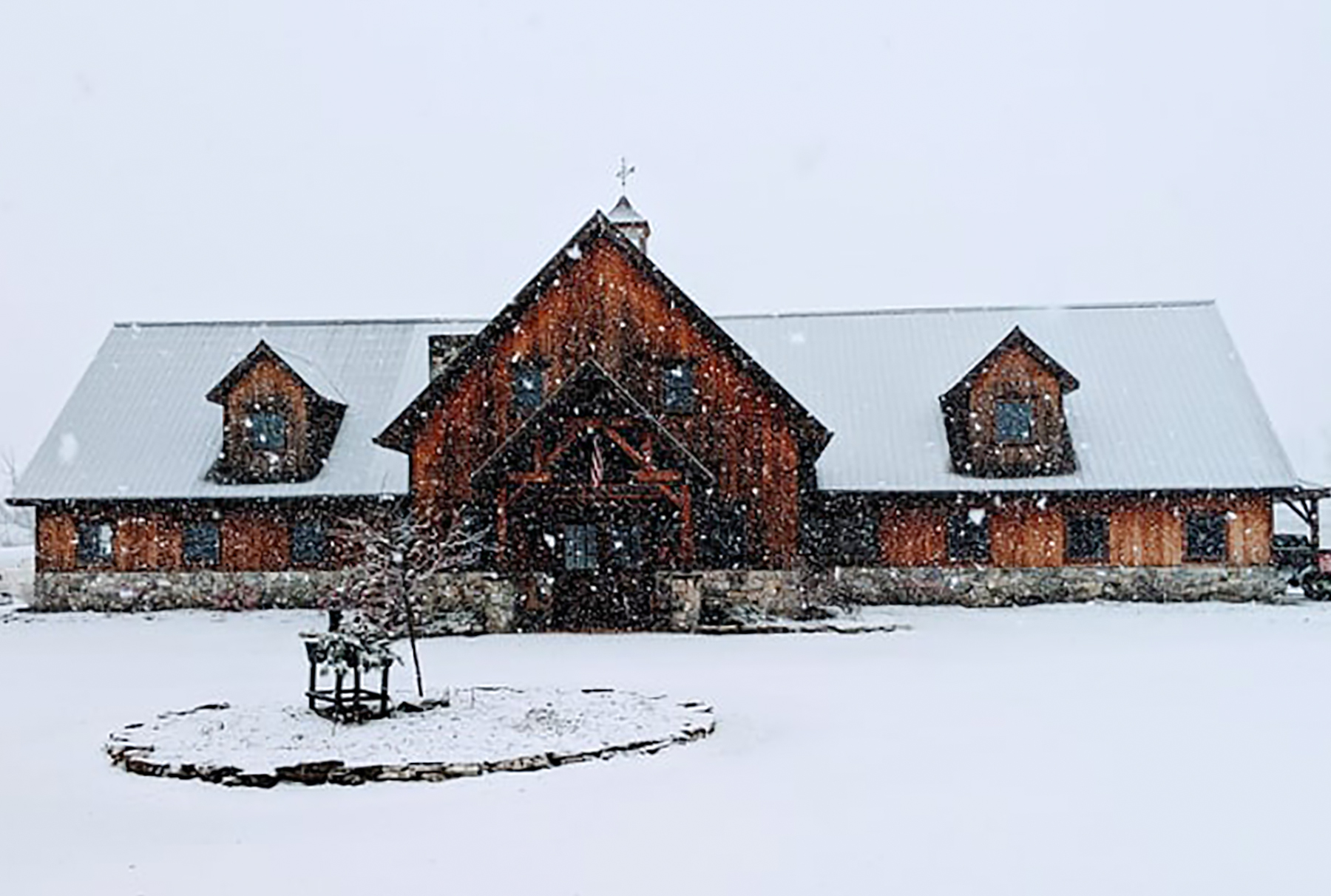
Picture postcard perfect in Tuesday afternoon’s snow, Rusty Herr’s 71-acre farm, including the all wood construction dairy and heifer barns (shown here), designed to showcase Golden Rose Genetics, as well as the restored historic home (not shown) in the Andrews Bridge historic district of southern Lancaster County will be auctioned by Beiler-Campbell on Feb. 9.

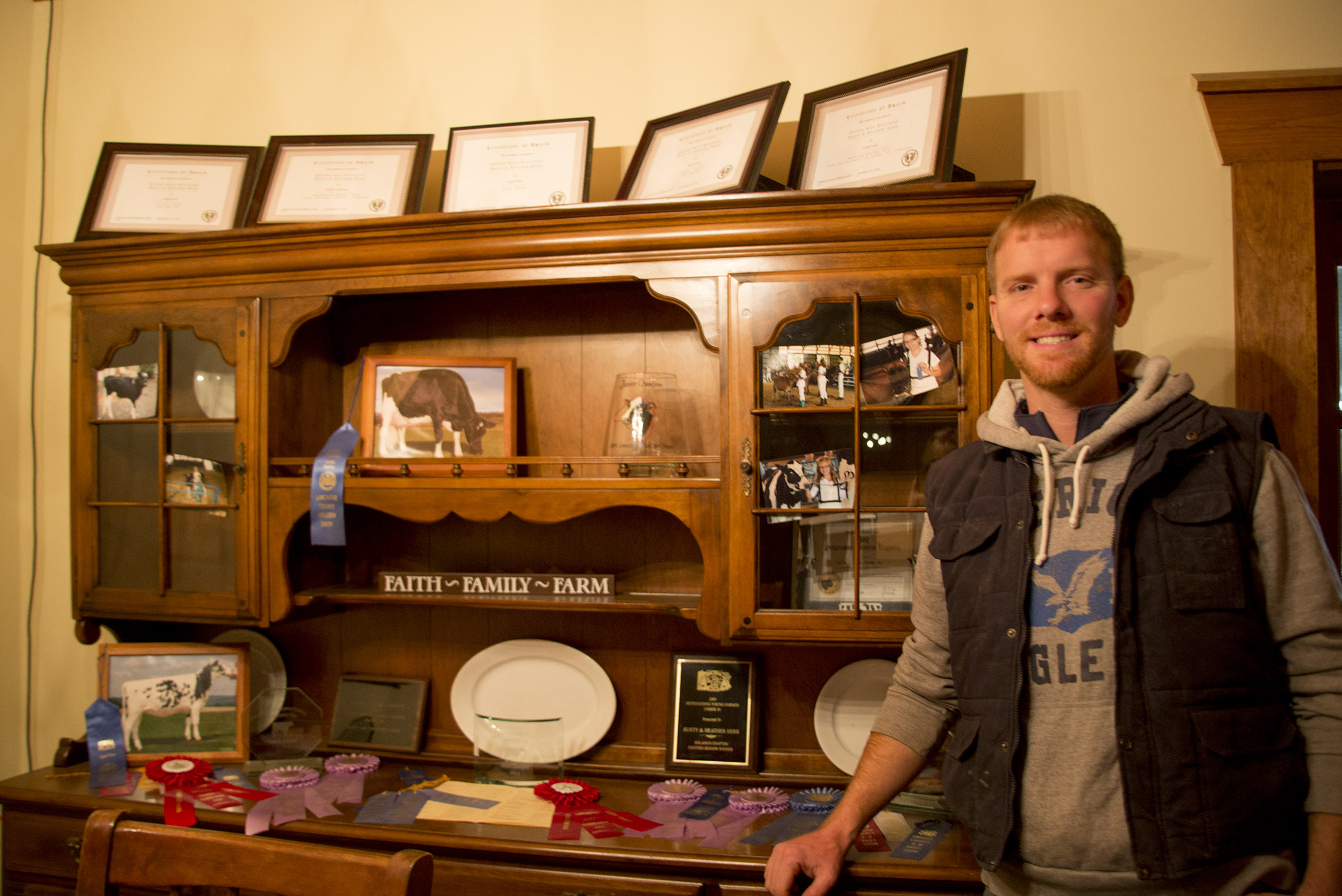
CHRISTIANA, Pa. – “It was a gut feeling, more than anything — an inner sense of knowing something had to happen,” says Rusty Herr about his November decision to auction the 71-acre farm and its most unique dairy facility that is home to Golden Rose Genetics and its elite herd of 40 cows, 25 of which are related to the Oakfield Pronto Ritzi cow he purchased as a yearling in 2009 at the New York Spring Sensation Sale.

Beiler-Campbell Auction Company will conduct the public auction at the 3 Sproul Road farm in the Andrews Bridge historic district of southern Lancaster County near Christiana, Pennsylvania next Saturday, February 9 at 1:00 p.m. In addition to the farm, and it’s not quite four-year-old dairy and heifer barns, the sale includes the family’s restored historic home.

RustyHerr00

Rusty with his foundation cow Oakfield Pronto Ritzi EX93, in front of the dairy facility at Golden Rose Genetics. The facilities and renovated farm house are part of the auction Feb. 9 of the 71-acre farm. Pronto Ritzi’s is from a genetic line that is now 19 consecutive generations EX with the most recent four generations bred here at Golden Rose and a potential 20th generation EX — a red and polled first calf heifer — waiting in the wings to be scored.

Rusty will determine his options for the cattle and equipment after the sale of the farm. He’s hoping to be able to keep some of his best animals and some heifers for his children to show.

The beautiful all-wood construction Canadian-style barn, complete with indoor wash rooms and a show case entryway was built so that Rusty could give his small herd of high-scoring cows the individual attention and as a show place to merchandise the genetics he has been developing.

In fact, his Golden-Rose Ladd Glory-Red (below), both Red and Polled, has not yet been classified and has the potential to be a 20th generation EX in Oakfield Pronto Ritzi’s line.

RustyHerr-ProntoRitzi

Oakfield Pronto Ritzi EX93 is the foundation cow at Golden Rose

RustyHerr-Glory

Golden-Rose Ladd Glory-Red is a polled first-calf heifer that will be professionally photographed in February. She is not yet classified, and Rusty has high hopes for her as a potential 20th generation EX from the Oakfield Pronto Ritzi line. Rusty will make plans and choices for his cattle after the public auction of the farm.

Good cows and good genetics, along with a love of marketing and the training and skill-set for reproductive work — these are the things Rusty has learned and will continue to love – even if the path forward right now is like opening a book of blank pages.

While it was a gut feeling and months of deliberation that led to the decision to sell the farm, it all comes down to the financial strain he and other dairy producers are enduring.

“Each of us has to know how much longer we can tread water before losing everything,” he says. “We also have to look at how the financial strain may be impacting on other areas of our physical, emotional and family life. If the dairy industry was in a good place, financially, it is obvious we would not have all of these farms going out of business.”

In kitchen table discussions with other dairymen who’ve crossed this bridge over the past several months, one thing is apparent, our industry’s young farmers and transitioning families do not have the cash flow to finish transitions or move into later stages of having started as beginning farmers. They also don’t have the peace of mind that the markets will cycle high enough to pull them up from four years of losses. This is concerning for the future as we are not just seeing the older generation retiring out of the business, we are seeing unprecedented numbers of young people who have a passion for dairy in these tough decisions.

For Rusty, it means walking away from the farm and most unique dairy facility he had spent years dreaming, planning, preparing for and then in 2015 building for his Golden Rose Genetics.

He had been sharpening his skill-set in embryo transfers, ultrasounding and IVF work, building a line of Excellent cows from the Oakfield Corners yearling he had purchased. He methodically built up the genetics side of his business, ultimately downsizing his prior herd with a 2015 auction to fund the new barn and intimate setting for a smaller herd where he could specialize in genetics.

What he didn’t plan on — what nobody could have — is that the milk price would abandon its three-year cycle to tumble low for four straight years, beginning in 2015 when he moved his smaller herd into their new quarters at Golden Rose.

RustyHerr02.jpg

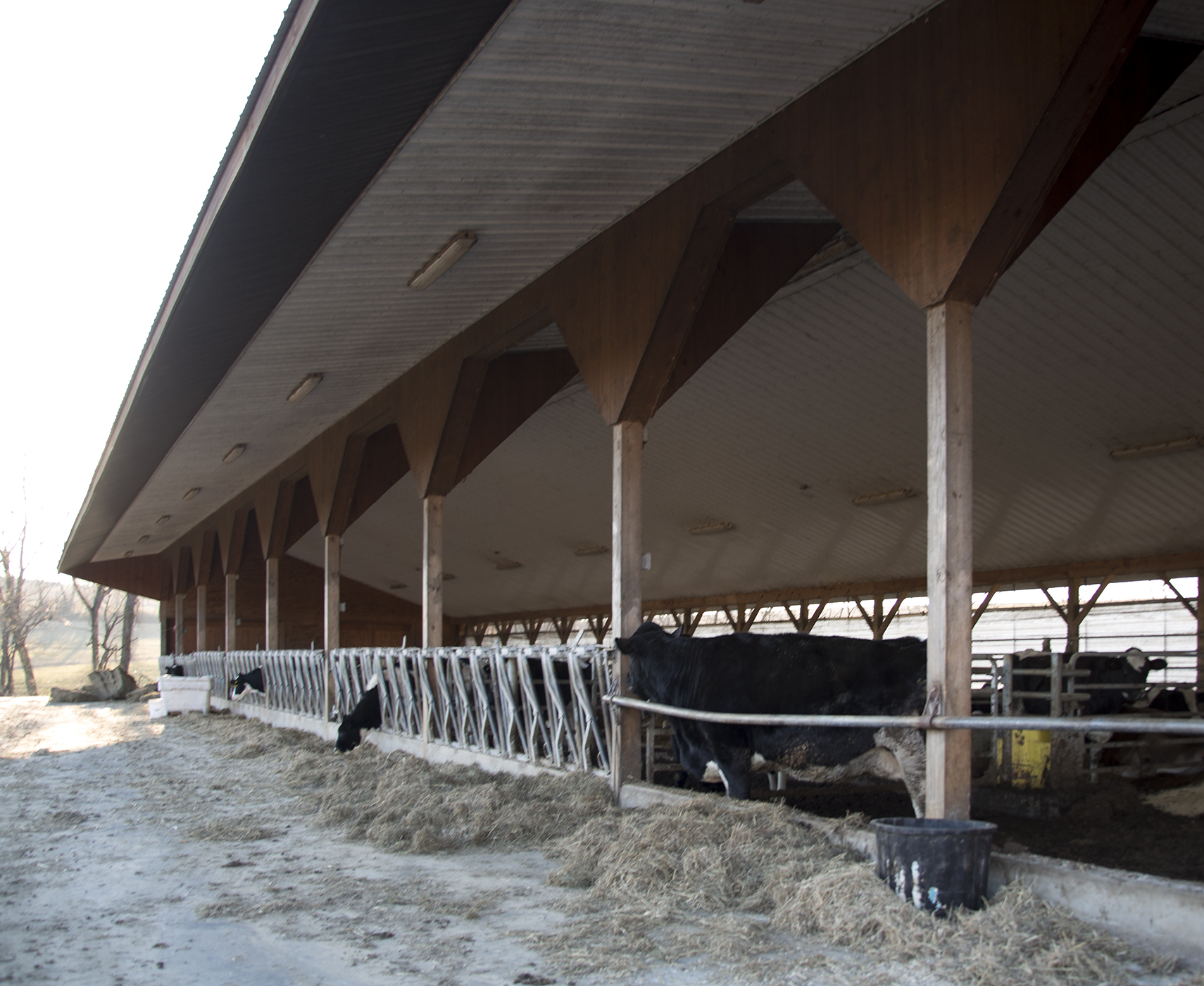
With a rough-cut pine exterior and the interior smooth pine tongue-and-groove construction, clear-coated to protect the wood against moisture, the 40 tie-stalls and four box stalls were designed for the individual care of high-scoring cows. They currently produce 75 pounds/cow/day of milk with 4.2 fat and 3.3 protein and somatic cell counts 160,000 and below. They are fed a forage-based TMR of mainly corn silage and double-cropped triticale, along with some dry hay.

“Without one good year in the dairy markets (since 2015), it’s been an uphill battle,” Rusty reflects. “We were treading water, but then the outlook sealed it. If it looked like markets would be a lot brighter going into 2019, maybe we could hunker down a bit longer, but we felt like we have already hunkered down and pushed it.

“Obviously it has not been an easy decision to make,” but he says that it is the right one for his family to move on from dairy farming as they have known it.

Looking back, he has no regrets.

RustyHerr-showcase

The entryway to the cow barn is part of what make this property a unique opportunity for many types of buyers. The location and beauty of the property and its wood-crafted dairy facilities designed for a small elite dairy herd could easily be converted for horses or for a farm to retail business.

“Life has a way of teaching us valuable lessons that we would have never learned if we didn’t go through certain things. When things get difficult, when the pressure is high and the pain is great, those are the times when we learn the most, when we figure out who we really are and come out better and more prepared to handle what is to come,” he describes the perspective that leaves him with peace about stepping towards whatever God has in store next for him and his family.

With the decision made, the marketer in him has Rusty feeling excited about the upcoming auction on February 9.

He and his wife Heather feel a sense of relief knowing the financial strain will ease, and he believes that any number of options could be in front of him.

He says the whole experience has taught him patience and to trust God for His perfect timing.

“This wasn’t how I would have planned it, having just purchased the farm and begun construction on the dairy less than four years ago, but it’s how the script is unfolding,” he notes.

“The dairy industry is changing in many ways, and to think that anyone could have predicted the markets would be moderately to severely depressed going on a fifth year in a row would have been unimaginable.”

But he adds that, “This is the reality of where we are with a high debt load, input costs from all angles and a very uncertain outlook. It’s just not sustainable to continue with the farm and small dairy herd.”

He and his wife Heather and their four children have put the future in God’s hands. He loves the work he has been doing both on and off the farm.

If a buyer wants to keep the dairy going and keep him working with it, he is open to that potential.

If the farm sells to a buyer completely unrelated to dairy, his path could change dramatically, and he’s ready for that.

RustyHerr-08.jpg

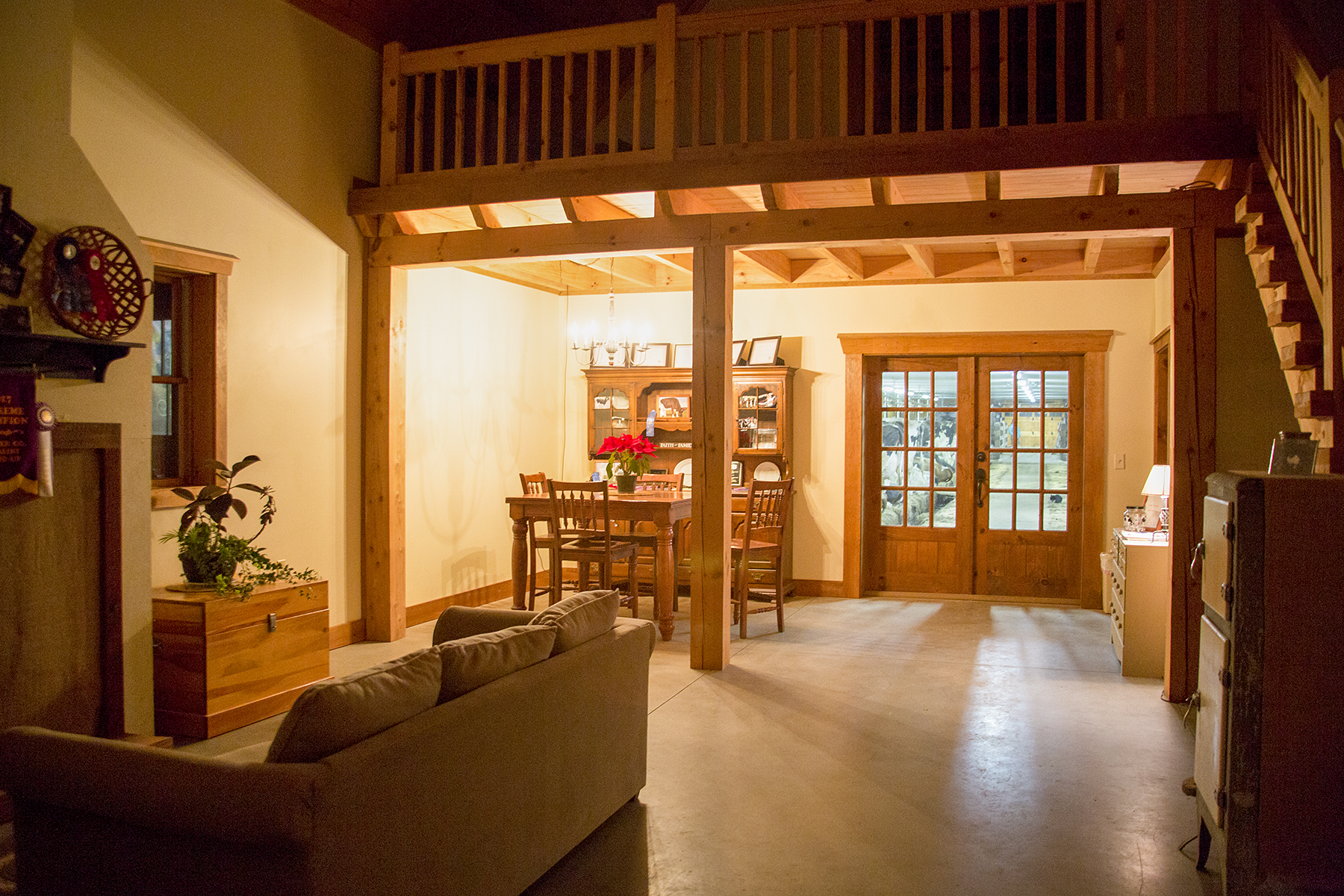
The foyer has a comfortable and historic sitting-room feel where milk quality certificates, pedigrees and ribbons and banners won by his daughters showing cattle at the local fairs are displayed. You can see the cows behind the double doors in the tiestalls. A visitor from the Netherlands surprised Rusty with a cow decal on the wall, a signature he leaves at every farm he visits, worldwide.

“We chose to auction the farm. This is not a forced auction,” Rusty affirms. “I have always loved cow auctions and after meeting with Beiler-Campbell, we decided this is how we would handle the farm sale.”

True to form, Rusty finds himself seizing the opportunity to learn about marketing real estate through this whole experience. Just another way to embrace circumstances and decisions even if they are completely opposite of earlier dreams and plans.

RustyHerr-AuctionSign.jpgIn fact, Rusty penned these words in a Facebook post 10 days before Christmas just after the auction signs went up, thanking their network of family, friends and church family and offering to others a glimpse of the hope and faith that remain strong – knowing so many farmers are wrestling with similar difficulties and decisions.
“Yes, it is sad to walk away from something I have worked my whole life to get to, but in other ways I can be so happy to have been given the opportunity to do it. So many people can never say that,” Rusty wrote, and reiterated during a Farmshine visit to Golden Rose Monday evening. During the visit, Rusty confided that the rollercoaster has not been the markets — they’ve been down with no relief. The rollercoaster he and other dairy producers deal with every day is an internal up-and-down in the mindset of whether they can move forward, or how.

“We can control a lot of things, but not the market,” he explains that they have done all they could to increase income and cash flow amid the perfect storm of lower prices for milk, cattle and beef. He stepped up his ET, IVF and other reproductive services to dairy producers in the region –pulling him away from the very farm he was bringing income back to keep going.

“What’s the family farm going to look like in the future?” Rusty wonders aloud. “That question, I think, is being answered. We are disappearing.”

“I don’t want sympathies and people feeling sorry for us…” he wrote in that mid-December post announcing the sale of the farm. “There are dairy farm families right now who are grieving over the loss of a loved one who thought that ending their life was the best way to cope with their overwhelming situation. They are the ones who need our prayers and support. There are others who have no idea how they are going to get through the coming months and years if things don’t dramatically improve. They might be retirement age and have just watched all of their net worth get eaten up while trying to ride out the storm. I would like this post to be about them.”

Rusty is grateful for family, friends and faith. He urges everyone in the dairy community to “Reach out to your neighbors and friends. Let them know that you care and are praying for them.”

In short, he says, “2018 has been the most difficult year in modern history to be a farmer. Farmers are strong people and can deal with more than most will ever have to, but we all have a breaking point. Pay attention, listen when someone just needs to be heard. Be a shoulder to cry on if needed. Be kind — you never know how much someone might be dealing with. People are good at hiding their struggles and pain.”

RustyHerr06.jpg

It’s milking time, and Daisy Herr, 13, gets started Monday evening at Golden Rose.

As Rusty and one of his daughters, Daisey, 13, began milking Monday evening, younger daughter Maddie, 12, fed the cats and prepared to join in. Their dad started a pot of coffee and prepared to feed.

“It’s a bittersweet thing,” he said as we concluded the interview as night fell. “The decision was difficult, but we’re all looking forward to what’s next, even if we don’t know what that looks like at the moment. For now, I’m focusing on the auction on Feb. 9, and trusting God has our back.”


“For I know the plans I have for you,” declares the Lord, “plans to prosper you and not to harm you, plans to give you hope and a future.”


Jeremiah 29:11

RustyHerr07

Rusty pushes up and gets ready to feed while daughter Daisy milks and daughter Maddie helps with other chores. He says Alli, 15, Daisy, 13, and Maddie, 12, have been taking turns with the milking. Son Jeremiah, 9, helps Heather’s mom with feeding calves.

RustyHerr-dronephoto.jpg

RustyHerr04

RustyHerr-HeiferBarn.jpg

RustyHerr-Maddie.jpg

‘It’s getting real, and we’re not alone’

Unsure of future, Nissley family’s faith, community fill gap as dairy chapter closes with sale of 400 cows

By Sherry Bunting, Farmshine, November 16, 2018

Nissley0051.jpgMOUNT JOY, Pa. — Another rainy day. Another family selling their dairy herd. Sale day unfolded November 9, 2018 for the Nissley family here in Lancaster County — not unlike hundreds of other families this year, a trend not expected to end any time soon.
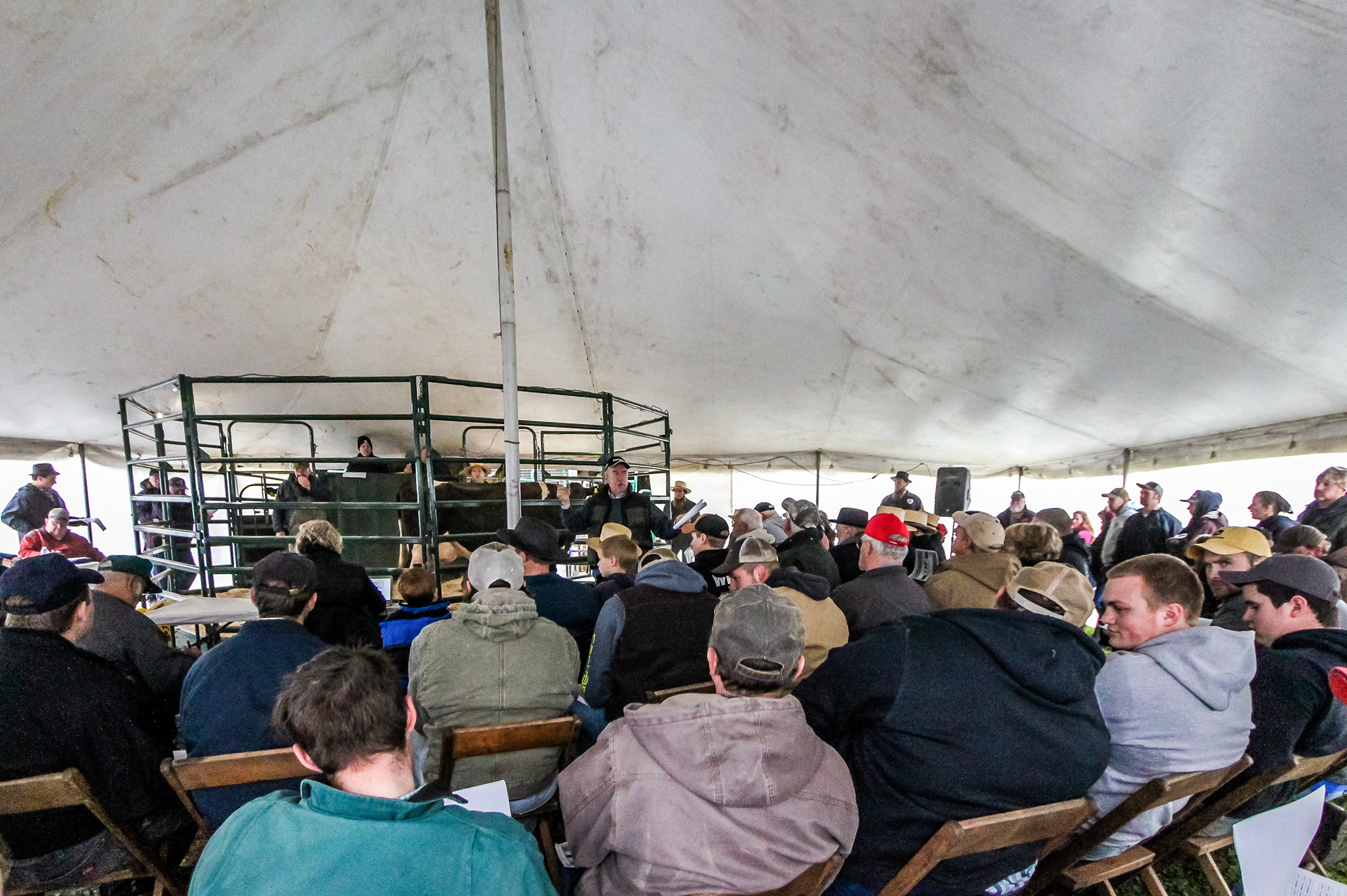
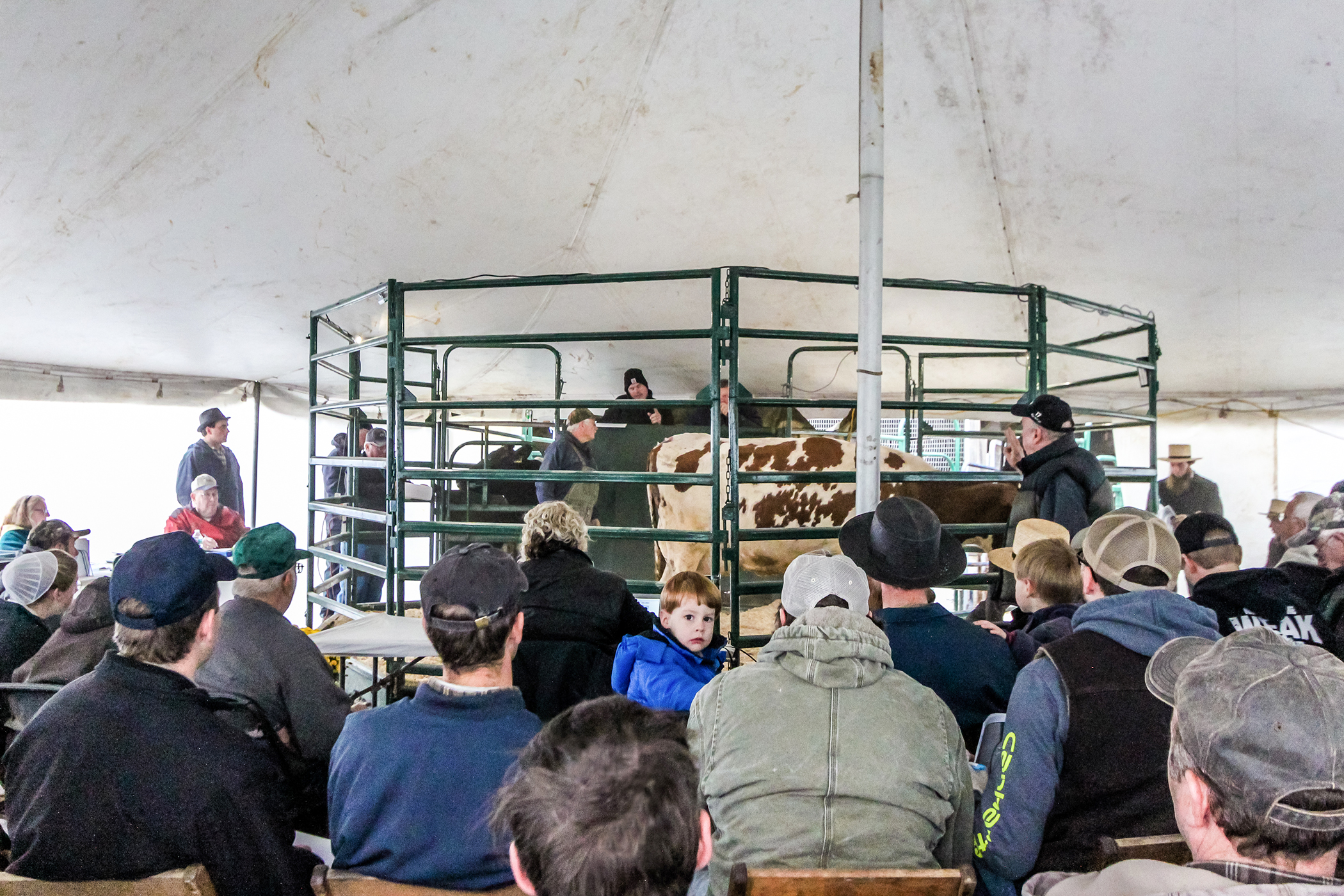
After 25 years of building from nothing to 850 dairy animals — and with the next generation involved in the dairy — the Nissleys wrestled with and made their tough decisions, saying there’s no looking back, although the timetable was not as they planned because the milk price fell again, and some options for transitioning into poultry came off the table.

Nissley2005

The Cattle Exchange put up the tent, and the community came out in-force to support the Nissley family and their sale Friday. Throughout the weekend, they heard from people who bought their cows, telling them they’ll take good care of them. While many went to new dairy homes, a third of the cows at dispersals like this one have been going straight to beef, despite culling a good 10% of the herd in the weeks before the sale.

They began culling hard the past few weeks and on Friday, Nov. 9 offered 330 remaining milk cows and over 80 springing heifers. The Cattle Exchange put up the tent, and the community came out at 10 a.m. to support the family and — as Mike Nissley put it — “watch a life’s work sell for peanuts.”

Breeding age heifers are being offered for sale privately and the young calves, for now, are still being raised on another farm as they would sell for very little in these trying times.

Nissley-Edits-18

As we talk outside the sale tent in the cold November rain, the cell phones in the pockets of Mike, Nancy (left) and Audrey are sounding off with outpourings of support. Know that the smiles through brushed back tears are because of the loving care of others, the family’s faith in a loving God, and the knowledge that they took great care of their cows.

Mike and his wife Nancy aren’t sure what the future looks like, but they are surely feeling the prayers, calls and texts of their friends, family, and community getting them through it.

Both Mike and his daughter Audrey Breneman have loved working with the cows, saying the sale felt like a funeral — “the death of a dream” — standing in the light rain outside the sale tent while the auctioneer chanted prices dipping into the $500s and $600s, even struggling shy of $1000 on a cow making 90 pounds of milk with a 54,000 SCC.

Later, a smile crossed his face, hearing the auctioneer stretch for $1700. “That one’s good to hear,” he says, as they headed back into the tent to watch springing and bred heifers sell.

While Daniel Brandt announced their number-one heifers, bids of $1600 and $1700 could be heard on some.

Nissley2011“It was a privilege to make the announcements on those 425 head, and I was impressed with the turnout of buyers, friends and neighbors as the tent was packed,” said Brandt after the sale. “The cows were in great condition and you could tell management was excellent.”

Mike gave Audrey the credit.

Before the rattle of cattle gates and the pitch of the auctioneer began, Audrey addressed the crowd with words that make the current dairy situation real for all who were there to hear them:

“We would like to welcome you to the Riverview Farms herd dispersal and thank you each for coming. Today feels a bit like attending my own funeral where we bury a piece of me, a piece of my family, and a piece of history, where we say goodbye to a lifestyle, to a way of life, to a lot of good times and many hardships as well. But I stand before you today proud to present to you a herd of cows that will do well no matter where they go.

 “This isn’t the end for these ladies, nor is it the end for us. I’ve had the privilege of managing the herd for the last 15 years and though we may not have done everything perfectly, we’ve done a pretty darn good job of developing and managing a set of cows that can be an asset to your herd. Everything being sold here today is up to date on vaccines. Any cows called pregnant has been rechecked in the last 10 days, Feet have been regularly maintained and udder health was always top priority. We culled hard over the last few weeks and have only the cream puffs left as the auctioneer Dave Rama says.

 “Though it feels like the end, it’s only the beginning of the next chapter, and we’re excited to see where God leads us next. Our milk inspector said once: it’s not a right to milk cows, it’s a privilege, and that’s exactly what this herd of cows was, a privilege.”

Her sister Ashlie’s husband Ryan Cobb offered a poignant prayer. The youngest grandchildren not in school, watched until lunchtime as the selling went through the afternoon, and the cattle were loaded onto trucks in the deepening rain at dusk.

As the sale progressed, a solemn reflection could be seen in the eyes of neighbors and peers. To see a local family sell a sizeable herd leaves everyone wondering ‘who’s next’ if prices don’t soon recover.

Nissley-Edits-21.jpg“It’s getting real,” says Mike. “Everyone is focused on survival, but we can see others are shook, not just for us, but because they are living it too.”
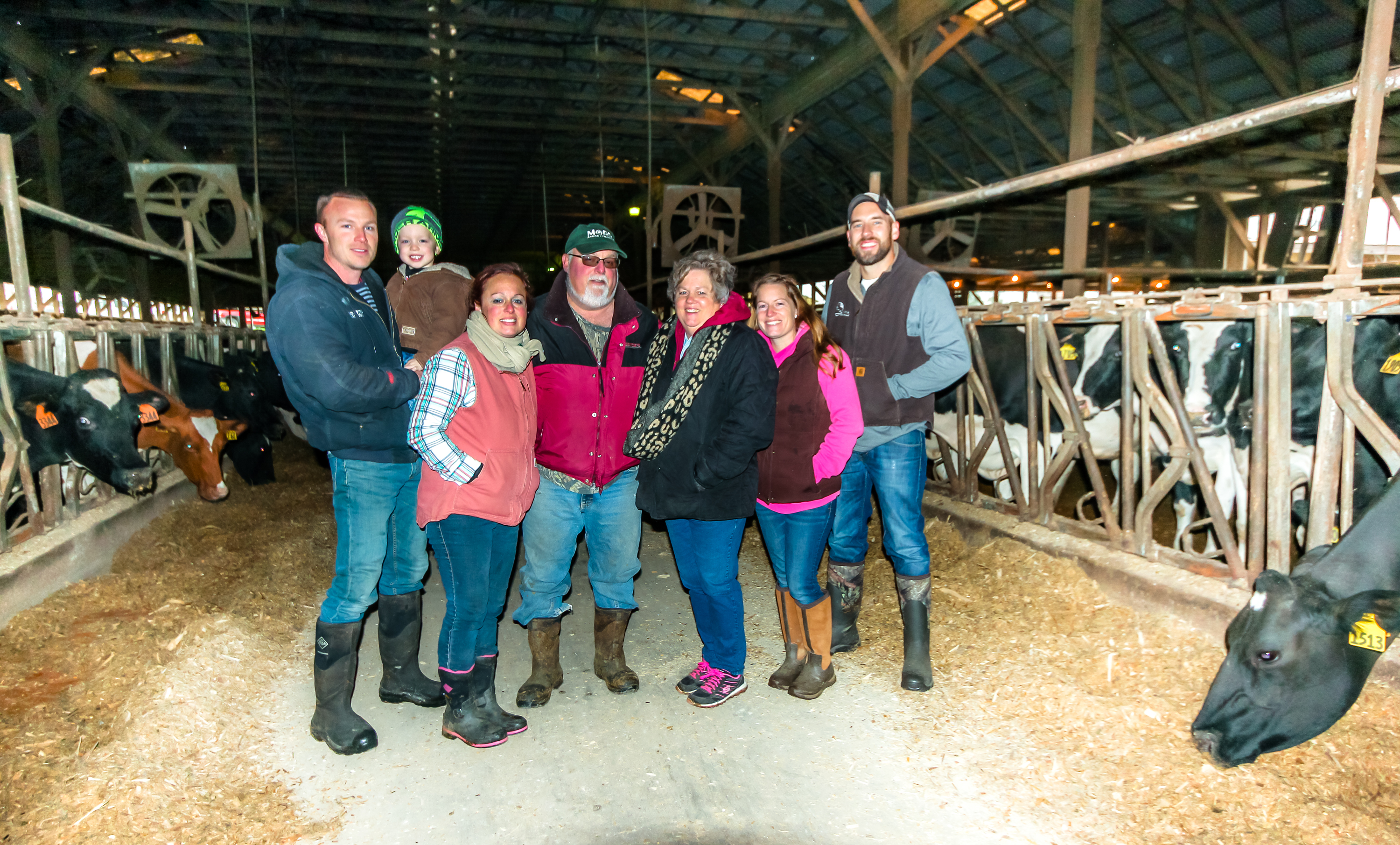
He has spent the last two years fighting to protect everything, including his family, “but now I surrender,” he says. “It feels like failure.”

There’s where he’s wrong. There are no failures here, except that the system is failing our farmers — and has been for quite some time — leaving good farmers, good dairymen and women, to believe it is they who have failed, when, in fact, they have almost without exception succeeded in every aspect of what they do.

Nancy is quick to point out that without Mike’s efforts and the family’s faith, “we wouldn’t have gotten this far, but now it’s time to see where God leads us next.”

Nissley2075.jpg

The dairy chapter closed last Friday for the Nissley family in Mount Joy, Pennsylvania, but they are looking forward to where God leads them next. Mike and Nancy Nissley are flanked by daughter and herdswoman Audrey (left) and son-in-law and feed manager Matt Breneman and son Mason and daughter Ashlie (right) and son-in-law Ryan Cobb.

“Never have we felt the love and support like we have now from our community,” Audrey relates.

Nancy tells of a group of 20 who met at the farm for a meal the night before: “They prayed with us and rallied around us and supported us.”

Mike feels especially blessed. “We’ve had people just come over and sit in our kitchen with us,” he says. “People say ‘we’re here for you.’ People I never met are reaching out to tell me ‘you’re not alone, you’ll get through it, and there’s life after cows.’”

His bigger concern is that, “The public doesn’t fathom what the real struggles are out here. They have no idea where their food comes from and what it takes to produce it, the hours of work, of being tied to it 24/7/365. As farmers, we don’t have the resources or the time to correct all the misinformation when everyone believes what they see on social media.

“They go in a store and see milk still sold at $4.75/gal. The ice cream mix we buy for our ice cream machine costs the same as it did in 2014, when farm milk prices were much higher. DFA and Land O’Lakes report big annual profits. Where does the money go? Where did our basis go? It used to be $3.00 and now it’s barely 50 cents. There’s not one area to fix if the system is broken,” Mike says further.

“When you really look at this,” he says, “it’s amazing how little farms get for the service they provide, but if the public doesn’t know or understand that service, then they won’t expect the farmers to receive more and will actually make it harder for the farms to do with less.”

Nissley-Edits-25.jpgThe Riverview herd had good production and exceptional milk quality. Making around 25,000 pounds with SCC averaging below 80,000, Mike is “so proud of the great job Audrey has done. Without that quality, and what was left of the bonus, we would have had no basis at all,” he says, explaining that Audrey’s strict protocols and commitment to cow care, frequent bedding, and other cow comfort management — as well as a great team of employees — paid off in performance.
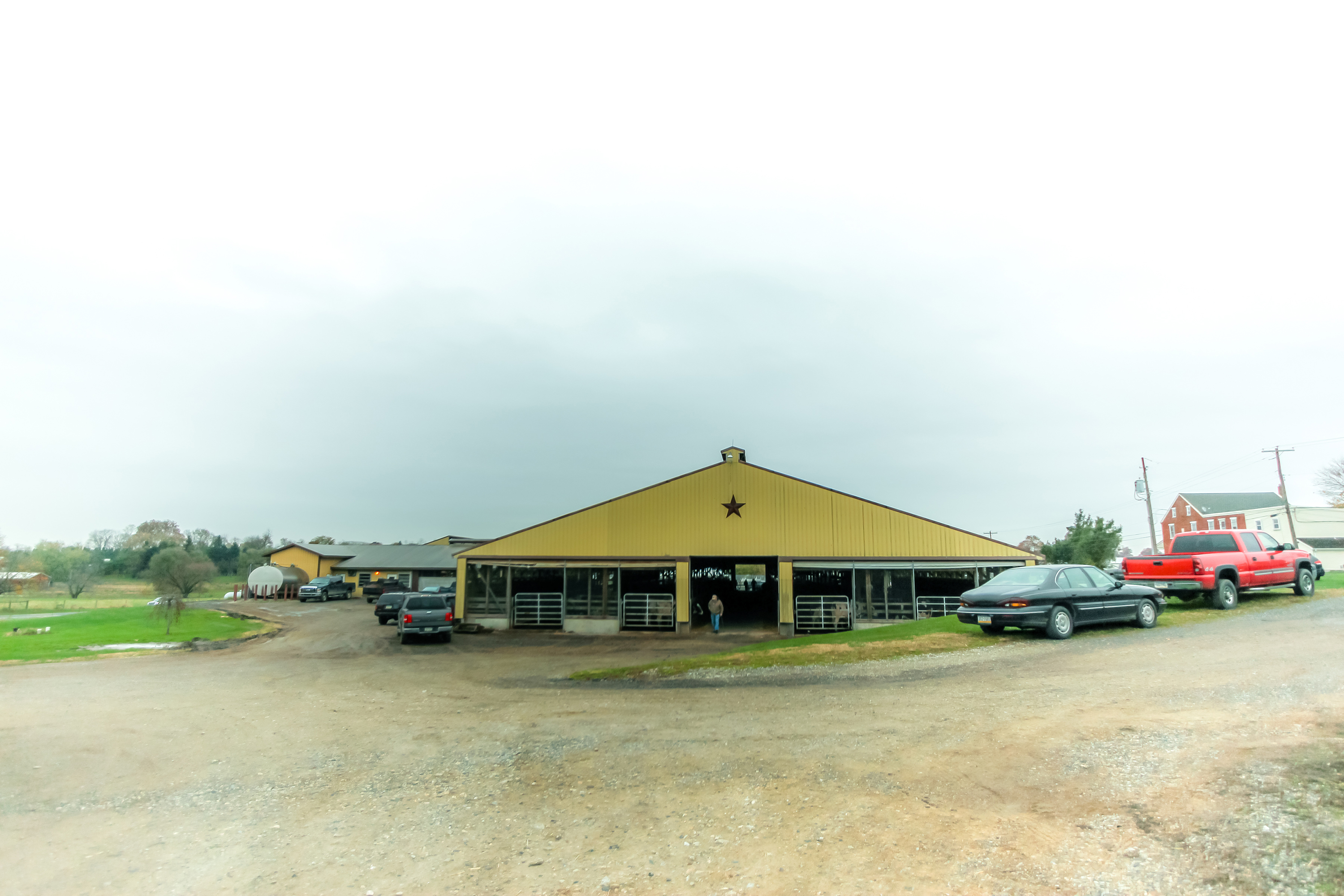
But at the same time, with all the extra hauling costs and marketing fees being deducted from the milk check, the quality bonus would add, but the subtractions would erode it.

He notes further that a milk surplus doesn’t seem to make sense when the bottom third — or more — of every herd that sells out is going straight to beef.

The Nissleys are emerging from the deepening uncertainty that all dairy farm families are living right now in a country where we have Federal Orders for milk marketing, and yet we are seeing an expedited disorderly death of dreams at kitchen tables where difficult decisions are being made.

Nissley2097Trying to stay afloat — and jockeying things around to make them work — “has been horrible,” said Nancy. She does the books for the farm and has a catering business.
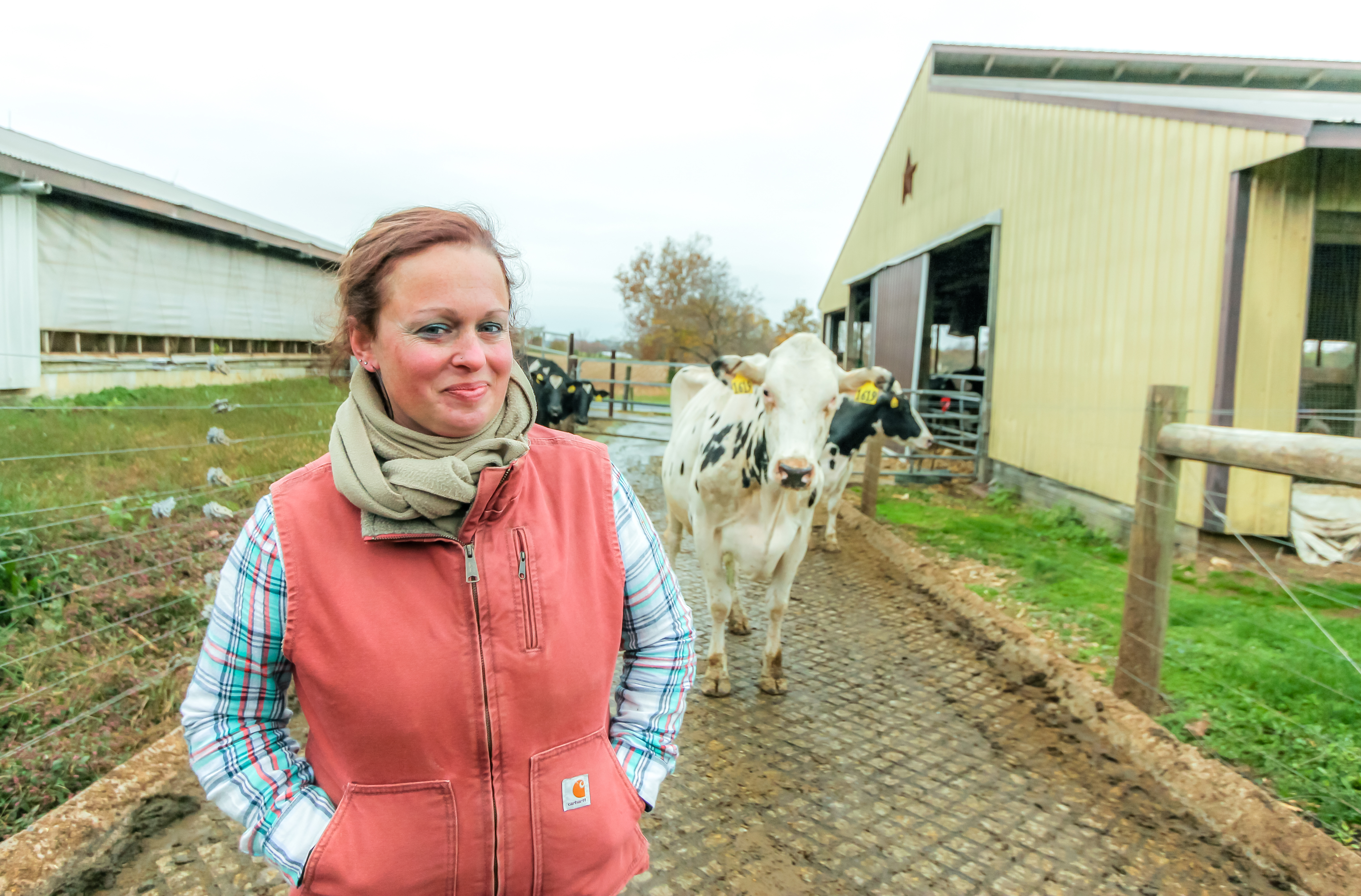
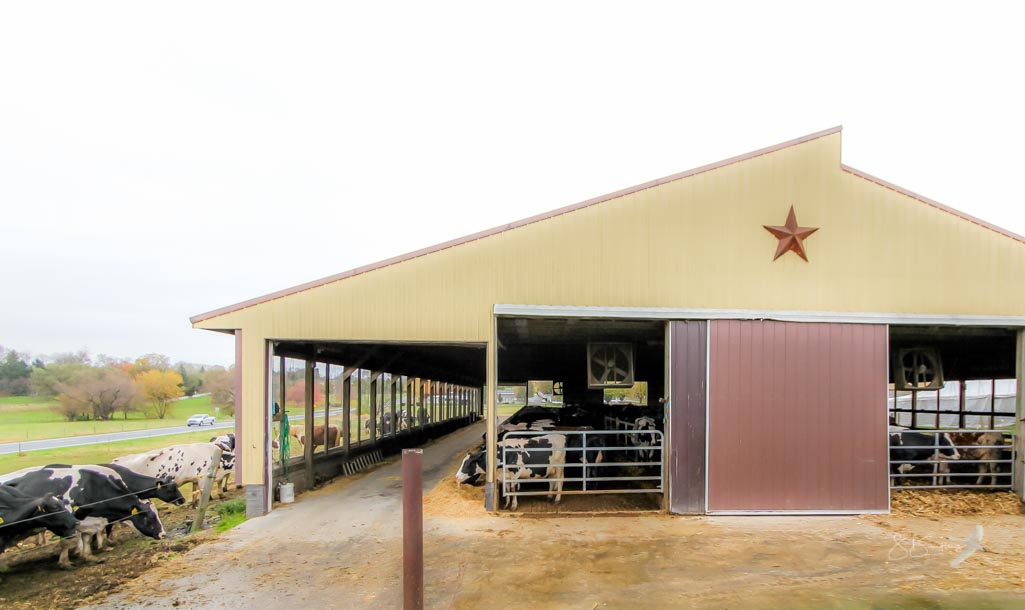
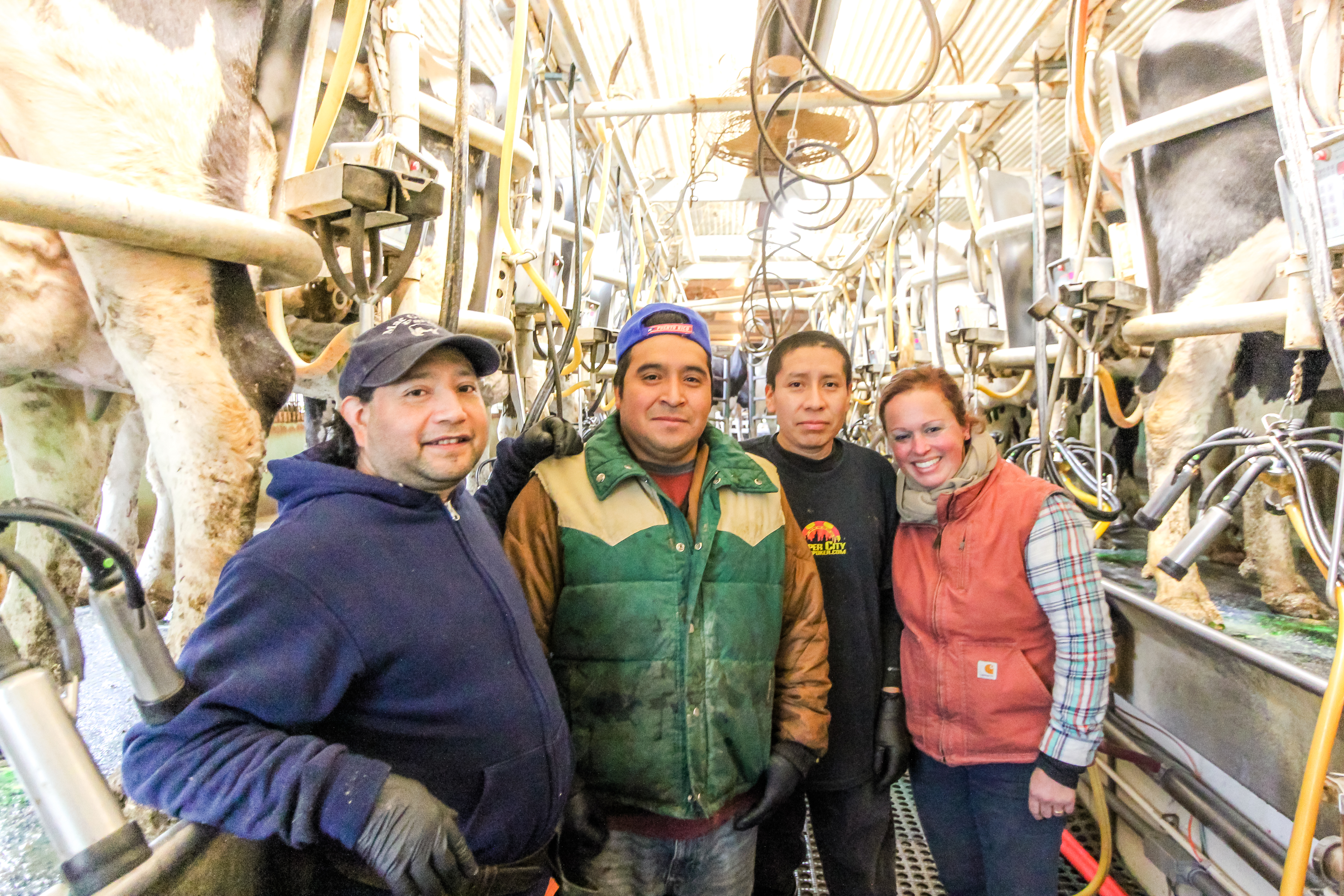
Financial and accounting consultants advised holding off the sale for the bit of recovery that was expected by now. But it never materialized, and in fact, prices went backward.

“The question for us became ‘how much longer do we keep losing money hoping that things will get better?” Audrey suggests. “We had to start figuring our timeline.”

She has been the full-time herd manager here for 15 years since graduating from Delaware Valley University with a dairy science degree. Husband Matt has been the full-time feed and equipment maintenance manager.

Nissley2062

Cows have been part of Audrey Breneman’s life as long as she can remember. “They are part of who I am,” she says. Graduating from Del Val with a dairy science degree in 2003 and working full-time for 15 years as herdswoman at then 400-cow dairy farm started from scratch by her parents Mike and Nancy Nissley, have given her options as she moves forward after the sale of the family’s dairy herd.

She loved the cows. Their care was her passion, and the herd record and condition reflected this. But even the strongest dairy passion has limits when tested in a four-to-five-year-fire of downcycled prices.

“It’s too much work to be doing this for nothing,” she says.

With two young children of her own, Audrey could not envision doing the physical work, the long hours, with no sign of a future return that would allow her and her husband to invest in facilities, equipment and labor. How many years into the future could they keep up this pace, continually improving the herd and their milk quality, but feeling as though they are backpeddling financially?

These are the tough questions that the next generation is asking even as their parents wonder how to retain something for retirement, especially for those like Mike and Nancy who are still a way off from that.

We hear the experts say that the dairy exits are those who are older and deemed this to be “time,” or that the farms selling cows are doing so because their facilities have not been updated, or because they don’t have a next generation interested.

These oversimplified answers seek to appease. The truth is that in many cases — like this one — there is a next generation with a passion and skills for dairy farming.

The problem is the math. It doesn’t add up.

How are next generation dairy skills and passions to take hold when the market has become a flat-line non-volatile price? There are no peaks to go with the valleys because the valley has now become the price that corresponds directly with the lowest cost of production touted by industry sources and policymakers when talking about the nation’s largest consolidation herds in the west — and how they are dropping the bar on breakevens.

How are the next generation’s dairy passions to take hold when mailbox milk checks fall short of even Class III levels in much of the Northeast where farms sit within an afternoon’s drive of the major population centers

In Audrey’s 15 years as herd manager, there have been other downcycles, but they were cycles that included an upside to replenish bank accounts and hope. The prolonged length of the current downcycle brings serious doubt in the minds of young dairy producers about a sustainable future, but are the industry’s influencers, power centers and policymakers paying attention?

wNissley-Edits-39

Cows congregate in the two freestall barns and in the meadow by the road as a holding area during the Nissley family’s sale of the dairy herd Friday while the milking team milks for the last time in the nearby parlor.

Like many of her peers transitioning into family dairy businesses, the past four years have been draining. Much depends upon how far into a transition a next generation is, what resources they have through other diversified income streams in order to have the capital to invest in modernizing dairy facilities and equipment.

Without those capital investments, these challenging dairy markets combine with frustrating daily tasks when there is insufficient return to reinvest and finding and securing sufficient good labor also becomes an issue.

Nissley-Edits-28.jpg

As difficult as it is for the Nissley family, they are also concerned for their family of employees. The herd’s production and excellent milk quality are very much a team effort, they say, and the team of milkers pictured with Audrey (l-r) Manuel, Willie and Anselmo were busy Friday with the last milking at Riverview as cows came through the parlor all day ahead of their sale and transport.

The Nissleys are quick to point out that as hard as this has been for their family, it is also hard on their family of employees. They, too, are hurting.

“This is what I wanted to do all my life. It was our dream when we were married. I had a love for it and Nancy had a love for it,” says Mike, whose dairy dream was ignited by visits to his grandfather’s farm. Nancy grew up on a farm too, but the cows were sold in the 1970s.

The couple worked on dairy farms in the early years and saved their money. In 1994 they started dairying on their own farm with 60 cows. In September 2007, they moved to the Mount Joy location and began renovating the facilities for their growing herd.

Cows have been part of Audrey’s life as long as she can remember. “They are part of who I am,” she says, adding that she is glad to have her dairy science degree, along with the dairy work ethic and experience. “Here we are selling the cows, and I have opportunities to consider that I may not otherwise have. That degree is a piece of paper no one can take away from me.”

As the Nissleys closed this chapter Friday, they turn to what’s next. Nancy says she looks forward to being able to do things together they couldn’t do before while being tied to the dairy farm. As to what they will do on the farm, she says “God has not steered us wrong yet. Yes, it’s scary, but we also have faith that He is in this.”

Nissley2016

Mike and Nancy Nissley aren’t sure what the future looks like, but they say they are feeling the prayers, calls, texts and support of friends, family and community. That’s what is getting them through these days.

Mike has also gained new perspective. He observes that for any dairy family that has a future generation with a long-term goal, it makes sense to stay in and try to ride this out. “But if you have any question about that long-term goal, have the tough conversations about your options.

“It’s easy to lose perspective. For the last two years, I lost my perspective because I was so focused on survival. That’s what I take away from this, the importance of getting perspective. We are first generation farmers. We started with no cows 25 years ago and have 850 animals today. It’s hard to see it all dismantled and be worth nothing. But we’re not second-guessing our decision.”

Talking and praying with friends and acquaintances, Mike believes that, “We go through things, and we can’t let it drag us down but use it for God’s glory.”

Under the milky white November sky spilling rain like tears, he says that while the sale “feels like the death of a dream, I know I’ve been blessed to have shared this dream with my wife and to work alongside our daughter and to see the great things she was able to do with this herd, for as long as we could. I’m thankful for that.”

The sale started at 10 a.m. Over 400 cattle were loaded in the deepening rain at dusk as the dairy chapter closed at Riverview Farm, Mount Joy, Pennsylvania, and two generations of the Nissley family said there’s no looking back, only forward to where God leads them next.


Being real: Dairywomen share insights, Part One

AUTHOR’S NOTE: It’s Women in Dairy month and the season of harvest and Thanksgiving, so I reached out to more than a dozen women across two generations and several states for their insights and wisdom. Each woman received the same five questions, and the feedback was both informative and inspirational. Here is part one.

By Sherry Bunting, Farmshine, November 16, 2018

BROWNSTOWN, Pa. — When asked what challenges and opportunities women see in dairying today, many of those interviewed pointed out the low milk prices and the difficulty in managing costs and juggling payments through the months when milk prices don’t stretch. But even more so, they identified consumer communication as a primary challenge.

“Conveying milk and dairy products as superior (because dairy is), conveying the economic struggle… and meeting consumer demand and desires with economic realities,” writes Katie Sattazahn of Womelsdorf, Pennsylvania describing the main challenges she sees for dairy.

Katie is part of Zahncroft Farms LLC with 250 Holstein and Brown Swiss cows in a conventional freestall and parlor facility. She manages the calves and does the farm financials and is part of the third generation of the farm owned and operated in partnership with her husband and brother-in-law.

She also shares snippets of life on the dairy — the basics with the hows and the whys — with her friends on her personal facebook page.

Other women, too, expressed their desire to have the general public understand more fully what dairy producers face and to know the clear nutritional benefits of dairy over other choices in the food and beverage marketplace.

An interesting observation by many dairywomen is that there seems to be a large gap of understanding between farmers who are struggling and the industry representatives who receive a paycheck, regardless.

This was touched upon by Jessica Peters of Meadville, Pennsylvania also. She farms in partnership with her brother and father as the fifth generation, milking 275 Jerseys through the parlor at Spruce Row Farm.

She does a column in Hoards, in which she touched on this topic.

Jessica also does the farm’s facebook page with over 5800 followers, and her “See Jess Farm” style has drawn consumers and other farmers into the discussions of all things dairy, including a lot of myth-busting. She has become known for her social media expressions, including videos where she is clear to be herself and to be real and to be entertaining.

Recently, she spoke to a group of industry representatives and warned them that her presentation would be unlike anything they’d ever seen.

“I talked about what I do online and why I do it,” says Jessica. “I touched on what they can do for us. I told them to understand life sucks for us right now, that it is difficult for us to answer the phone because you want money, and we don’t have any, and you are our friends, and it is awkward,” she explains in her very honest and direct manner.

She also produced a little video “Dear struggling farmer,” several months ago that has continued to fill her phone and inbox with others reaching out to talk or to thank her for putting into words what they are feeling and could not express.

After speaking to bankers and industry reps, Jessica says she couldn’t believe how many came up to her and said they did not realize how hard it is right now. The difficulties go beyond dollars and sense and what Peters describes is the reality of what people feel and how it affects relationships and every part of their lives and businesses.

“My dad always says we don’t want to be complainers, and I am not a Debbie-downer, but not speaking about what we feel is part of what got us here,” she says.

For Katie, the challenge of meeting consumer desires for small to mid-sized family-run farms in an environment where processors and agribusinesses are leaning toward wanting larger farms, is an example of the challenging gap in understanding.

“How do we give consumers what they want — quickly — so they don’t find another product to consume?” Katie asks. “We have a superior product that we don’t need to alter… We just need to educate consumers to understand that dairy packs a huge nutritional package per dollar of cost. As a younger farmer, I recognize everyone needs to eat … so the opportunity in 20-plus years is definitely there for our generation.”

Renee Troutman farms with her husband, milking 100 Holsteins in Berks County, Pennsylvania. She milks, raises calves, does the heat detection and bookkeeping.
Seeing the challenge of rapid consolidation of the dairy industry, Renee points out the impact of diminished market options, which was not the case when they started farming.

“The dairy gave us a great quality of life for our first decade in, and it was our plan and desire to continue that way. But things are changing in the industry and the feeling of becoming obsolete because of our size and structure is tangible. The last several years of low milk prices has all but eroded that first decade of progress,” says Renee.

She and others talk about looking ahead at ways to diversify and ways to get closer to consumers who seem to want that relationship with food producers.

In a broader way of relating to others, Jessica put some of the farming realities in the form of submitted photos into a recent “This is Farming” video for National Farmer’s Day in October, organized to an uplifting and inspiring song.

“I am very millennial. It has to be fun or emotional to catch my attention, and that’s what I try to do with my videos, catch their attention and just be myself,” she says.

The “This is Farming” video is something she had in her head for awhile after watching The Greatest Showman. She loves music and theater. It was Jessica Peters — along with Katie Dotterer-Pyle of Cow Comfort Inn Dairy, Maryland — who started the “dairy dance off” earlier this year where farmers, farm women, farm kids across the country caught on with little stress-relieving videos of themselves or others on the farm dancing karioke-style while doing chores.

For “This is Farming,” Jessica had the vague idea in her mind, but then decided to post a request for photos at the Dairy Girl Network facebook group. On-farm photos started pouring in from across the country. Within a half hour, she had 300 photos. It took 6 hours to edit the video together, and she posted it later that day on Facebook and YouTube. (Here’s a link to it again: This is Farming)

“I never expected such a good response,” Jessica says. “It is one of those videos that speaks to the heart for those in and out of the industry.”

She notes further that “everyone is feeling this concern right now.”

Jessica and others say they see the emotion in conversations and posts in networking groups and in the unspoken word.

“People need a place to go to connect,” she says.

“I guess one of the most important things I want people to know is that they are not personally failing,” says Jessica. “It’s almost like agriculture as a whole is falling hard right now, and that we need to talk to each other and realize that even though it feels personal, it’s not.”

She too is concerned about the public perception of agriculture, but takes it a step farther. She wants it to be real.

“People don’t seem to consider farmers as people. I just don’t think they realize we are people, the same as everyone else. We have done that by setting ourselves apart from the average consumer,” Jessica observes.

That’s changing through social media and dairywomen who give glimpses of life on the farm within the context of every day life their non-farm peers can relate to.

“Building relationships is important as a first step with the goal of getting others to trust you enough to come to you when they have that question,” says Jessica.

Look for more dairywomen wisdom as this series continues with Part 2 in the Nov. 23, 2018 edition of Farmshine and posted here online at Agmoos.

Summer memories and milk margins

GL 4736.jpgAuthor’s Note: Amazing how even more true this piece from 2016 rings today in 2018. This “Growing the Land” column was originally published two years ago in the July 20, 2016 edition of the Register-Star in New York’s Hudson Valley. Indeed, it is still timely today, two years later, as summer memories are still grand and dairy farm milk price margins are still poor — and as a society we continue to incrementally lose the soul of our food, which we may not even fully appreciate or realize is happening.

By Sherry Bunting, originally published July 20, 2016 Register-Star

The fresh flavors of summer are in — sweet corn, tomatoes and, of course, ice cream. In fact, July is National Ice Cream Month, and it is certainly hot enough for some extra frozen goodness.

Summer foods bring back summer childhood memories: Celebrating first pickings with a dinner of simply sweet corn and sliced tomatoes. Or an ear of sweet corn for breakfast — no sugar required.

And then there were those summer evenings when Dad would get in just before dark, singing: “I scream, you scream, we all scream for ice cream!” Off we’d go to the nearby ice cream shop where the number of flavors made our heads spin and the homemade goodness left us smiling.

So much goes into producing these simple pleasures we may take for granted. I recently ran into a cousin of mine attending an event I was covering for the ag papers at a dairy farm in southern York County, Pa., that had been in two branches of our family four generations earlier. He had grown up in Baltimore and now lives on a nearby small farmette that had stayed in our great uncle’s family, renting a little crop ground to a neighbor.

I had brought my then 94-year-old grandmother to the farmer-meeting. My cousin Tom decided to come over also — curious to see the place as a modern dairy farm that had some historic significance to our family.

I was there just doing my job.

Before the farm tour, the event gave farmer-attendees a run-down of the latest business improvement resources for managing below-cost milk prices and updates on various regulations.

Unlike my cousin, I had spent my high school and college years working for nearby dairy farms — milking cows, feeding and caring for livestock, running equipment; beginning later a career as an ag and markets reporter. I was accustomed to the farm life my cousin had not experienced.

Having a deep appreciation for local farmland around his current home, he attended this first-ever farmer meeting and found it to be an eye-opener.

“How do they keep doing it?” he asked. “It sounds like they have to interact with a lot of regulations and governmental departments to get it all done.”

He was also surprised by the number of young people at the meeting, whereas I had many times witnessed the passion of next generation farmers — their love for bringing new life into the world and their dedication to nurturing life, which in turn produces for the rest of us a bountiful harvest.

He just shook his head in wonder. Why do they do it? Why do they carry-on this time-honored tradition of feeding the world? Why do they do the hard work for an often thankless society? And how do they keep pushing forward through daily chores and challenges when the prices they receive for their products are often below what it costs them to produce it?

This is certainly the case for dairy farmers over the past 12 to 18 months. (2018 update: that situation is going on 4 years now). Their farm-gate milk price has dropped 40 percent below 2014 levels and is roughly where it was 40 year years ago, while the input costs continually increase.

There are roughly 2 million farms of all kinds and sizes in the U.S., but less than 40,000 of these farms are dairy farms. The dairy farm sector may be small in number, but they represent the largest economic driver in dairy states like Pennsylvania and New York, where they account for half the cash farm receipts in the state, and one job is created in the greater community for every 9 dairy cows on nearby farms. Nearly half of those jobs are related to dairy farming and the service and supply sector, and the other half related to dairy processing and other downstream aspects of the dairy economy.

Dairy farms are often a linchpin for the infrastructure relied upon by all farms in a region.

In these tough economic times, dairy farmers are exhausting credit lines, spending their savings, borrowing on the equity of their land and looking for other work to add to their already busy days — just to pay the bills for the goods and services that are associated with feeding and caring for the cows, servicing and keeping up the equipment, and other aspects of economic revenue generated throughout the community by the production of milk.

If milk prices don’t turn around soon, more dairy farms will be lost. (That was in 2016… Fast forward to 2018, the rate of dairy farm loss has accelerated even more, in some areas these sell-offs are up 30% this year)

Families who have expanded their dairy operations in the past five to seven years — when industry and government asked them to produce MORE milk to fuel what was a rapidly growing yogurt industry in the Northeast at that time — now find their investments at risk because of the low prices paid for their milk today.

A reported oversupply of milk, globally, has depressed the commodity markets on which the federally-regulated milk prices are based in a globalizing industry. Regionally, dairies are also losing access to markets for their milk in the Northeast U.S. as consolidation at the dairy retail, processing and marketing levels continues at a rapid pace. (This hit an unprecedented level in 2018, though this was written in 2016).

What can consumers do to support the agriculture and dairy farms that support their communities?

1) Thank a farmer, when you have the opportunity, and if you have questions about food and farming, don’t rely on ‘Google.’ Go to the source: Ask a farmer, visit a farm.

2) Buy local, whenever possible. Read labels, look at plant codes (check them out on whereismymilkfrom.com and @findmymilk on social media). Supporting local dairies is a sustainable step every consumer can take. Look for other label clues about milk origin, such as the PA Preferred label in Pennsylvania. To earn that label, the milk is not only bottled at a Pennsylvania plant, it must come from a Pennsylvania farm.

3) Realize that dairy milk is nature’s ultimate protein drink, containing up to eight times more protein per serving compared with plant-based beverages that falsely call themselves ‘milk.’ In addition, the amino acid quality of dairy protein is unsurpassed among the fraudulent beverages that steal milk’s good name. Dairy milk is also a natural source of calcium and other essential vitamins and minerals with no added sugar, thickeners or other additives found in those plant-based not-milk beverages. And the truth is known, that full-fat dairy is good for us!

4) Realize how the local economy depends on local dairy farms and how 97 percent of U.S. dairy farms, regardless of size, are owned and run by families.

5) Understand that farmers are passionate about the dairy life — caring for the land and animals but they also need to operate the farm as a business. For example, they adopt new technologies, just like other businesses, as they strive to navigate the devastating price cycles. If farms are not profitable, their ability to continue to the next generation — investing into the local economy, jobs, environmental stewardship, open-space beauty, and fresh food security benefits — can not continue here for the rest of us to enjoy.

A former newspaper editor, Sherry Bunting has been writing about dairy, livestock and crop production for over 30 years. Before that, she milked cows. She can be reached at agrite@ptd.net.

CAPTION for photo

July 12 was Cow Appreciation Day, and while we may think about the cows when we have delicious, nutritious dairy foods, we may not have a full appreciation for the farmers who are truly appreciating their cows — caring for them through all types of weather and markets. No matter the size or management style of farms today, 97 percent are family-owned and operated. New generations of young farmers, like Justin Pavlot of New York, are passionate about what they do, and dedicate themselves to this work, even as they navigate an uncertain economic future with today’s depressed milk prices. Sherry Bunting photo