
 Harrisburg Dairies, Schneider’s Dairy step up for milk from at least 9 of 42 dropped Pa. farms
(Author’s note: Farmers whose milk has been displaced in 8 states are in various stages of determining their futures. Some are exiting the dairy business, a few have been picked up by cooperatives, or as in the case of this story, by processors. Some are resorting to marketing milk with brokers at much lower prices. In addition to PA Preferred, Tennessee’s legislature is working on a state label for milk.)
By Sherry Bunting, Farmshine, March 30, 2018
BROWNSTOWN, Pa. — In the days following the “Save Pennsylvania Dairy Farms” town hall meeting in Lebanon March 19, some breakthroughs came for 9 of the 42 Pennsylvania farms notified by Dean Foods that their contracts will end May 31.
Harrisburg Dairies, based in Harrisburg, picked up 5 (possibly 9) of the 26 farms let go by Dean’s Swiss Premium plant in Lebanon.
Schneider’s Dairy, based in Pittsburgh, picked up 4 of the 16 farms let go by the Dean plant in Sharpsville.
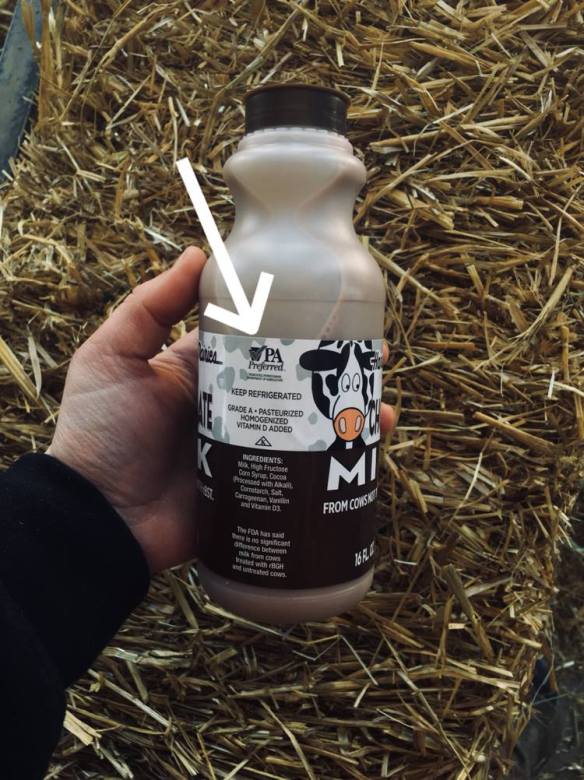
Both Harrisburg Dairies and Schneider’s Dairy source their milk through direct relationships with local family farms, and they use the PA Preferred logo on their milk labels, signifying it was produced and processed in Pennsylvania, which also means the state-mandated over-order premium paid by consumers is passed back through the supply chain.
“It really made the decision for us, when it came to needing our milk supply to be independent producers that we can have a direct relationship, monitor and inspect ourselves,” Alex Dewey told abc27 News, Harrisburg about the PA Preferred label and their decision to add five of the displaced farms to their Pennsylvania-sourced milk. Dewey is the assistant general manager of Harrisburg Dairies.
Likewise, Schneider Dairy president William Schneider told Clarion news that, “We really didn’t need the milk, but… these people were going to lose their livelihood. I didn’t want people to be out on the street, so we did what we could.”
Both dairies appear to have chosen their 4 and 5 farms based on hauling routes and proximity to their respective plants.
Meanwhile, the situation is in limbo the remaining 12 farms in western Pennsylvania, along with the handful of Ohio and New York producers, affected by volume adjustments at Sharpsville and New Wilmington as well as 21 in eastern Pennsylvania affected by volume adjustments at Dean’s Swiss plant in Lebanon.
In addition, producers affected by these notices in Indiana, Kentucky, Tennessee and the Carolinas are also currently still seeking markets. A few in the Southeast have made plans to sell, but overall, there are still about 100 dairy farms displaced by Dean’s system-wide consolidation and Walmart’s new plant coming on line in May in Fort Wayne Indiana.
Some other marketing factors are emerging.
For example, the Dean Sharpsville plant continues to notoriously bring in loads of milk from Michigan. The company confirms that the 90-day notices sent Feb. 26 to over 100 dairy farms in 8 states, did not include Michigan.
The Sharpsville plant was referenced specifically in the December Pennsylvania Milk Marketing Board (PMMB) hearing where the Pennsylvania Association of Milk Dealers and Dean Foods requested a significant reduction in the producer over-order premium to its lowest level in 17 years. This change to a 75-cent mandated premium went into effect for wholesale and retail milk price minimums January 1.
At the time of the hearing, both John Pierce and Evan Kinser of Dean Foods testified that retailers are getting accustomed to bargain-priced milk elsewhere with documented retail milk prices offered to consumers in other states as low as 87 cents per gallon. Kinser testified that this new reality made Pennsylvania’s high state-minimum retail milk price an increasingly attractive destination for milk bottled elsewhere.
Kinser had further testified that the pressure from the increasing influx of out-of-state milk was making it difficult for milk produced in Pennsylvania to compete for retail (and apparently farm level) contracts.
Kinser also indicated that the mix of milk sourcing at the Sharpsville plant, in December, was already much different than the mix at the Swiss Premium plant in Lebanon. With Sharpsville close to the Ohio and New York borders, the plant has been sourcing milk from Ohio and New York for some time, but also increasingly from Michigan and Indiana.
In fact, at the December PMMB hearing, Kinser’s much-redacted testimony warned of Pennsylvania milk becoming displaced and that the new and lower 75-cent over-order premium level is “already a compromise that represented the highest level the current economic conditions can sustain.”
Kinser warned that if the premium were any higher than 75 cents, Dean Foods would be forced to renegotiate its contracts with suppliers to change the mix of milk used at ALL of its plants within the state in order to compete for contracts with packaged milk coming into the state from plants beyond Pennsylvania’s borders.
Even though the PMMB granted Dean’s request to lower the mandated premium to 75 cents, it appears the mix of milk is being renegotiated anyway as part of the company’s milk supply chain consolidation process as the volume adjustments at Pennsylvania plants have fallen primarily onto Pennsylvania farms.
Also emerging in the marketplace is the increased occurrence of brokered milk. This trend began in 2013 as producers across the Northeast and Mideast have dealt with contract losses in the fluid market at smaller levels than seen today.
Great Lakes Milk Producers is an example of a recently organized group of producers from Ohio, Michigan and Indiana, which is organized “like” a cooperative but markets milk as single-source loads through a broker.
Part of the drill is getting the milk qualified with farm audits and certifications as single-source loads that can be matched up to spot needs from cheese and yogurt plants to even, at times, the Dean plant in Sharpsville, Pennsylvania, the Southeast in the summer, and potentially even the new Class I Walmart plant in Fort Wayne.
Marketing through a broker can mean a long haul in a long market with changing conditions. This option makes milk quality a mandate without a premium.
As 27 farms in Indiana continue to seek a market, it is unclear whether brokering with Great Lakes Milk will become an option. The size of the displaced Indiana family dairy farms fits the single-source criteria, ranging 300 to 1500 cows and collectively represent an estimated 20 million pounds per month of displaced milk volume let go by a Dean plant in Indiana as well as Louisville, Kentucky.
“This is a huge issue for our state right now with an overwhelming impact,” said Indiana Dairy Producers executive director Doug Leman at a recent annual meeting in Indianapolis about the 27 farms with displaced milk scattered around the state. “Conversations are starting to happen, and we are planning a meeting for these farms. But just because Dean is not buying this milk, does not mean that the consumer demand has gone away. We have to let the dust settle and go through the milk shuffle.”
Among the recently affected Indiana farms is the sixth generation Kelsay Dairy Farm, operated by brothers Joe and Russ Kelsay and milking nearly 400 cows near Whiteland. Joe Kelsay was the milkman for last year’s Indy500.
“We are exhausting all contacts and connections with cooperatives and plants,” said Kelsay in a phone interview. “Several told us they are not in a position to take any additional milk, some are doing some checking, and we do have a couple meetings scheduled. We are cautiously optimistic.”
When asked if the new Walmart plant will pick up any of the Dean dropped farms, Leman said the plant’s supply has been locked up with a percentage coming from undisclosed dairies doing contracts directly with Walmart and the balance being single-source loads via third parties.
“We can’t tell Walmart where to get the milk, but we are letting them know to check with these farms,” said Leman. “Some are within 50 miles of the plant.”
Kelsay doesn’t blame either Dean or Walmart for the market loss his family and others are experiencing. “This is a difficult time, but we can’t fault one company or another for doing their best to run their businesses,” he said.
Meanwhile, in Pennsylvania, town hall meetings were held (and reported in last week’s Farmshine) to raise public awareness. Ag Secretary Russ Redding wrote to Dean Foods asking for contract extensions.
But Dean has indicated its problem with excess volume will begin before these contracts end.
“We explored all our options before we made this decision,” noted Reace Smith, Dean Foods director of corporate communications. “At this time, we can’t extend the contracts further. As a fluid milk processing company, we are unable to store milk long-term.”
The timing is difficult with spring flush and spring decisions around the corner.
“We’re all in limbo right now,” said Agri-King nutritionist Bob Byers in a phone interview. He works with 25 farms, serving in the affected area of western Pennsylvania for 20 years. He notes that affected farm families have only so much time to make decisions like what crops to plant, what fuel and supplies to order. These decisions revolve around whether or not they will be milking cows after May 31.
“There is a timeline involved to unwind a multi-generational dairy farm with inventories of cows and feed and with a team of employees to think about,” says Kelsay. “If there is no one to purchase our milk, how can we continue? What happens here has a significant impact on our team of employees, and their families, as well as our hauler, nutritionist, equipment and feed suppliers – our whole web of contacts. We do a lot of business with a lot of people.”
Byers notes that this is the worst of times in the dairy business that he has seen in his 20 years and that it definitely affects local jobs and businesses.
“Local people want local milk,” he said. “That is the only thing that will help these local farms at this point. Media attention will help get that message in front of consumers, and in front of companies like Walmart.”
CAPTIONS –
PA-preferred
Alisha Risser of Lebanon posted this photo of Harrisburg Dairies’ milk displaying the PA Preferred label signifying the milk was produced on Pennsylvania farms. The Rissers were part of a town hall meeting in Lebanon reported in last week’s Farmshine, and they are one of five farms whose contracts were dropped by the Dean Swiss Premium plant in Lebanon that will be picked up by Harrisburg Dairies.
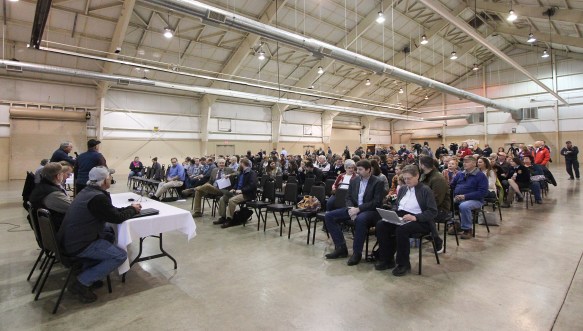 Emotional town hall meeting in Lebanon, Pa. draws over 200 people urging contract extensions for Dean’s dropped dairies
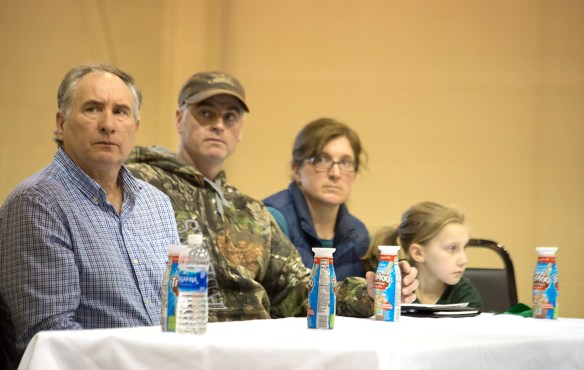 Indeed, a legacy is on the line in Lebanon and Lancaster Counties, as in other communities similarly affected.
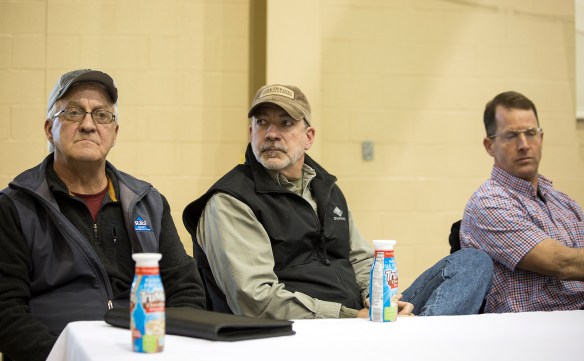 Rick Stehr, a nutritionist and owner of R&J Consulting, directed some of his comments to the significant number of youth in the audience, saying that these farms are where the next generation learns morals, values, work ethic and the joys and failures of life.
 Brent Hostetter, Lebanon County dairy producer: “I am not sure how we are going to handle this going forward. We have put all we have into the farm. Nothing will settle like it should.”
 Alisha Risser, Lebanon County dairy producer: “We are proud of our milk that we produce on our farm, and we are proud of the Swiss Premium milk in our community. We are just asking the community to support us with letters to Dean Foods to provide a contract extension until fall or winter.”
 Kirby Horst, Lebanon County dairy producer: “The thought of looking out at the pastures and not seeing the cows … I don’t know if I can handle that.”
 Dr. Bruce Keck, Annville-Cleona Veterinary Service: “Without a contract extension…This is like asking a loaded tractor trailer to turn as fast as a speeding car. It’s not enough time.”
 Rick Stehr, R&J Consulting: “This is worth fighting for…worth fighting all together for.”
 Rep. Sue Helm: “A group of representatives are writing a letter Dean Foods. We want farmers to stay in contact with us.”
 Rep. Russ Diamond: “We wanted to get Pennsylvania milk into Pennsylvania schools but have been told that with the product stream in Pennsylvania, this is hard to do. This Pa. Milk Marketing Board issue is a hard issue to get to the bottom, and people get very protective of it.”
 Rep. Frank Ryan: “Keep faith first and foremost and your sense of humor and talk with your bankers. This is emotionally draining and people want to run from it. There is a solution and we need to work together to find it.”
 Mike Eby, chairman National Dairy Producers Organization and former Lancaster County dairy farmer: “The media are our friends. We can work with the media to advertise our product in ways the (check off) promotion programs can’t.”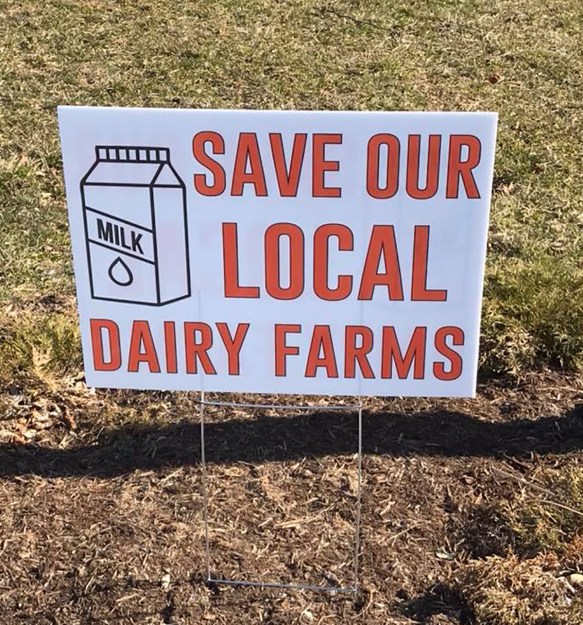
 Learn, then comment! Deadline: March 30!
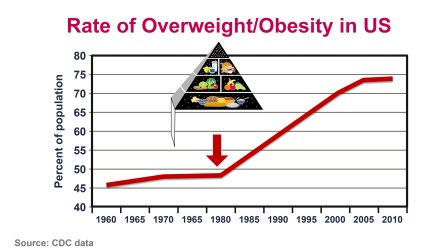 “Not only has this advice been bad for people, it is especially bad for children,” said Teicholz as she told her story of a decade of investigation met by intimidation uncovering stories of a scientist who bullied others who had alternative hypotheses and a powerful nutrition elite still controlling the food supply through their grip on Dietary Guidelines.
 A colleague of Keys had done research with 5000 people around the same time, but it didn’t see the light of day. This Minnesota Coronary Survey found no difference from fat in the diet between treatment and control. It is the biggest and most well controlled study of its time but was not published for 16 years!
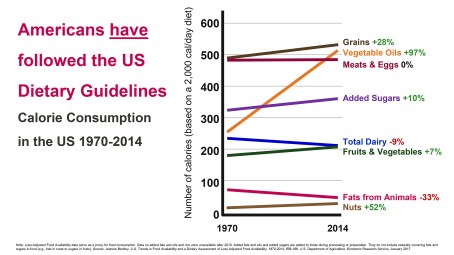 “We follow the guidelines and eat more calories, but all of those extra calories are coming from the increase in carbs,” said Teicholz.
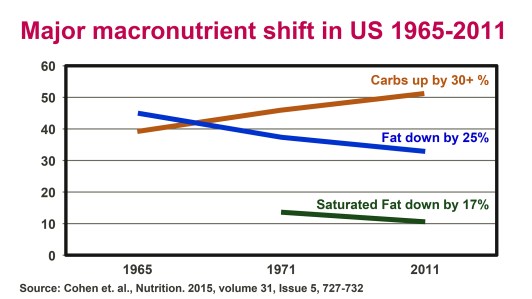 “We cannot exercise ourselves out of a bad diet,” said Teicholz. “Is it our own fault or is it the advice we have been given? I’m here to tell you that saturated fats do not cause cardiovascular death, and Canada is already working to remove the percent of fat requirement from their guidelines.”
 “To be in this for the long haul, we have to look ahead and know what we’re dealing with,” he says, wistfully reflecting upon growing when his father made a good living with 40 registered dairy cows.
 In fact, some farms are opting to sell quite a few heifers. Even though prices are not the best, these sales contribute to cash flow, which is critical. Some farms are breeding to beef breeds and producing a dairy beef cross for the feeder market. Again, not a big price, but the cost of the breeding is less, and the calves generate cash flow as well as cost savings. Such strategies require careful thought so as not to jeopardize the position of the herd for the future.
 While the company will not provide a list of affected plants or a state by state break down in the number of farms or volume of milk affected, they have indicated that the state that may be hardest hit on a volume basis is Indiana.
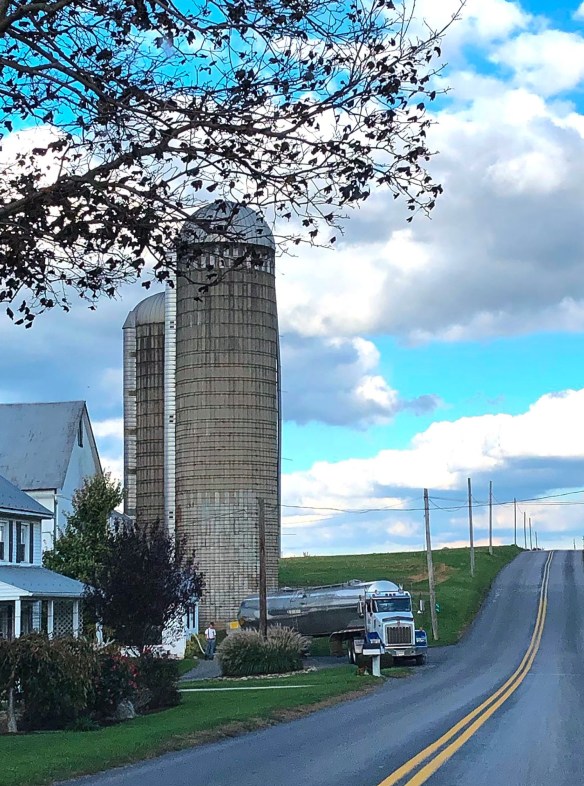
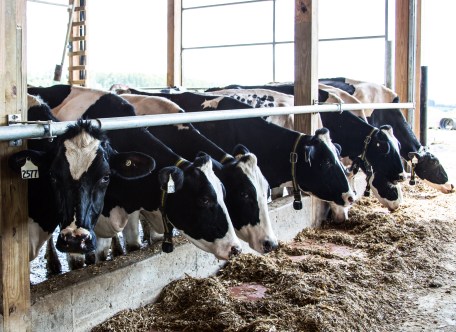 In fact, the farm this reporter visited in Lancaster County Tuesday was already working to call every available market and neighbors who also lost their contracts were looking at everything they could think of. Four or five trucks go through the county picking up milk every day so they wonder if each one can find a market or if they are better off pulling their milk together to find a single-haul market.
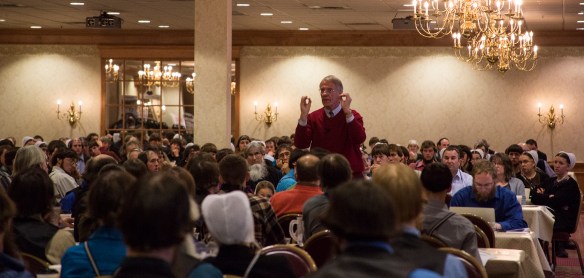
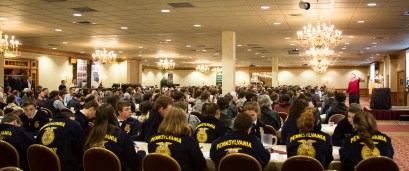 “The leader of China worked on hog farms for two years. He ‘gets’ agriculture,” said Kohl, as he turned to a table populated with blue and gold jackets and said: “The relationships you form today, you will not know their impact down the road.”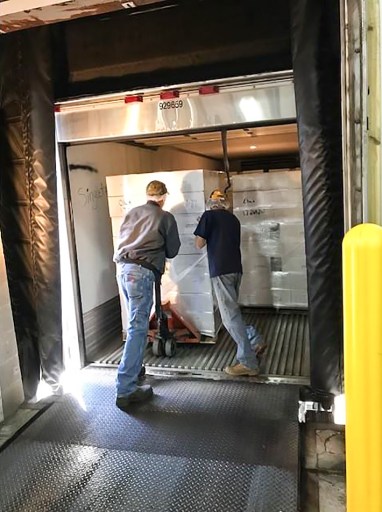
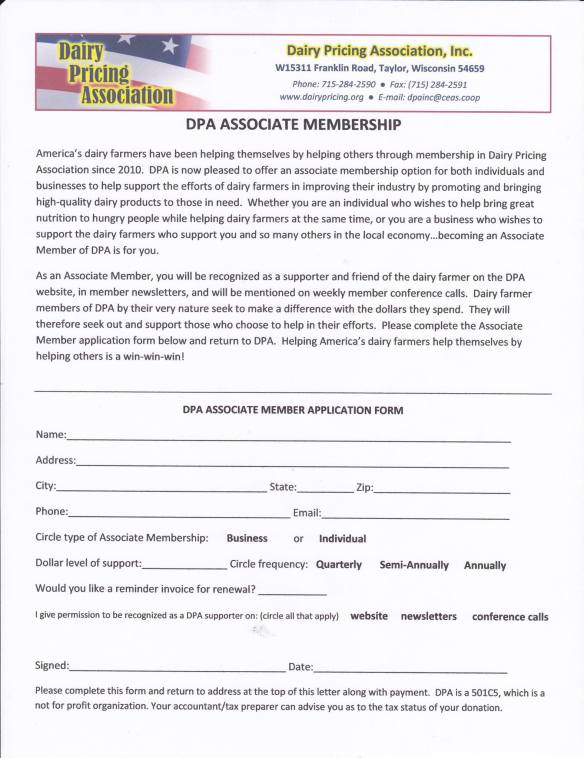
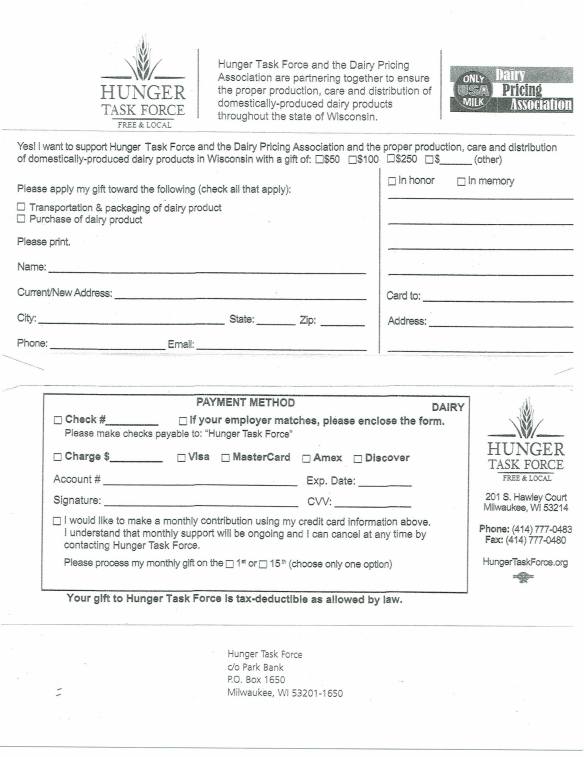
 Recently, Farmshine interviewed O’Brien to better understand from a trader’s perspective how the dairy spot markets function since the transition from live floor trading to electronic trading in the second half of 2017. We also gained insights on some differences between the global and domestic trading platforms.
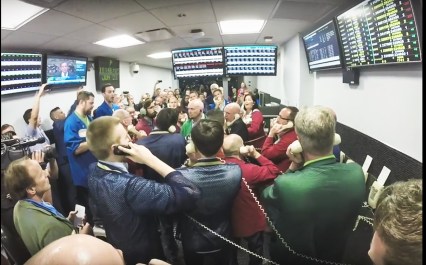 For example, in past years, the largest physical producers and end users in the United States would regularly use the same clearing broker for their spot transactions, resulting in the majority of market participants acting on this inferred knowledge in real time. A single bid or offer from certain brokers would set distinct levels of support and resistance, and this was coveted as the most prolific dairy information of the day.
