Start your engines… the milk’s a’chillin’

By Sherry Bunting, May 25, 2018

kim-minich-684x1024x

Photo credit ADAI

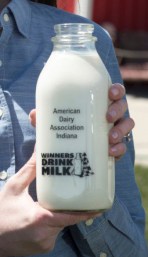
INDIANAPOLIS, Ind. — Just as those Indy Cars are fueled to perfection for 500 miles at blistering speeds of 215 to 225 mph, that famed Bottle of Milk fuels the checkered-flag dreams of winners at the finish line of the Indy 500.

It’s the honor of the Milk People (aka dairy farmers) to get it there.

While I didn’t meet this year’s Indy 500 Milk Woman — I did meet her husband and children during a visit to the farm last March while passing through Northern Indiana.

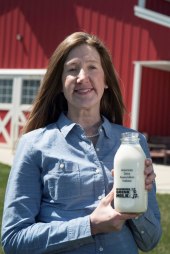
Kim Minich, Triple M Dairy, LaPorte, was the rookie last year when Milk Man Joe Kelsay, Kelsay Farms, Whiteland, had the honor of delivering the “coolest trophy in sports.” This year, Kim is the veteran, and her rookie understudy is Andrew Kuehnert, Fort Wayne. They all hail from six and seven generation Indiana dairy farms.

kim-minich-684x1024.jpg

Photo credit ADAI

Last year, as the ‘rookie,’ Kim learned the ropes for this year’s 102nd big race at the Indianapolis Motor Speedway, where legends are born, speed and tradition rule, and milk always wins!

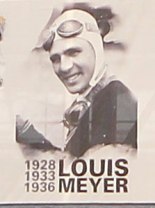
During my brief March visit to Triple M Dairy where Kim and her husband Luke are part of the dairy farm that has been in his family since 1909, their children Anna, Kate, Mary, Will and Calvin were looking forward to May. They talked of how exciting it was to see Mom’s rookie year as Milk Woman in 2017 … How it felt like the dairy farmers were celebrities like the Indy car drivers — two long and storied traditions brought together when three-time Indy 500 winner Louis Meyer requested buttermilk to quench his thirst after his second win in 1933.

Indy500-4137According to American Dairy Association Indiana (ADAI), Meyer was then photographed in Victory Lane drinking milk after his third win in 1936. Milk was presented off and on during the next several years until, in 1956, the Bottle of Milk was made a permanent part of the post-race celebration by Indianapolis Motor Speedway owner Anton “Tony” Hulman.

Today, the milk choices of the drivers are kept cold in a secure “Winners Drink Milk” cooler.

The drivers are polled ahead of time on their milk preferences — whole milk (3.5%), 2%, 1% or fat-free, and the cooler is stocked with these choices, so the ‘milk people’ are ready.

For this year’s race, 17 drivers chose the whole milk option, 10 chose 2%, 4 chose fat-free and 2 said any milk was fine with them!

Hoosier driver Ed Carpenter chose to up the ante with a request for the throw-back choice of Louis Meyers: Buttermilk. That could be a lucky move as he is considered a strong contender going into the race scoring a pole position.

Tomorrow, as always, the milk will be kept under lock and key in a secret location with one of the Milk People keeping a watchful eye at all times. This year, in fact, the Milk People will be the first to enter the Indianapolis Motor Speedway grounds at 5 a.m., Winners Drink Milk cooler in tow.

Minich5414wRecalling her mom’s rookie year in 2017, Anna says “they looked like the secret service in sunglasses guarding the milk cooler!”

In 2016, the 100th running ended with a milk toast by spectators. The children wonder what milk drama will unfold this year.

“The bottle of milk is the star,” says Kim’s husband Luke. “When they start making their way toward the winner’s circle with that cooler, and you hear the crowd chanting ‘It’s the milk,’ as a dairy farmer, that’s pretty cool.”

Each year the ADAI selects a dairy producer to represent Indiana’s 1100 dairy farms as the Milk Man or Milk Woman.

People flocking through the gates want to talk to the Milk People (aka dairy farmers), and for weeks ahead of the big day, they have opportunities to tell the story of milk and dairy farming. They even co-host the Fastest Rookie Luncheon earlier in the week.

Kim married into dairy farming, and in one pre-race-day interview, she explained how she grew up in the Indianapolis suburbs and would watch the Indy time trials with her father.

Minich5418wToday in her career as a nurse-practitioner, Kim says she has a big appreciation for the milk-side of the big race and appreciates the opportunity to tell others about the nutritional goodness of milk and dairy products as well as the life their family lives — like other dairy farm families across the country — caring for the animals and the land.

The children are passionate about the farm too. They have a growing array of 4-H projects that make your head spin: Cattle, chickens, rabbits, goats, horses. In fact, while the dairy farm is home to 1000 mainly Holstein milk cows, Luke and Kim’s older children each have a few of their own breed — Anna with Jerseys, Kate with Brown Swiss, Mary with Shorthorns, and Will with Ayrshires. They love their chores and are happy to show visitors, like me, around.

“This is a great way to raise a family and produce a quality product for other families to enjoy,” says Luke on a brisk March day at the farm.

His wife Kim could not agree more, saying in pre-race interviews that being part of the dairy farm “has been absolutely wonderful, and as a nurse practitioner, I’m able to talk to my patients about the importance of dairy.”

As for her job tomorrow as the provider of the Indy 500 Bottle of Milk, “It’s a great honor to do this,” says Kim. “It’s exciting to meet the drivers and to represent our dairy farmers and what we do.”

web2016WinnersDrinkMilk-46As the sun rises tomorrow, drivers and crews will be getting ready, spectators will be pumped, our nation’s service men and and women will be honored, anthems will be sung and tributes given… and after 500 miles of exhilarating speed, the winner drinks milk!

So chill your milk, and get ready. The thrill of the 102nd Indy 500 is hours away.

Here’s a video teaser from the 100th Indy 500! Wait for it… The powerful and patriotic blend of freedom and speed that ensues after the recognition of our military, the moment of silence for fallen heroes, the singing of America the Beautiful, the National Anthem followed by the Blue Angels flyover, the singing of Back Home in Indiana, the anticipated “Gentlemen Start Your Engines”, the breaking free of the pace cars as the field of Indy cars passes the paddock with Old Glory in tow!


-30-

Global dairy thoughts Part I: Whirlpool of change. Who’s minding the store?

Part One of Six-part “Global Dairy Thoughts” Series in Farmshine

By Sherry Bunting, from Farmshine, April 27, 2018

BROWNSTOWN, Pa. — Even though U.S. per-capita milk consumption is in decline, consumption of other dairy products is strong. As the industry devotes resources to new milk markets abroad and puts the fluid milk market here at home on commodity autopilot: Who’s minding the store?

While it is true that the U.S. dairy market is ‘mature’ — not offering the growth-curve found in emerging export markets — the U.S. consumer market is still considered the largest, most well-established and coveted destination for dairy products and ingredients in the world.

As U.S. milk production continues to increase despite entering a fourth straight year of low prices and market losses, industry leaders look to exports for new demand that can match the trajectory of new milk.

The U.S. has already joined the ranks of major dairy exporting nations, and the U.S. Dairy Export Council (USDEC) has set a goal to increase exports from the current 15% (milk equiv) to 20%. Keep in mind that as our percentage of exports increases while our milk production also increases, the volume of export markets required to meet this goal is compounded.

On one path at this fork in the road is the mature domestic market with its sagging fluid milk sector that is increasingly filled in deficit regions by transportation of milk from rapidly growing surplus regions.

This dilemma of getting milk that is increasingly produced away from consumers packaged and moved toward consumers was cited as a “tricky challenge” by Dr. Mark Stephenson, Director of Dairy Markets and Policy at the University of Wisconsin-Madison, in his presentation on Changing Dairy Landscapes: Regional Perspectives at the Heartland Dairy Expo in Springfield, Missouri earlier this year. In this presentation, Stephenson pegged the Northeast milk deficit at 8 bil lbs and the Southeast deficit at 41 bil lbs. (More on this in a future part of this series).

On the other path at this fork in the road is the industry’s desire to expand exports within a global market that needs a 1.5% year-over-year global production increase. But, as the USDEC reported in its February global dairy outlook, global milk output is growing by twice that rate, mainly from gains in Europe.

Meanwhile, U.S. regulatory pricing structures are based on milk utilization. As the total dairy processing pie grows larger, the neglected fluid milk sector becomes a shrinking piece of the expanding pie, and income is further diminished for dairy farms.

The emerging export markets are rooted in the demographic of rising middle-class populations improving diets with dairy. And yet, just because these new markets offer new growth curves for new milk production, the anchor for this ship is still the U.S. market, still No. 1 as the largest dairy consumer sector globally, and still moving milk via Federal Order pricing that hinges on that shrinking piece of the expanding pie: Class I.

What are the obstacles to improving this sagging fluid milk sector? How are regulated promotion and pricing constraining restoration of declining fluid milk sales?

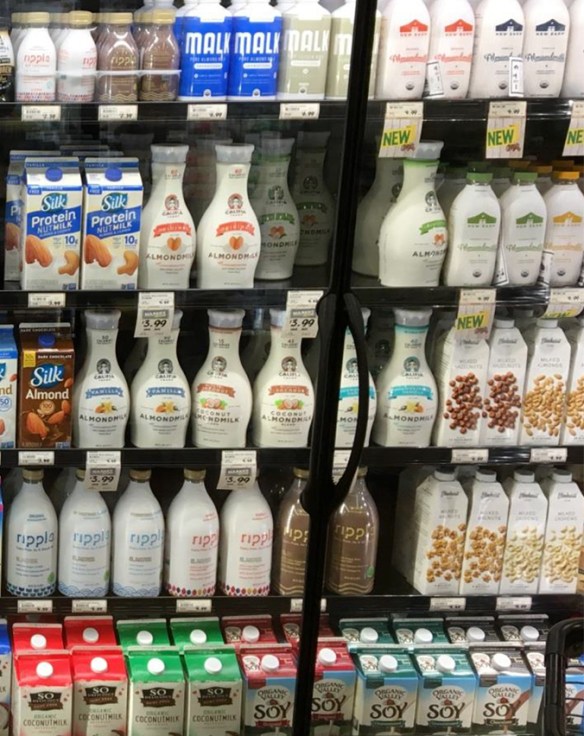
Over the past three years, two prominent and longstanding milk bottlers in the New York / New Jersey metropolis have either closed their plants (Elmhurst in New York City), or sold their dairy assets (Cumberland Dairy in New Jersey sold to DFA). Amazingly, the former owners of both plants are expanding into the alternative beverage space — adding new plant-based beverages to the proliferation of fraudulent ‘milks’ that already litter the supermarket dairy case.

GlobalThoughts(Chart1).jpg

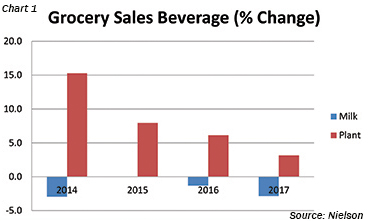
While dairy milk sales decline, plant-based beverages are a growth market, though the pace of growth has slowed.

At the Georgia Dairy Conference in January, Rob Fox, Dairy Sector Manager of Wells Fargo’s Food and Agribusiness Industry Advisors, talked about big picturedairy trends, and he showed graphically the way these alternatives are eating into the U.S. dairy milk market. While dairy milk sales decline, the plant-based beverages are a growth market, though the pace of growth has slowed. (See Chart 1)

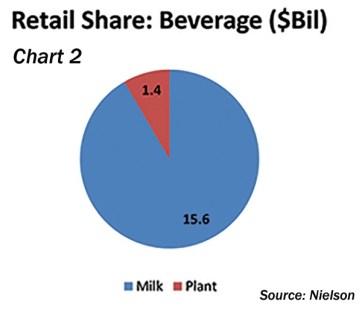
Fox also showed a pie chart of combined supermarket sales of dairy and plant beverages at $17 bil., with dairy accounting for $15.6 bil. and plant-based at $1.4 bil. (Chart 2).

GlobalThoughts(Chart2)

Rob Fox showed a pie chart of combined supermarket sales of dairy and plant beverages at $17 bil with dairy accounting for $15.6 bil. and plant-based at $1.4 bil.

Doing the math, Fox remarked that the plant-based alternatives now represent 8.9% of the combined dairy and plant-based ‘milk’ market. He said that in other countries with mature dairy markets, these alternative beverages tended to level off in growth when reaching 10% of total dairy market share. But at the same time, the combined dairy and plant beverage sector has also declined from 6.4 billion units in 2013 to 6.1 in 2017, according to Fox.

He noted the alternatives are also infiltrating other dairy product categories and that these ‘next generation’ products are offering much better nutrition than earlier versions. “But they will never compete with dairy milk, nutritionally,” Fox said.

What these alternative beverages have going for them, said Fox, is very high margins for processors and investors.

He explained that plant-based dairy products have low ingredient costs, are easier to manufacture, package, market and distribute and are seen as ‘greener’ and animal friendly. They are better positioned for e-commerce and kiosk-type retail outlets and are made by innovative marketing companies and startups with a market and margin profile that attracts investors.

Meanwhile, dairy milk is a highly regulated market with a prevailing commodity mindset worn down even more-so by supermarket price wars at the retail level, making it difficult for the dairy milk sector to adapt to U.S. consumer market trends.

U.S. consumer trends gravitate toward innovation and specialization so everyone can be a ‘snowflake,’” Fox explained, adding that areas of growth for the dairy milk sector will be full-fat in smaller containers, dairy protein in sports nutrition, and non-GMO branding. (No joke: Look for more later on genetically-modified, aka GMO, lab-manufactured products like Perfect Day that are actively defending what they see as their right to use the term ‘animal-free dairy’ because their product is said to be compositionally the same as milk, derived from genetically modified laboratory yeast exuding a white substance they say IS milk.)

That said, where is the true and simply original dairy in its re-branding process? What efforts are being made to compete to reverse this fluid milk market decline? Wouldn’t revitalization of the fluid milk sector also provide a demand pull for U.S. production growth?

Fresh fluid milk is not interchangeable on the global stage as are milk powders, fat powders, protein powders, cheeses, butter and aseptically packaged shelf-stable fluid products.

Meanwhile, the fastest growing surplus regions of the U.S. are busy aligning with retailer/processors and utilizing the Federal Order pricing schemes to pull their production growth into milk-deficit regions, leaving the milk-deficit region’s producers sending their milk to manufacturing homes in other Orders, or even looking for ways to export from eastern ports.

The U.S. has the water, the feed, the space, the transportation, logistics and support infrastructure, as well as a large existing domestic market to anchor the base production level of our nation’s farmers. The U.S. also has a legacy of dairy producers that are respected for their progress, animal care and food safety.

The ingredients for global success are here, but other factors need evaluation because the success is eluding dairy farm families as they face their fourth year of low prices and lost markets forcing increased numbers to exit the business.

In future installments of this multi-part series “Global Thoughts,” we’ll look more closely at the export side of this fork in the road, including the product trends, product and trading platform differences, imports, transportation and logistics, the role of regulatory pricing and cooperative base programs at a time when the dairy landscape is being forever changed.

As this series proceeds, thoughts and questions are welcome: agrite2011@gmail.com


-30-


Flashback: two NY/NJ dairy plant owners shift assets from regulated ‘commodity’ dairy milk to freedom of branded non-dairy ‘milk’

nondairymilk.jpgAuthor’s note: Below are two articles from two interviews August 2016 and November 2017 with two separate owners of two separate plants in the New York / New Jersey metropolis that were closed or sold in the past two years. Today, the Schwartz family (Elmhurst Dairy, Queens, NY) and Catalana family (Cumberland Dairy, Bridgeton, NJ) are involved in developing and launching new non-dairy plant, nut and grain based beverages in the supermarket dairy case. This trend toward making plant-based versions of animal protein products is also becoming a problem for the meat industry.

For dairy milk, the root of the issue is the alliance between USDA and the anti-trust-protected national-footprint milk cooperatives. First, USDA designates dairy milk as a “commodity” with an FDA standard of identity that is only enforced on dairy milk, not on plant-based ‘milks.’ USDA also runs the federal order milk pricing system on fresh fluid milk. USDA also dictates what schoolchildren are permitted to drink, currently allowing only fat free or 1% milk, despite scientific proof to the contrary that whole milk (3.25% fat) is the most healthy value. USDA also dictates what the dairy promotion boards may and may not do to promote fresh fluid milk using money the USDA mandates every farmer must have deducted off their milk checks for said promotion. USDA and the promotion boards push the lowfat agenda despite it being proven to be less healthy than full-fat dairy.

In their separate situations, Henry Schwartz and the Catalana brothers got out of commodity dairy milk and are developing and launching plant-based beverages with free rein in the supermarket “dairy” case.

BELOW ARE THEIR STORIES…

Story #1 – By Sherry Bunting, reprinted from Farmshine August 2016

New York City’s last milk plant, Elmhurst Dairy, closes doors

JAMAICA QUEENS, N.Y. —  He says the commodity milk category is ‘unsustainable’ and that the future lies in new brands.

At 82, Henry Schwartz has witnessed the evolution of dairy. Food and farming look very different today compared to when he was six years old, spending his youth on the family’s former dairy farm and in their milk plant.

His family’s Elmhurst Dairy was the combination of two dairy farms and milk plants in Queens County, New York — one owned by his paternal grandparents, the other by his maternal grandmother.

The farms have been gone since 1948, and in October (2016), the Elmhurst Dairy plant in Jamaica, Queens, New York, will close its doors too.

With this closure of New York City’s last fluid milk plant, a long and storied series of chapters in the milk business will end.

But with every end, comes a beginning, and Henry Schwartz sees light at the end of his tunnel.

“I’m not depressed anymore,” he said in a telephone interview with Farmshine. “We have other businesses that are related to dairy, and they are successful. We will be bringing out new products under the Elmhurst name.”

Henry referenced the family’s Steuben Foods, Inc. plant near Buffalo, N.Y. where 600 people are employed. Its aseptic packaging spawned a new line of beverages in June of 2015, called Elmhurst Naturals — an offshoot of Henry’s son Cyrus’ business Dora’s Naturals. (Examples include Banana Water and Mango Water). Henry also referenced the family’s Mountainside plant near Roxbury, N.Y., where filtered milk with a longer shelf life has been bottled since 2006.

With both plants already expanded into aseptic packaging and Natural market lines, the next sequence, said Henry, will be further expansion at Steuben into grain, nut and seed beverage products already set to generate half a billion in sales.

Henry was quick to give heartfelt thanks “to a great many people who worked so hard for so long to see that we succeeded.”

He also cited the “enormous economic impact” the company has had in the area through the dairy business.

But, he said, in order to continue to have positive economic impact, things had to change. They had to break free of commodity milk.

“The future of the milk business is value-added,” said Henry. “The milk business as I knew it is unsustainable. Nobody talks about the price of milk anymore, they talk about all of these other things. They talk about quality and services. That is the evolution and an indication that we do not have a totally sound business model in (conventional) milk, so we are trying to diversify in the marketplace.”

When asked whether brand marketing within the conventional dairy milk category can help save this seemingly “unsustainable future,” Henry commented that there are “outstanding people in the marketplace coming out with cutting edge new products.”

He mentioned what fairlife has done to bring out what is basically milk and to market it as a brand.

He mentioned what Chobani did to “take limited assets and build a billion dollar company inside of seven years on branding an old-style yogurt right in front of our eyes.”

He talked about how Daisy revived the sour cream category by specializing in it and branding it.

And he mentioned other products, like the genesis of Lactaid milk right out of Atlantic City and later sold to Johnson and Johnson.

He also mentioned Organic milk as a branded category that “started from scratch into a billion-dollar category.”

“We can create with milk and dairy products tremendous success stories and brands if we are willing to work at it,” Henry elaborated. “In many ways, our Steuben Foods — operating as an offshoot of Elmhurst but now much bigger — is doing that.”

Yes, the Schwartz family of businesses, including Dora’s Naturals started from scratch by Cyrus, is transforming itself according to the wishes of the urban New York City consumers.

Henry’s word of wisdom to the dairy farmers who ship milk to the New York City plant that is closing? “Diversify.”

It was obvious after a 45-minute conversation that he has a soft-spot for dairy farming. But his family’s younger generation is following the trends. They value the economic contribution to the community and dairy legacy of the generations before them, but they see even more economic opportunity and job creation in diversifying their efforts into a variety of beverages and breaking free of the commodity-milk market.

Henry could barely bring himself to call them all ‘milk,’ but he had enthusiasm as he talked of the future. He said that “exciting new products” — derived from grains, nuts and seeds — will be the wave of the future as the family diversifies into branded plant-based beverage businesses, which their website refers to as ‘grainmilk’ and ‘nutmilk’.

Already one of the largest Organic dairy milk processors in the nation under contract for Horizon and other brands, the Schwartz family’s Steuben Foods and Roxbury plants will continue in dairy milk, but Steuben will also branch out into the newer non-dairy beverage categories as well.

Henry said the Roxbury plant is expected to expand opportunities in both the dairy and non-dairy fields also. He said the family has many interesting and proprietary product concepts in store.

“We will continue to be a large milk handler,” he said. “We will also be doing a lot in grains and nuts and seeds. Part of our future will be cow’s milk. That will certainly continue. I have had my whole life in it. There is a bright future ahead and the continuation of something our family started over 130 years ago when my great-grandfather opened the first family farm plant in Middle Village in the 1880s. We are pleased to continue in this milk business, but that continuation will look different in the future than it did in the past.”

The Jamaica, Queens property — where the ubiquitous red barn and silo label of Elmhurst Dairy now fades — will become the site of any one of a number of projects Henry said his family is currently working on.

“I spent a good deal of my youth at my grandmother’s farm plant, Juniper Valley Dairy, where she milked 200 cows, bottled the milk and delivered it until 1948. She was the last farm in Queens County,” he said. Meanwhile, his paternal grandfather’s dairy farm spawned the original Elmhurst Dairy plant, which was started by Henry’s father and uncle at their father’s dairy farm in nearby Middle Village.

“They got all of that together here in Jamaica, Queens in 1948, where we are the last milk plant in the area. Now that it is closing, we expect to make use of the land in a way that is more beneficial to ourselves and to the community,” said Henry.

“It is an evolution of what was once dairy farms that became a dairy company and now is going into other fields that will be beneficial,” he added.

“Yes, it is sad. I spent 76 years, my whole life in it. When I saw the end coming, I was initially upset. But now I realize it is for the best. Even though it is a big change, we are going to use the property in a way that will be good for the community, and we will continue in the milk business near Buffalo, New York, through other forms — both cow’s milk and with grains, nuts and seeds,” he said.

Bottom line according to Henry Schwartz: The future is very much agriculture-based but not 100 percent dairy-milk based. That can be said of the future for the Schwartz family in the post-dairy era as it can be said of the urban food and beverage marketplace of New York City for which they are building new brands and expanding in plant-based beverages.

————-

Story #2 – By Sherry Bunting, reprinted from Farmshine, November 2017

DFA buys Cumberland Dairy, New Jersey’s last independent fluid milk processor

BRIDGETON, N.J. — Cumberland Dairy, the last independent fluid milk processor in New Jersey, was acquired by Dairy Farmers of America, Inc.  The plant has been co-op supplied through Land O’Lakes and its predecessors Atlantic and Interstate as well as Maryland-Virginia milk cooperatives, since its founding, according to president Carmine Catalana IV.

In a phone interview with Farmshine Tuesday (Nov. 7), Carmine said they are moving forward with their current milk supply, which includes a few DFA members commingled on local milk routes.

He acknowledged that the Bridgeton, New Jersey company had interest from other buyers, but that a big consideration in accepting DFA’s acquisition offer — at an undisclosed price – was that Carmine and his brothers would continue in the leadership of the company with the backing of the nation’s largest milk cooperative.

Cumberland Dairy, founded in 1933 by Charles Catalana, is run today by third generation brothers Carmine IV, Frank and David.

The business will continue to operate as Cumberland Dairy, and the (180) employees will retain their current positions, according to DFA’s public announcement of the acquisition. The announcement stated further that, “The Catalana family and existing management team will continue to manage all day-to-day operations, including customer relationships, milk procurement and production.”

“We have the opportunity to move the company forward with the blue-chip customers we serve, and other benefits are sure to come with the backing of a national milk cooperative with 13,000 dairy farms behind them,” said Carmine.

In its press release last Thursday (Nov. 2, 2017), DFA described Cumberland Dairy as a company “proudly serving some of the nation’s top quick-service restaurants, convenience and grocery chains, wholesale food distributors, fine-casual restaurants and dessert concepts to a variety of customers,” stating that the acquisition aligns with DFA’s strategy… to expand into extended shelf life processing.

“DFA approached us because we are one of several extended shelf life (ESL) plants, and they were looking to enter this marketplace and acquire our technology and customer base,” Carmine told Farmshine.

Since the mid-1980s, the plant has been doing ultra high heat pasteurization ESL products in ultra clean packaging to deliver shelf life over 75 days for refrigerated liquid dairy products.

Their ESL process is different from the UHT aseptic packaging that DFA currently uses on the West Coast to package California Gold — a primarily 3.5% fat shelf-stable drinking milk with a non-refrigerated shelf life of one year — which is shipped to Walmart and other chains in China. Those fluid milk sales to China have grown every year since 2014.

“We have not taken the big financial and technology step into the aseptic shelf-stable non-refrigerated dairy market,” said Carmine. But, over the last 30-plus years, the Catalanas have been innovators in the ESL space, before the concept of extended shelf life had a name or an acronym.

DFA noted in an email response that upgrades for aseptic shelf-stable technology may be considered for export from this East Coast plant.

Carmine notes that once his family had implemented an ESL process with a flavor close to fresh milk, “we stopped doing the regular pasteurized milk as a relatively small player, and sold our roots off to a customer, and did nothing but ESL,” Carmine said as he explained the company’s evolution of moving away from conventional milk bottling toward producing their own ESL liquid dairy products under the Freshlife brand and especially into co-packing for private labels.

For example, they do milk and dairy products for Rosenberger’s and other dairies, like Rutters, Schneiders, Wawa, Gallikers, Turkey Hill, and Turner Dairies. While they do everything liquid and refrigerated — from skim milk to heavy cream to dessert mixes — the emphasis is on the ESL products like egg nog, half-and-half and other cream products.

Cumberland Dairy also makes McDonald’s milkshake mix, Rita’s frozen custard, Shake Shack sakes and Kohr Bros. frozen custard, to name a few. In fact, the company’s website shows photos marking when the company began making milkshake mix for “that new drive-in restaurant in the area called McDonald’s” in 1971.

“Most of what we produce has someone else’s label on it,” said Carmine. “We do these products for other dairies, these family businesses that we hold dear as our customers.”

He sees a bright future for the products they currently manufacture. “We have had some conversations with DFA about where this portion of the business is going and how it has continued to grow,” Carmine related. “We felt like this was not something we had the ability to do on our own, and that in DFA, with that many dairy farmers behind them, we had the best partner for the future.”

In an official statement, Carmine said that, “A future with DFA means that we can continue to focus on our values as a company while accelerating our opportunities for growth. This is a very exciting time for the entire Cumberland Dairy family, and we look forward to this next chapter with DFA.”

For DFA’s part, the acquisition “represents a commitment by our farmer-owners to expand our investments in processing and to continue to grow the U.S. dairy industry,” said DFA president and CEO Rick Smith in a DFA press release.

“There are not many independents dairy plants left in this business,” Carmine reflects. “We were the last independent fluid milk processor in New Jersey.”

The Catalana family’s sister business — Innovation Foods LLC, founded by the Catalanas in 2008 — is not included in this transaction with DFA. It will remain independent and wholly-owned by the family, according to the announcement.

At the Cumberland Dairy website, the Catalana family’s retained Innovation Foods LLC is described as “producing high-acid beverage products for our partner NextFoods under their GoodBelly brand.” According to their website, NextFoods, Inc. was founded by Steve Demos, the founder and former president of WhiteWave (makers of Silk soymilk, almondmilk, etc) along with Todd Beckman, a former vice president of business operations at WhiteWave. Their website explains that Demos and Beckman built their NextFoods team to include many who worked at WhiteWave where they helped launch Silk Soymilk “into the stratosphere.”

-30-


PMMB responds to Pa. Dept. of Ag with hearings May 2 and 16

Public comment must be pre-submitted by Apr. 30 and May 11 to speak at the hearings on May 2 and 16. Separate from the PMMB hearings, the Pa. Dept. of Ag is seeking public comment to improve the market for dairy in the state and invites the public and industry to provide suggestions or comments online to be considered moving forward.

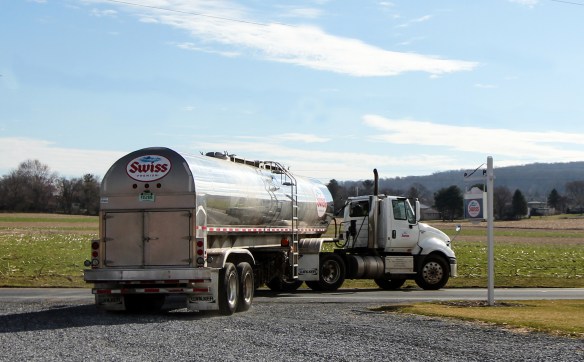
cropped-milktruck1.jpg

By Sherry Bunting, @agmoos

HARRISBURG, Pa. — In responding to Pennsylvania Secretary of Agriculture Russell Redding’s petition for hearings and review, the Pennsylvania Milk Marketing Board (PMMB) announced April 18 that it will conduct the first of two public hearings on May 2 with an expedited process requiring testimony to be provided in advance by noon on April 30.

The first hearing is set for May 2, 2018 at 9:00 a.m. in Room 309 of the Agriculture Building across from the Farm Show Complex on North Cameron Street, Harrisburg.

A second hearing is set for May 16, 2018 at 9:00 a.m. in the Monongahela Room of the Pennsylvania Farm Show Complex. The second hearing was announced this week, and like the first hearing, stipulates pre-registration with copy of comments provided in advance by noon on May 11.

PMMB states that the purpose of the first hearing on May 2 is to receive testimony and comments regarding the specific “Recommendations for Statutory Changes” found in the Ag Department’s April 5 petition.

The hearing will occur before the PMMB Sunshine Meeting already scheduled on that day, which sources indicate will address another portion of the PDA petition — asking PMMB to amend regulatory provisions dealing with termination of dealer-producer contracts. Since this portion of the petition involves a board-level action rather than a statutory change, steps to begin the regulatory review process will begin during the Sunshine Meeting that follows the public hearing on May 2.

(Author’s note: As you read on, please keep in mind that most Pennsylvania dairy farmers I speak with want transparency. They are not seeking a more complex system. They are seeking truth and a level playing field from which to compete. Pennsylvania is unique in having this lawyered-up state-level milk pricing system cohabitating with two Federal Order milk pricing systems. The state system (PMMB) sets a minimum retail milk price and minimum wholesale milk price for 6 regions of Pennsylvania, and the farm premium built into it only passes back to the farm IF the milk is audited to have met three specific criteria: produced, processed and sold in PA. However, the money is collected from all Pennsylvania consumers on ALL milk sold in Pennsylvania no matter where it came from or what pathway of logistics it utilized in getting to a PA store shelf. In turn, the very high per-gallon minimum price creates an uneven playing field for PA-produced milk as the state has become a magnet for increasing numbers of out-of-state dealer licenses as well as out-of-state milk usage, as well as out-of-state distribution warehouses and companies that specialize in logistics while the nation is overcome by supermarket loss-leading and price wars for customer acquisition).

In Wednesday’s hearing (May 2), PMMB will receive testimony on the following statutory items specifically mentioned in the Ag Department’s petition, many of which were suggested by PMMB staff as far back as 2009, but were never moved on, nor implemented!

LICENSING OF RETAILERS

In its petition, the Pa. Dept. of Ag mentions a recommendation by PMMB staff back in 2009 that was never implemented. It would have enabled the Board to require retailer reporting of volumes of fluid milk purchased and volumes sold in Pennsylvania “to track the amount of fluid milk sold at retail, the amount of consumer dollars being generated by the various components that make up the minimum retail price, and to identify the wholesalers and other sources of all fluid milk sold in Pennsylvania.”

The PDA petition notes that this is “a noted absence of data which prevented Drs. Novakovic, Stephenson and Nicholson’s study from being more conclusive on PMMB pricing’s impact on retail prices and Pennsylvania processing volumes. Such data is necessary for the continuation of credible, industry-supported and publicly-supported, PMMB pricing.”

TITLE TO MILK

Regarding Title to Milk, the PDA petition cites another amendment suggested by the PMMB staff in 2009, but never implemented, “to declare by statute, for the purposes of producer pricing only, that title to milk transfers to a milk dealer at the farm pick-up.”

In its petition, PDA notes that, “This (amendment) enables the Board to account for milk transported for out-of-state processing and to track that milk if it comes back in-state via wholesale or, coupled with the above, by a retailer.”

RETURN ABOVE COST OF PRODUCTION

The PDA petition also cites portions of the statute that result in “a return above the cost of production must always be guaranteed in the wholesale and retail price but not in the producer price.”

The petition recognizes that while the producer price under Section 801 must be, according to statute, “cost of production and a reasonable profit to the producer,” there is this exception stating that ‘the market for Pennsylvania-produced milk is threatened,’ which has “so permanently swallowed the rule that increasingly producers question the legitimacy of the entire PMMB pricing system,” PDA states in its petition.

“This is a major problem that must be addressed with transparency and clarity. This petition specifically requests that the PMMB staff be charged with investigating and recommending options to the Board for a statutory revision that has industry acceptance and equitably allocates the impact of market conditions across producers, milk dealers and retailers. If that is not deemed advisable, consideration of a statutory amendment nevertheless remains necessary to replace the existing language,” the petition states.

(Author’s Note: In other words, in times when the minimum price must be lowered to protect the market, the “pain” should be allocated to the other sectors and not taken on solely at the farm level. For example, when supermarkets loss-lead and get into price wars to acquire customers, should they not calculate that cost to their business rather than pass it back through the chain to the farm? It’s the retailer’s decision to use the price on a staple to acquire customers. It’s the processor’s decision to negotiate for large contracts. In the same sense, farmers cooperatives have admitted (in at least one civil proceeding) to doing the same by “sharing” profits gained by collective distribution efficiencies in the form of rebates to processors that are then passed on to retailers. Meanwhile, farmers are told the efficiencies of these collective distribution efforts are meant to reduce the cost of the hauling that is passed on to the farmer and that cost been steadily rising.)

RETURN OF BENEFIT TO PRODUCERS

Finally, the May 2 hearing will receive testimony on the point in paragraph 18 of the Pa. Ag Department’s petition concerning the return to producers of the benefit of minimum wholesale pricing.

The PDA petition explains it this way: “Much has been said over the years about the language of Section 805 of the Milk Marketing Law and whether the price increase built into the minimum wholesale price for payment of the over-order premium is being ‘given to producers’ as required.

“The allowed exception (‘ … necessary in order lawfully to maintain proper milk markets and outlets for producers and consumers’) has, again, permanently swallowed the rule. As with Section 801 producer pricing, consideration should be given to amending Section 805 to clarify the intended result. This is another area where positive perception of PMMB pricing appears to have been eroded by a perceived lack of clarity and transparency, the petition explains.

The PMMB hearing announcement states that intent to present testimony, and a written copy must be provided by noon on April 30, 2018 either electronically at  deberly@pa.gov or by filing at the PMMB office, Rm 110, Agriculture Building, 2301 North Cameron Street, Harrisburg, PA 17110.

For the May 16 hearing, the purpose is to solicit and consider suggestions for statutory changes to the Milk Marketing Law as requested by the PDA in its petition.

Those wanting to give testimony or comments on May 16 must provide notification and a written copy in advance to the PMMB by noon on May 11 either electronically at ra-pmmb@pa.gov or by filing at the PMMB office, Rm 110, Ag Building, 2301 North Cameron St., Harrisburg, PA 17110.

Announcements for the May 2 and May 16 public hearings indicate that both will be listening sessions with no examination or cross examination by interested parties.

A copy of the Pennsylvania Department of Agriculture Petition can be found at the Board’s website and drafts of the proposed amendments may be obtained on the Board’s website at http://www.mmb.pa.gov/Legal/Documents/Petition%20for%20Hearing%20MMB.pdf.

-30-

Will ‘local’ focus stem tide of milk displacement?

PA-preferred (1).jpgHarrisburg Dairies, Schneider’s Dairy step up for milk from at least 9 of 42 dropped Pa. farms
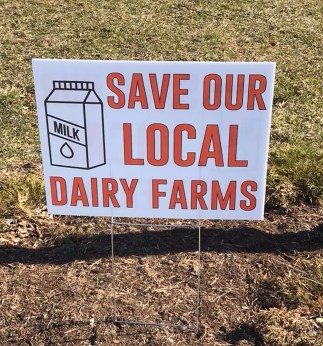
 

(Author’s note: Farmers whose milk has been displaced in 8 states are in various stages of determining their futures. Some are exiting the dairy business, a few have been picked up by cooperatives, or as in the case of this story, by processors. Some are resorting to marketing milk with brokers at much lower prices. In addition to PA Preferred, Tennessee’s legislature is working on a state label for milk.)

By Sherry Bunting, Farmshine, March 30, 2018

BROWNSTOWN, Pa. — In the days following the “Save Pennsylvania Dairy Farms” town hall meeting in Lebanon March 19, some breakthroughs came for 9 of the 42 Pennsylvania farms notified by Dean Foods that their contracts will end May 31.

Harrisburg Dairies, based in Harrisburg, picked up 5 (possibly 9) of the 26 farms let go by Dean’s Swiss Premium plant in Lebanon.

Schneider’s Dairy, based in Pittsburgh, picked up 4 of the 16 farms let go by the Dean plant in Sharpsville.

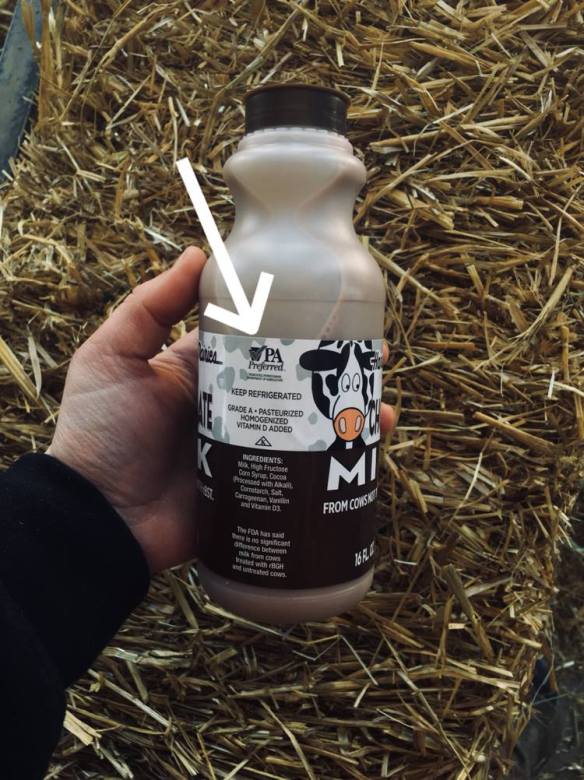
Both Harrisburg Dairies and Schneider’s Dairy source their milk through direct relationships with local family farms, and they use the PA Preferred logo on their milk labels, signifying it was produced and processed in Pennsylvania, which also means the state-mandated over-order premium paid by consumers is passed back through the supply chain.

“It really made the decision for us, when it came to needing our milk supply to be independent producers that we can have a direct relationship, monitor and inspect ourselves,” Alex Dewey told abc27 News, Harrisburg about the PA Preferred label and their decision to add five of the displaced farms to their Pennsylvania-sourced milk. Dewey is the assistant general manager of Harrisburg Dairies.

Likewise, Schneider Dairy president William Schneider told Clarion news that, “We really didn’t need the milk, but… these people were going to lose their livelihood. I didn’t want people to be out on the street, so we did what we could.”

Both dairies appear to have chosen their 4 and 5 farms based on hauling routes and proximity to their respective plants.

Meanwhile, the situation is in limbo the remaining 12 farms in western Pennsylvania, along with the handful of Ohio and New York producers, affected by volume adjustments at Sharpsville and New Wilmington as well as 21 in eastern Pennsylvania affected by volume adjustments at Dean’s Swiss plant in Lebanon.

In addition, producers affected by these notices in Indiana, Kentucky, Tennessee and the Carolinas are also currently still seeking markets. A few in the Southeast have made plans to sell, but overall, there are still about 100 dairy farms displaced by Dean’s system-wide consolidation and Walmart’s new plant coming on line in May in Fort Wayne Indiana.

Some other marketing factors are emerging.

For example, the Dean Sharpsville plant continues to notoriously bring in loads of milk from Michigan. The company confirms that the 90-day notices sent Feb. 26 to over 100 dairy farms in 8 states, did not include Michigan.

The Sharpsville plant was referenced specifically in the December Pennsylvania Milk Marketing Board (PMMB) hearing where the Pennsylvania Association of Milk Dealers and Dean Foods requested a significant reduction in the producer over-order premium to its lowest level in 17 years. This change to a 75-cent mandated premium went into effect for wholesale and retail milk price minimums January 1.

At the time of the hearing, both John Pierce and Evan Kinser of Dean Foods testified that retailers are getting accustomed to bargain-priced milk elsewhere with documented retail milk prices offered to consumers in other states as low as 87 cents per gallon. Kinser testified that this new reality made Pennsylvania’s high state-minimum retail milk price an increasingly attractive destination for milk bottled elsewhere.

Kinser had further testified that the pressure from the increasing influx of out-of-state milk was making it difficult for milk produced in Pennsylvania to compete for retail (and apparently farm level) contracts.

Kinser also indicated that the mix of milk sourcing at the Sharpsville plant, in December, was already much different than the mix at the Swiss Premium plant in Lebanon. With Sharpsville close to the Ohio and New York borders, the plant has been sourcing milk from Ohio and New York for some time, but also increasingly from Michigan and Indiana.

In fact, at the December PMMB hearing, Kinser’s much-redacted testimony warned of Pennsylvania milk becoming displaced and that the new and lower 75-cent over-order premium level is “already a compromise that represented the highest level the current economic conditions can sustain.”

Kinser warned that if the premium were any higher than 75 cents, Dean Foods would be forced to renegotiate its contracts with suppliers to change the mix of milk used at ALL of its plants within the state in order to compete for contracts with packaged milk coming into the state from plants beyond Pennsylvania’s borders.

Even though the PMMB granted Dean’s request to lower the mandated premium to 75 cents, it appears the mix of milk is being renegotiated anyway as part of the company’s milk supply chain consolidation process as the volume adjustments at Pennsylvania plants have fallen primarily onto Pennsylvania farms.

Also emerging in the marketplace is the increased occurrence of brokered milk. This trend began in 2013 as producers across the Northeast and Mideast have dealt with contract losses in the fluid market at smaller levels than seen today.

Great Lakes Milk Producers is an example of a recently organized group of producers from Ohio, Michigan and Indiana, which is organized “like” a cooperative but markets milk as single-source loads through a broker.

Part of the drill is getting the milk qualified with farm audits and certifications as single-source loads that can be matched up to spot needs from cheese and yogurt plants to even, at times, the Dean plant in Sharpsville, Pennsylvania, the Southeast in the summer, and potentially even the new Class I Walmart plant in Fort Wayne.

Marketing through a broker can mean a long haul in a long market with changing conditions. This option makes milk quality a mandate without a premium.

As 27 farms in Indiana continue to seek a market, it is unclear whether brokering with Great Lakes Milk will become an option. The size of the displaced Indiana family dairy farms fits the single-source criteria, ranging 300 to 1500 cows and collectively represent an estimated 20 million pounds per month of displaced milk volume let go by a Dean plant in Indiana as well as Louisville, Kentucky.

“This is a huge issue for our state right now with an overwhelming impact,” said Indiana Dairy Producers executive director Doug Leman at a recent annual meeting in Indianapolis about the 27 farms with displaced milk scattered around the state. “Conversations are starting to happen, and we are planning a meeting for these farms. But just because Dean is not buying this milk, does not mean that the consumer demand has gone away. We have to let the dust settle and go through the milk shuffle.”

Among the recently affected Indiana farms is the sixth generation Kelsay Dairy Farm, operated by brothers Joe and Russ Kelsay and milking nearly 400 cows near Whiteland.  Joe Kelsay was the milkman for last year’s Indy500.

“We are exhausting all contacts and connections with cooperatives and plants,” said Kelsay in a phone interview. “Several told us they are not in a position to take any additional milk, some are doing some checking, and we do have a couple meetings scheduled. We are cautiously optimistic.”

When asked if the new Walmart plant will pick up any of the Dean dropped farms, Leman said the plant’s supply has been locked up with a percentage coming from undisclosed dairies doing contracts directly with Walmart and the balance being single-source loads via third parties.

“We can’t tell Walmart where to get the milk, but we are letting them know to check with these farms,” said Leman. “Some are within 50 miles of the plant.”

Kelsay doesn’t blame either Dean or Walmart for the market loss his family and others are experiencing. “This is a difficult time, but we can’t fault one company or another for doing their best to run their businesses,” he said.

Meanwhile, in Pennsylvania, town hall meetings were held (and reported in last week’s Farmshine) to raise public awareness. Ag Secretary Russ Redding wrote to Dean Foods asking for contract extensions.

But Dean has indicated its problem with excess volume will begin before these contracts end.

“We explored all our options before we made this decision,” noted Reace Smith, Dean Foods director of corporate communications. “At this time, we can’t extend the contracts further. As a fluid milk processing company, we are unable to store milk long-term.”

The timing is difficult with spring flush and spring decisions around the corner.

“We’re all in limbo right now,” said Agri-King nutritionist Bob Byers in a phone interview. He works with 25 farms, serving in the affected area of western Pennsylvania for 20 years. He notes that affected farm families have only so much time to make decisions like what crops to plant, what fuel and supplies to order. These decisions revolve around whether or not they will be milking cows after May 31.

“There is a timeline involved to unwind a multi-generational dairy farm with inventories of cows and feed and with a team of employees to think about,” says Kelsay. “If there is no one to purchase our milk, how can we continue? What happens here has a significant impact on our team of employees, and their families, as well as our hauler, nutritionist, equipment and feed suppliers – our whole web of contacts. We do a lot of business with a lot of people.”

Byers notes that this is the worst of times in the dairy business that he has seen in his 20 years and that it definitely affects local jobs and businesses.

Lebanon9495(Signs)

“Local people want local milk,” he said. “That is the only thing that will help these local farms at this point. Media attention will help get that message in front of consumers, and in front of companies like Walmart.”

CAPTIONS –

PA-preferred

Alisha Risser of Lebanon posted this photo of Harrisburg Dairies’ milk displaying the PA Preferred label signifying the milk was produced on Pennsylvania farms. The Rissers were part of a town hall meeting in Lebanon reported in last week’s Farmshine, and they are one of five farms whose contracts were dropped by the Dean Swiss Premium plant in Lebanon that will be picked up by Harrisburg Dairies.


‘This is the face of the dairy crisis’

(Author’s note: Look for an update here soon about developments since this town hall meeting on 3/19. As of 3/31, in eastern Pennsylvania, 9 Lebanon County dairy farms have been picked up by Harrisburg Dairies, 2 have been picked up by a cooperative and 2 have decided to exit the dairy business, leaving 2 Lebanon County farms and 11 Lancaster County farms still seeking a market. In western Pennsylvania, 4 of the 16 farms have been picked up by Schneider’s Dairy based in Pittsburgh, leaving 12 still needing a market for their milk.)

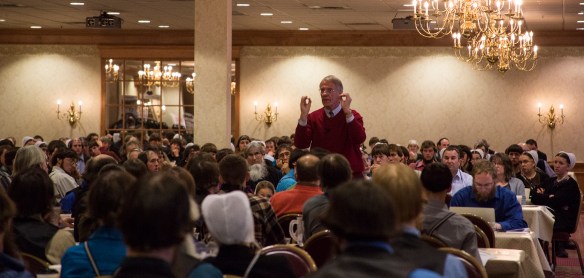
Lebanon9490(crowd)Emotional town hall meeting in Lebanon, Pa. draws over 200 people urging contract extensions for Dean’s dropped dairies
By Sherry Bunting, Farmshine, March 23, 2018

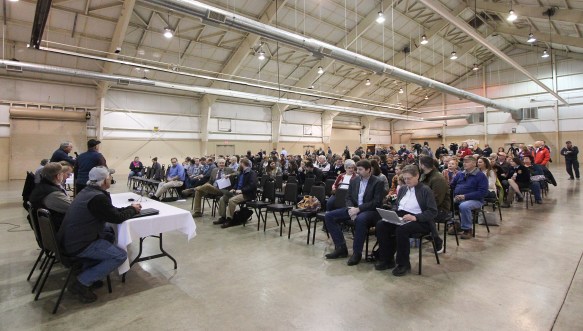
LEBANON, Pa. – “Family is a treasure for all of us here, and we have a family crisis concerning our dairy farms,” said Randy Ebersole, a local car dealer whose family has been part of the Lebanon community surrounded by dairy farms for generations. He moderated a “Save Pennsylvania Dairy Farms” town hall meeting about the 26 Lebanon and Lancaster County dairy farms that received 90-day milk contract termination letters from the Lebanon Swiss Premium plant owned by Dean Foodd on March 3.

The meeting drew 200 people to the Expo Center Monday (March 19) and was covered by three television stations and a host of other media.

State representatives Frank Ryan, Russ Diamond and Sue Helm also attended and spoke about their commitment to work with farmers on solutions.

Jayne Sebright, executive director of the Center for Dairy Excellence also attended, mentioning the Center’s resources for counseling and support as well as a joint venture with the Pennsylvania Dairymen’s Association to launch a “local and real milk” promotion by June Dairy Month.

Pa. Ag Secretary Russell Redding was not present, but Sebright said he will be sending a letter to Dean Foods in support of an extension of terminated contracts for 42 Pennsylvania dairy farms, the 26 in eastern Pennsylvania and 16 shipping to Dean plants in western Pennsylvania.

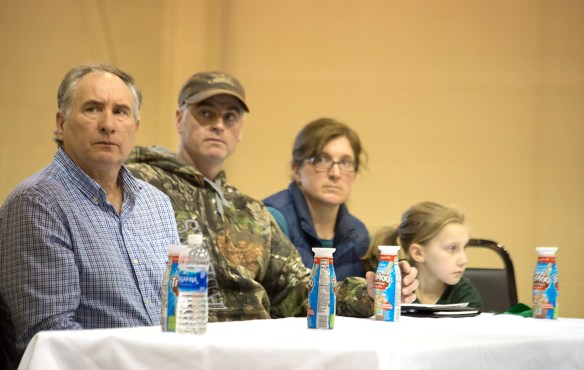
“This is the face of the dairy crisis. This is not fake news. This is real,” said Ebersole of the panel of three producers, a nutritionist, a veterinarian and a feed mill manager who shared their stories of the impact to the farms whose milk contracts will end May 31, 2018. This represents about half of the Lebanon plant’s daily milk intake.

The message of the town hall meeting was simple: Don’t blame or boycott Dean Foods because there are still another 40 local farms who did not get letters and are supplying the Swiss plant in Lebanon. But do, write, call or email support for a contract extension for these terminated farms until fall or winter.

And yes, drink more milk and eat more dairy products, especially locally-sourced dairy, knowing how it supports healthy bodies and healthy communities.

All told, Dean Foods ended marketing agreements with over 100 farms in eight states as the company says it adjusted its milk volume because of a supply and demand imbalance made worse by the trend among retailers, namely Walmart, to vertically integrate into bottling their store brands and compressing the supply-chain with consolidated intakes and wider distributions.

The emotional 2-hour meeting revealed community support for these farms by those who recognize how these farms touch many of its jobs and businesses.

Yes. A legacy is on the line here. And there were plenty of youth among the 200 attendees, many of them from local dairy farms where the future is uncertain due to the current dairy economics and especially for those in the families whose farms have been blind-sided by these 90-day termination letters.

One after another, people voiced their concern that 90 days is not enough time to find a new market at the worst time of year, ahead of spring flush, nor is it enough time for these families to unwind their businesses by selling cows, assets, even their farms and their homes to settle their lifetime investments in a way that allows these farm families to find a path forward.

“You will not find a more dedicated and hard-working people than dairy farmers,” said Ebersole. “They have invested their money, their time and their lives developing their herds and their businesses. We understand the world is changing, and that we are not an island, but what has not changed is the expectation of fair and reasonable treatment.”

A local pastor asked a blessing on the meeting and referenced Psalms 139 where David asks God ‘search me… and know my heart; test me and know my anxious thoughts. See if there is any offensive way in me and lead me in the way everlasting.’

The parallels of this passage to what these farmers are facing were obvious in the emotion that followed as each of six panelists told their stories and as others attending lent their support and as 8-oz chugs of Dean’s TruMoo milk and trays of cheese from the Lebanon County dairy royalty were enjoyed.

No one blamed Dean Foods.

Producers talked of a good relationship with the plant. They talked of how the letters completely turned their worlds upside down. They talked of how they have called eight to 10 other milk buyers in the region, none of them stepping up to accept new milk.

“Our cows are like our children,” said Kirby Horst of Lynncrest Holsteins, which has produced milk for the Lebanon Swiss Premium plant for 60 years across two generations. “The thought of 90 days and no market for our milk and no place for our cows to go… the thought of looking out at the pastures and not seeing the cows … I don’t know if I can handle that.”

The affected producers and the businesses that serve them stressed that with a little more time, they could do what is best for their families.

“Just like all the 26 farms affected in this community, our minds are missing right now,” said Alisha Risser. She and her husband have been shipping their milk to the Swiss plant for 17 years. She described how they worked full time jobs and saved and rented a barn before purchasing a herd and then building a dairy full time on their farm in 2001, when they began shipping milk to the plant in Lebanon.

“We have been lucky to have our passion be our job every day and to share this with our kids,” said Risser, her voice tinged with emotion as she described how her husband and youngest son bounce ideas off each other about the cows and the crops. “Our children wonder what future we have now. This is such a feeling of helplessness.

“We are proud of our milk that we produce on our farm, and we are proud of the Swiss Premium milk in our community,” she added. “We are just asking the community to support us with letters to Dean Foods to provide a contract extension until fall or winter.”

As milk pricing, promotion, regulatory environments and dietary guidelines are sorted out in the coming months, these farms are left without a milk market, without an opportunity to compete, to survive.

“God is always faithful, and we know we will be okay in the end, but an extension would allow all 26 farms here to make decisions for our families and our futures,” Risser said.

Ebersole added that, “These farms have developed their cow herds over a long period of time. They are rooted in our community. It’s not like a car dealership where you can just go to the Manheim Auto Auction and get in the business of selling cars.”

Lebanon5278(ProducerPanel).jpgIndeed, a legacy is on the line in Lebanon and Lancaster Counties, as in other communities similarly affected.
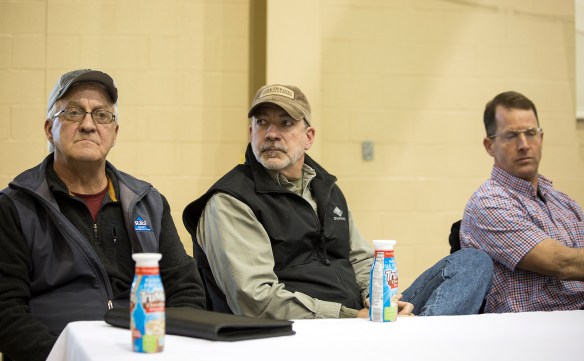
“I am not sure how we are going to handle this going forward. We have put all we have into the farm. Nothing will settle like it should,” said Brent Hostetter, who received his letter a week after the other farms on his milk hauling route were notified. Hostetter and his wife have been shipping to the plant for 19 years.

“Our kids love the farm. It has been going three generations, and now I am not sure how we can see a fourth,” said Hostetter. Like the others, he said a contract extension would give them some time to figure things out.

He also encouraged the public to “support our Pennsylvania farmers” to buy local milk and to look at the plant codes.

Lebanon5282(AgBizPanel).jpgRick Stehr, a nutritionist and owner of R&J Consulting, directed some of his comments to the significant number of youth in the audience, saying that these farms are where the next generation learns morals, values, work ethic and the joys and failures of life.

“This is worth fighting for,” said Stehr, “worth fighting all together for.”

He noted that for every 9 milk cows in Pennsylvania, one job is supported in the related business infrastructure. In Lebanon County, alone, one job is supported by six cows. The impact is deep if these cows and farms are lost, he said.

“Each cow here produces $14,000 in revenue for our community,” said Stehr, “16% of U.S. dairy farms are located in Pennsylvania where the average farm size is 80 cows. We are not California or New Mexico. We are located well within a day’s drive from 50% of the U.S. population. It seems our location would be pretty good, and yet this is happening.”

The emotion was palpable as Stehr and others offered to do whatever is needed in terms of counseling and assistance through this.

Alan Graves, manager of Mark Hershey Farms, a prominent feed mill in Lebanon County, said 80% of the mill’s feed business is dairy.

“We have been in business 45 years and employ 55 people in this community,” said Graves. “This day is about the producers and how they affect everything else in our communities. Our mill employees and their families rely on these dairies for their jobs. We don’t make business projections for 90 days, we are out a few years in our projections.

“The extension these producers are asking for is a fair request,” he added. “They have spent their lives improving their cows and improving the product they produce. The thought of taking that away in 90 days is almost unjust.”

Ebersole described the community impact this way: “These folks write out checks to other businesses in our community. There has to be a check coming back the other way. In 90 days that will all stop.”

Dr. Bruce Keck of Annville-Cleona Veterinary Service talked about how the public is unaware of what has been happening over the past 30 days and the past 10 years of consolidation and change. He asked the three television stations represented to raise awareness.

“We want to bombard Dean Foods with letters and emails and phone calls,” he said.

“These dairy farmers are so invested in cows and equipment that they can’t just quickly turn around,” said Keck, who has worked with local dairy farmers as a veterinarian for 25 years and took over the practice started by his father in 1961. He understands the family business dynamics.

“Without an extension, these families will be forced to sell their herds, and even their farms, for a fraction of their worth in this environment,” said Keck, “and that will trickle down to affect truckers, nutritionists, equipment companies, feed mills, veterinarians and more. This is like asking a loaded tractor trailer to turn as fast as a speeding car. It’s not enough time.”

To communicate support for the farms facing 90-day termination of contracts, call Dean Foods at 214-303-3767, email dairydirectsupport@deanfoods.com, or mail a letter to Dean Foods, 2711 North Haskell Avenue, Suite 3400, Dallas, TX, 75204.

-30-

Lebanon5240(Hostetter)Brent Hostetter, Lebanon County dairy producer: “I am not sure how we are going to handle this going forward. We have put all we have into the farm. Nothing will settle like it should.”

 

Lebanon5228(Risser)Alisha Risser, Lebanon County dairy producer: “We are proud of our milk that we produce on our farm, and we are proud of the Swiss Premium milk in our community. We are just asking the community to support us with letters to Dean Foods to provide a contract extension until fall or winter.”

Lebanon5216(Horst)Kirby Horst, Lebanon County dairy producer: “The thought of looking out at the pastures and not seeing the cows … I don’t know if I can handle that.”
Randy Ebersole, local car dealer and panel moderator: “This is not about blaming or boycotting Dean Foods. Please do the opposite, fill yourselves up with these dairy products.”

Lebanon5260(Kreck)Dr. Bruce Keck, Annville-Cleona Veterinary Service: “Without a contract extension…This is like asking a loaded tractor trailer to turn as fast as a speeding car. It’s not enough time.”
Lebanon5272(Stehr&Moderator)Rick Stehr, R&J Consulting: “This is worth fighting for…worth fighting all together for.”


Lebanon5257(Graves)

Alan Graves, Mark Hershey Farms: “These producers have spent their lives improving their cows and improving the product they produce. The thought of taking that away in 90 days is almost unjust.”

Lebanon9500(Helms)Rep. Sue Helm: “A group of representatives are writing a letter Dean Foods. We want farmers to stay in contact with us.”

Lebanon5291(RepDiamond)Rep. Russ Diamond: “We wanted to get Pennsylvania milk into Pennsylvania schools but have been told that with the product stream in Pennsylvania, this is hard to do. This Pa. Milk Marketing Board issue is a hard issue to get to the bottom, and people get very protective of it.”
Lebanon5303(RepRyan)Rep. Frank Ryan: “Keep faith first and foremost and your sense of humor and talk with your bankers. This is emotionally draining and people want to run from it. There is a solution and we need to work together to find it.”


Lebanon5314(Morrissey)

Bernie Morrissey, retired agribusinessman: “Dairy farmer Nelson Troutman got me involved in this nine years ago, and I have given up my retirement to work on this issue because it’s important to our farms. No matter who buys your milk, this is all connected… There are over 25 milk contracts from outside dairies selling milk in Pennsylvania while you guys are under the Pa. Milk Marketing Law. You have been shafted.”

Lebanon5318(EbyMike Eby, chairman National Dairy Producers Organization and former Lancaster County dairy farmer: “The media are our friends. We can work with the media to advertise our product in ways the (check off) promotion programs can’t.”
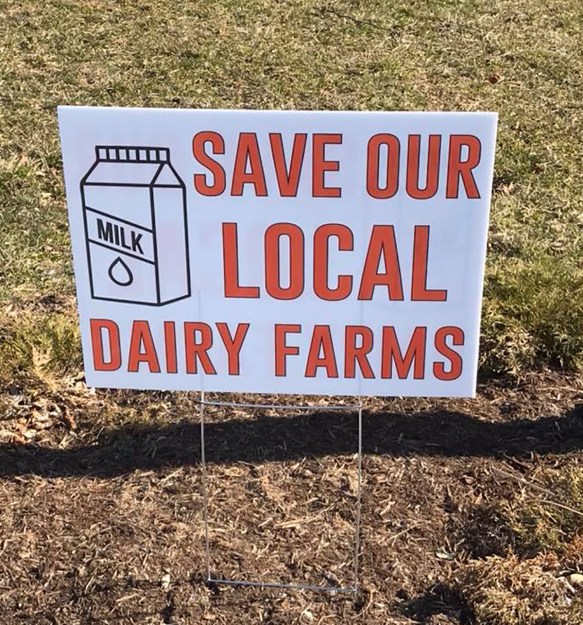
 

Lebanon9495(Signs)

Seismic shifts in milk supply chain ahead: New Walmart plant triggers Dean’s cut of over 100 dairy farms in 8 states

SwissDeanStory9468

By Sherry Bunting, from Farmshine, March 9, 2018

LEBANON, Pa. — He saw the mailman drive up and linger in the driveway, wondering if they were expecting a package. Moments later, his wife was standing there, holding a letter she had signed for.

The certified letter informed this Lancaster County dairy farm family that after 13 years of sending their milk to the Swiss Premium plant in Lebanon – along with decades of the farm’s milk in generations before them — the agreement with Dean Dairy Direct would end May 31, 2018.

The same story played out Friday among neighboring farms on the same hauling route to the same plant. And it was the same scene in driveways for approximately 120 dairy farms in eight states, including 42 in eastern and western Pennsylvania — around half of the Dean Dairy Direct shippers to three plants in the state.

Reace Smith, director of corporate communications for the Dallas, Texas-based Dean Foods, confirmed in a phone call Monday that against the backdrop of expanding raw milk production, and companies “asserting and expanding their presence in a market where consumers are drinking less milk (namely the Fort Wayne, Indiana Walmart plant where bottling begins this month) over 100 dairy farms in eight states received 90-day termination notices” from Dean Dairy Direct on Friday and Saturday, March 2 and 3 stating that their agreements will end May 31, 2018.

Smith confirmed that the over 100 affected dairy farms are in the states of Indiana, Ohio, Pennsylvania, New York, Kentucky, Tennessee, North Carolina and South Carolina.

“This affects all size herds and is not a large or small farm thing,” said Smith. While she was unable to supply specific information about the farms that were terminated, she said the widespread volume adjustments at multiple plants across four Federal Orders was necessary due to the new Class I plant (Walmart) coming online this month and the loss of a contract through a competitive bidding process (Food Lion).

Both market losses for Dean indicating structural change to the dairy industry as more retailers move into milk bottling in more centralized distribution models.

Sources in the various states confirm the affected farms range in size from less than 100 cows to over 1000 cows.

“This was an incredibly difficult decision. We tried very hard to avoid it and regret this decision had to be made,” said Smith. She indicated that Dean Dairy Direct field representatives are serving as resources to these producers and can provide a list of contacts for potential milk buyers. They are also offering counseling.

DeanFoodsMap.jpgWhile the company will not provide a list of affected plants or a state by state break down in the number of farms or volume of milk affected, they have indicated that the state that may be hardest hit on a volume basis is Indiana.
In fact, the volume of displaced milk in Indiana, alone, has been estimated at over 20 million pounds per month, representing the under 100 to over 1000 cow size range but most of them milking 300 to 1000.

The affected Indiana farms shipped milk to the Dean plant in Louisville, Kentucky, which also terminated 22 Kentucky dairy producers, ranging from 50 cows to 250, according to Maury Cox, executive director of the Kentucky Dairy Development Council.

In Tennessee, Julie Walker of Agri-Voice near Knoxville has confirmed nine (now 10 confirmed) affected producers ranging 60 cows to 300, and numbers in the Carolinas are unknown at this time.

From the standpoint of the farms affected, Pennsylvania is hardest hit, and while the number of New York farms is unknown at this time, some may have shipped to Dean plants in Pennsylvania.

According to Jayne Sebright, executive director of the Center for Dairy Excellence, 42 Pennsylvania dairy farms shipping to three Dean plants in eastern and western Pennsylvania received notices Friday – representing half of the Dean Dairy Direct shippers in the state. This includes 26 producers in eastern Pennsylvania, including Lebanon and Lancaster Counties, as well as 16 in western Pennsylvania, where the Dean plants in Sharpsville and Erie also ended agreements with Ohio farms. The number of Ohio farms affected is unknown at this time.

“The (Agriculture) Department and the Center have been reaching out to other markets to see what capacity is available, but at this point we do not know of any with available capacity,” said Sebright. “We are working to support the affected farms as best we can. We are very concerned both about the future of the farms and the well-being of the farm families.”

Sebright noted that the Center is making additional resources available and recommending use of their Dairy Decision Consultants Program to evaluate options — both within and outside of the dairy industry. “This is a difficult situation to be in and we are concerned.”

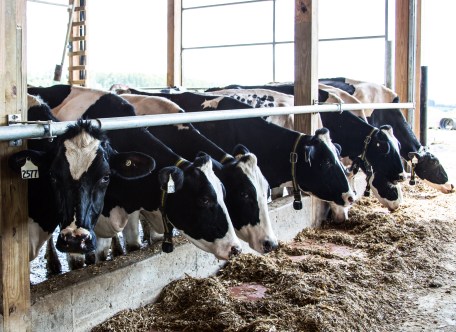
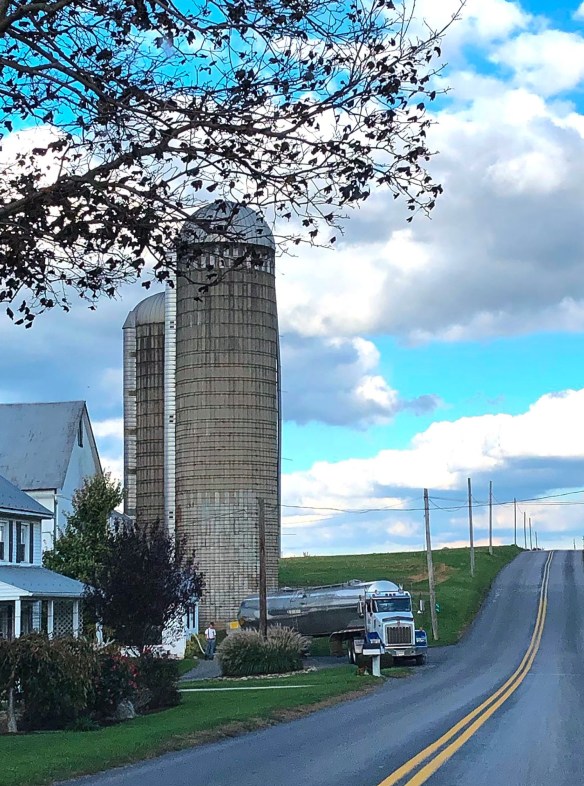
Dean-Cows.jpgIn fact, the farm this reporter visited in Lancaster County Tuesday was already working to call every available market and neighbors who also lost their contracts were looking at everything they could think of. Four or five trucks go through the county picking up milk every day so they wonder if each one can find a market or if they are better off pulling their milk together to find a single-haul market.
The producer was thankful, at least, for being part of a dairy producer discussion group and thankful for folks like Dr. Charlie Gardner with the Center who leads the group.

Not only were the Pennsylvania dairy farms shocked to receive the letters, veterinarians, nutritionists, feed company and equipment maintenance folks are facing this loss with their farm customers as the news spread this week throughout farm communities and the greater dairy community.

In Indiana, where estimates are that over 20 million pounds of milk per month has been displaced, producers had already been on edge as the Walmart plant took shape in their state and they contemplated its milk sourcing.

“We are working with producers and contacting cooperatives and potential markets to try to work together to get through this thing,” said Doug Leman, executive director of the Indiana Dairy Producers. He has been in contact with affected producers, the Indiana Department of Agriculture, and the plants and cooperatives that provide markets for milk in the region.

“I’ve had calls not just from the affected producers, but from many other Indiana dairy producers sharing their concern and asking if there is anything they can do,” said Leman. “I’m encouraged by that, and I am encouraging our producers to keep their chins up through this difficult time in their lives, families and businesses in the hopes that we can work through this together.”

Leman said he does not want to blame Walmart because, wherever the first Walmart plant would have been located, this was coming. Indeed, Walmart has entered a trend among retailers to move toward bottling their own private label store brands (Great Value and Sam’s Club Member’s Mark) rather than contracting with Dean Foods.

“Walmart was coming to Ohio, Michigan or Indiana, and I still believe it is better to have the plant in Indiana because it offers opportunities,” said Leman.

While fluid milk consumption is on the decline for 15 years — although stabilizing with more consumption of whole milk last year — retailers notice that nearly every shopping basket going through their stores includes milk. They seek their own store brand loyalty as loyalty to their store and some of the retail price wars happening in states without loss-leader protection are evidence of this. As is the ability to pull premiums away from states that have loss-leader protection or a minimum retail price as in Pennsylvania, to “fund” price wars in other surrounding states without any loss-leader protection.

The dichotomy points to a need, perhaps, for a federal loss-leader threshold versus random state programs that can fuel the picking of winners and losers in today’s times of seismic structural change to the dairy industry from retail all the way through the supply-chain.

In short, the region would likely have been affected by Walmart’s decision to vertically integrate its Great Value and Member’s Mark milk brand for its stores in the region — no matter which state the plant had been located.

In fact, sources indicate potential sites to the south are being eyed for a second Walmart plant in the future, revealing a corridor strategy to this vertical integration of single-source, full-traceability, each-truck-one-farm model.

The Dean Dairy Direct letters of termination to dairy producers in the region were dated February 26, 2018, which was the same day as Dean’s 2017 earnings call where the company projected its strategy in brand and private label supply and to “right size” its milk volume and consolidate its supply chain to achieve a “flatter, leaner and more agile” company into 2019.

According to Smith, there are no official announcements of any plant closures at this time and none of the plants involved have released all of their shippers. Still, there remains concern that some of the plants that have released a larger portion of their farms are vulnerable.

“We still have a commitment to local milk,” said Smith about the volume adjustments. “There are many factors that impacted this decision. We are seeing surplus raw milk when the public is consuming less fluid milk, and we see companies asserting and expanding their presence in a market where consumers are drinking three gallons less annually, per capita, since 2010 while the U.S. dairy industry is producing 350 million gallons more milk annually than the year before.”

In addition to the overall imbalance Smith said that, “The introduction of new plants when there is an industrywide surplus forced us into the position of further adjusting our milk supply according to demand.”

As vertical integration of milk at the retail level leads to consolidation by the nation’s largest milk bottler – Dean Foods – the company has diversified into soft dairy product brands that are just starting out of the gate and were discussed in the Dean earnings call as well.

Specifically, the letter received by Indiana and Kentucky dairy producers shipping to the Louisville plant stated “two indisputable dynamics led to this difficult decision. First and foremost, a retailer’s new Class I fluid processing plant is coming online in the region, significantly decreasing our production as milk volume is moved away from our facility to this new plant.

“The second reason is bigger than all of us. The steady increase of raw milk production combined with the decrease of Class I fluid dairy consumption…” the letter stated.

Letters received by producers in the southern market as well as eastern Pennsylvania did not specifically reference the new Class I fluid processing plant built by a retailer (Walmart) as had the letter to Kentucky and Indiana producers serving the Louisville plant and western Pennsylvania and Ohio producers serving the Sharpsville plant.

Those letters received by farms further to the east and the south indicated the plants had “lost a portion of customer fluid milk volume to a competitor through a customer-bid process.” Sources indicate this may include both the Food Lion private label store brand and the Walmart Great Value private label in these areas as well.

The letters received by producers said further that Dean was “unable to lock-in enough new customer volume to offset this loss.” This is a function of the overall decline in fluid milk consumption and the new milk via large multi-owner, multi-site farms in surplus regions of the Mideast and Midwest.

One thing is also clear in speaking with producers, veterinarians, organizations and others in the industry, the farms that are facing this difficulty are largely well-managed and producing high quality milk. Many of them are young families representing the next generation. Many are progressive, with updated facilities and technologies as well as utilizing the resources available to them for continued improvement in all that they do to supply their communities with milk.

In these states affected, whole transportation routes were terminated, presenting both challenges and opportunities for a collective effort in dealing with these market losses.

Walmart will not reveal the farms they have secured to supply the plant, but it is widely known that some of the milk will come from the north, some from within Indiana, and that a processor in Wisconsin is handling contracts and in a position to balance the Walmart plant’s fluid needs that may or may not have involvement by cooperatives.

As in Indiana and other states, Cox said of Kentucky: “We, are contacting other potential markets for our producers and would like to meet with Dean Foods to see what more we can do for these producers and to have a better understanding about the future of the Louisville plant” (where both the affected Kentucky and Indiana producers shipped their milk.)

Some state dairy organizations, state departments of agriculture and other industry leaders indicate they want to let the dust settle and allow options to emerge as they adopt a patient mindset to look at potential options for their respective state’s producers.

In the meantime, all are reaching out to producers and urging producers to reach out to them, and to each other. In fact, right now, more than ever, the dairy community needs to be reaching out and talking about its future to higher levels of relationships beyond what has occurred in the past.

“We want to survive,” said the dairyman this reporter visited 15 minutes from my home in Lancaster County, Pennsylvania, just four days after receiving the letter.

Like others this reporter has spoken to, they have done everything the industry suggests to make their farm competitive. While a small farm whose milk shipped for generations to the Lebanon Swiss plant serving local stores and consumers, this young farm family had invested in the latest technology, produces milk with very high components and very low somatic cell counts.

But here they are, facing what 120 of all sizes face throughout eight states as vertical integration from Walmart and other retailers sends a ripple effect and seismic shifts throughout the supply chain.

-30-


Dairy at a Crossroads Part I: 2018 Turning point?

dairycrossroadssherry4-e1519953486606.jpg

Number of farms, robust infrastructure are interdependent. The ripple spreads wide and the pain in rural communities, deep.

 By Sherry Bunting, reprinted from Farmshine, February 23, 2018

BROWNSTOWN, Pa. — Dr. David Kohl recently said he is still bullish on the small farms that populate the eastern dairy industry, that there will always be a place for them, but they will change their focus.

Still, lenders and industry participants confide they are concerned about a large number of dairy exits in 2018. They are encouraging producers to work with advisors, and urging the industry to work together in the embattled eastern U.S., because the whole infrastructure depends on the number of farms as much as — if not more than — the number of cows and amount of milk produced.

While lenders like Dale Hershey, director of ag lending for Univest Bank and Trust, say they have already seen many diversify and change how they operate, others are in the process of re-thinking their futures.

The biggest concern for Hershey is when farms decide to sell the cows, seldom do the cows come back to the farm.

“Some of those farms will stay empty. That, I do see,” he asserts. “Occasionally they’ll come back in and milk, but mostly they will go into something else, or if the farm is sold, we’ll see most of them stay dark in terms of dairy production.

“I think we’ll look back 10 years from now and see 2018 as a turning point.”

Mike Peachey of Acuity Advisors and CPAs agrees. He sees dairy at a crossroads similar to the hog industry in the 1990s: “My concern is that we will see a dairy industry 10 years from now that looks very different from how it looks today, and we are helping our dairy customers take stock of that.”

Peachey observes that as the number of farms decreases, “This puts a lot of pressure on the dairy infrastructure and the ag businesses that support the dairy farms. One of Pennsylvania’s competitive advantages is that there is a lot of infrastructure and support in the whole supply chain that is very beneficial for competitive pricing for our dairy farmers.”

He cites the region’s multiple feed companies, multiple points of expertise, nutritional perspectives and a bidding process, multiple veterinarians, the strong ag lending infrastructure, equipment dealers, and expertise in different specialties.

“My concern is that if the number of dairy farms decreases, and if the infrastructure goes away, then it changes that competitive advantage,” he says, observing that the number of cows or the amount of milk produced does not necessarily make up for what is lost when the quantity of individual farms is reduced by consolidation.

Yes, the dairy industry is at a crossroads, and no where is this perhaps more evident than in eastern states, like Pennsylvania.

The Northeast was a fluid milk market in the past, close to 50% of utilization. Today it is less than 30%. As more milk is produced — even if per capita fluid milk consumption stayed the same — not enough other products are made here, so mailbox prices are falling under the coinciding weight of increased hauling costs and losses in competitive and quality premiums.

Meanwhile, the Class IV utilization has increased as a percentage in the blend price, leading many to believe the Northeast model of dairy pricing may be broken.

In fact, so concerned are states and dairy organizations that state-wide analyses are being conducted in top tier “notably fluid” states like Pennsylvania and New York in the Northeast as well as in Georgia, in the Southeast. The states of Michigan and Wisconsin are also looking at their state’s production, processing and infrastructure to improve their future competitiveness.

In Wisconsin, milk prices are driven off the cheese market — a growing market that has been cultivated to generate variety, demand and competitive premiums — whereas the Northeast model is built off Class I, which is not competitive, nor is it growing. And, unlike cheese with its diverse growth in specialties and brands, the Class I milk at the store is treated like a base commodity against which all newcomers and imitations are compared and premium-priced.

Dairy producers and industry participants also say they are concerned about the Pennsylvania Milk Marketing Board’s role in terms of the costs associated with milk assembly vs. where the state premiums are going.

Meanwhile, store inventories are kept close to the bone. If they throw a gallon of milk away, the margin on every other gallon is affected, and so stocking depth is being reduced.

These are the kinds of issues that states like Pennsylvania, Georgia, New York and Michigan, among others, are actively looking at as they study capacity and market needs and trends.

Producers don’t control these decisions, but their input is vital.

From farm to table, technology and workforce are two other big pieces with immigration reform being a double-edged sword.

If the Congress and the Trump administration are able to legalize immigrant worker status, what will that really do for the dairy workforce? A National Milk Producers Federation study with Texas A&M reveals that 80% of the nation’s milk was harvested by immigrant workers — up from 60% in 2009.

With general unemployment now falling below 5%, which many economists consider to be full employment, a legalized immigrant workforce may be lost to jobs in industries with better margins.

Workforce issues are also affecting trucking and other infrastructure employment.

Labor is fast replacing environmental as the number one issue facing the dairy industry, and against that background, farms will do things differently over the next 10 years to systemize their production, say various experts.

Builders, lenders and others are seeing the emphasis for this in three areas: wet calves, dry cows and post fresh, as well as through investments in technologies that improve management, specifically by their impacts on cost of production because this is the criteria that will drive farm-level investments into the future.

Technologies may help solve it, but this requires investment. The right answer, policy-wise, is elusive, but for individual farms, the right answer comes, again, from knowing cost of production from which to weigh out the options and run projections and scenarios based on where the farm is now and where it wants to be in the future.

While some see opportunities to drive milk output per cow higher with more cow comfort and better heifer programs, pointing out that Pennsylvania lags behind other states in its milk output per cow, others in the industry point to imposed restraints pushing the focus toward managing risk.

Complicating the marginal milk model for improvement in Pennsylvania is the Land O’Lakes base program. When producers are over base — because they’ve improved their management — they take a penalty when the base is enforced, depending on the eastern region’s total production.

Learning to manage through this intermittent penalty seems to be affecting mainly the producers in the East, despite more substantial growth in the West. In addition, DFA has started a base program for portions of its membership in parts of the Southeast U.S., where milk is already regionally deficit.

How will this push-pull play out at the farm level?

Some producers will carry a lunch. Hershey is seeing a trend toward small farm operators finding seasonal off-farm employment to keep their dairy farms running.

Others have and will become diversified, which can reveal two pathways: Getting successful in another area and exiting the dairy, or seeing the dairy as a lifestyle to keep, and using other income streams to weather the storm.

In addition to diversifying, lenders note niche processing will be a path for some. There are a number of niche producers in this part of the country. Some have been doing this a long time, others are just getting in.

“The good economy has really helped those operations. Tourists are traveling, coming to our county, dining out, and packing the places we deal with,” Hershey observes about Lancaster County, Pennsylvania. Some of our cheesemaking stores are flourishing right now, but that business is not for the faint of heart. It requires deep pockets to get into.”

Connecting dots for consumers is essential for eastern states, like Pennsylvania. For example, in Lancaster County, Pennsylvania, there is this dichotomy. The county — like other parts of the eastern U.S. — has grown in produce and other specialty crops to become a great hub of food. To some degree this includes dairy, but more stimulation is needed.

As will be further discussed in part two of this dairy-at-a-crossroads series, knowing the cost of production for the farm business and knowing where lie the passions, strengths and weaknesses of the farm family are keys to finding each farm’s own path — whether that means keeping the cows and diversifying, investing in niche marketing, getting more competitive on cost of production or giving the cows up and channeling that valuable positive experience and energy to new pursuits.

This industry is about the milk and the cows, but even moreso, it is about the people.

“We can do it here,” says Peachey. “When we know our farm’s cost of production, we know the weak spot in our model and can figure out how to compensate for that and find where our opportunities are.”

As these changing tides and issues sort themselves out, Peachey observes how dairymen are making these “tremendous strides to improve their operations,” and he believes the next wave of improvement is figuring out how to do risk management well, how to capture margins when they are available, and how to protect operations from downside risk.

“We can take an operation so far and continue to improve, but the next wave of significant profitability and improvement is in managing the top line price and the input costs and locking in those good margins when they are there,” says Peachey.

“A generation ago, with price supports, dairy farmers could work hard and do okay or very well. Now it is a business requiring an approach to management for the long run,” he adds.

In part two of this series, we’ll examine the map for navigating the dairy crossroads.


-30-

Ag economy runs counter to urban economy

Dr. Kohl connects dots, prepares farmers for economic reset

UnivestMeeting(DavidKohl)1.jpg

By Sherry Bunting, reprinted from Farmshine, February 2, 2018

EAST EARL, Pa. – “The growth of the economy is hotter than a pepper sprout, but for how much longer?” observed Dr. David Kohl, Virginia Tech professor emeritus. He then opened eyes, and ears, saying that, “When the urban and suburban economies are going gangbusters, the ag and rural economies tend to struggle. That is very typical. The ag economy tends to run counter to the general economy.”

And with that, we were off to the races with Dr. Kohl, who spoke about positioning for success in the economic reset as the keynoter for the annual Univest Ag Summit that drew over 350 people — mainly farm families and many of them dairy producers — to Shady Maple Smorgasbord here last Friday, Jan. 26.

When Kohl is on the agenda for a meeting, you know you are in for an invigorating look at socio-economic trends, and a whole lot more. His high energy presentations deliver tidbits of insight that help make sense of market patterns that are so difficult to understand. The fact that he is a partner in a creamery is just ice cream on top of the cake.

Part of the reason for these opposite fortunes for urban vs. rural economies is the strength of the dollar and the price of oil that coincide.

Kohl is watching what happens with the U.S. dollar because this will influence inflation and interest rates in the general economy as well as exports in the ag economy.

“When the dollar is stronger, we are in a weaker position to trade commodities,” said Kohl. “When the dollar is weaker, it picks up inflation, so we have to watch out for higher interest rates. We are well into this period of low flat interest rates, but that is about to change.”

Kohl sees the Fed raising the prime rate possibly four times in the coming year, but that will depend on the rate of inflation. If it stays below 3%, there will be less incentive to raise interest rates. In fact, the report released that day pegged it at 2.6%. We shall see.

As he went through the indicators, Kohl indicated his bullishness on agriculture in the East. “One-third of the consumers with money reside within 10 hours of you,” he said.

While it is true that as the economy improves and consumers have more money in their pockets, the food processing and foodservice sector positions have improved, the problem is that the farm sector tends to ride at the back of that bus. What makes the difference for ag, according to Kohl, is the economic growth of export partners.

Trade has become integral to the marketing, pricing and distribution of farm commodities, including dairy, according to Kohl.

He travels extensively, especially during meeting season, and he said it is his ability to go out and confirm the numbers that allows him to see trends and connect dots.

Right now, he said, the problem for dairy is that we are working through a surplus. “The high prices of 2014-15 brought in some inefficiencies,” said Kohl. “When I see the bottom third of producers making good money, that’s when I know we will see financial issues within the next two years.”

On the trade issues, Kohl said that 1 out of 7 days’ worth of milk production in the U.S. is exported somewhere, and 39% of those exports are going to Mexico. During a conference in Mexico, he learned that those buyers will go elsewhere and pay more for dairy if they need to.

And while Asia, and China, are important export destinations for farm products, Kohl said that  NAFTA re-negotiations are important because the U.S. exports more ag products to Canada and Mexico, combined, than to China.

He observes that 47% of the Mexican population is under 25 years of age, and that “This youthful population of consumers helps fuel continued growth in U.S. agriculture.”

He also noted that 3 of every 7 consumers with money to buy goods reside in Asia, but the U.S. has pulled out of the Trans Pacific Partnership, “leaving China to fill our spot, so now Canada and Mexico are in the TPP and they are making agreements without us there.”

Kohl acknowledged the currency manipulations that go on by other countries, including China and Mexico, to improve their market competitiveness globally, and he said that is something to watch both in the trade negotiation processes and in terms of economic factors affecting agriculture, particularly as the U.S. dollar is likely to weaken.

Within this trade discussion, Kohl said the single most important thing that President Trump has done is appointing former Iowa Governor Terry Branstad as Ambassador to China.

And here’s the stuff you get from a guy like Kohl: Branstad and China’s leader Xi Jinping have a very close trusting relationship that dates back 35 years to their work on an Iowa hog farm. In fact, China’s leader holds a Ph.D. in ag and rural markets. He came from an elite family in China, but during the 1980s farm crisis circumstances had him working on farms in east Iowa.

UnivestMeeting(DaveKohl)2“The leader of China worked on hog farms for two years. He ‘gets’ agriculture,” said Kohl, as he turned to a table populated with blue and gold jackets and said: “The relationships you form today, you will not know their impact down the road.”

Under the Trump administration, the U.S. sealed a “beefed up” pork and protein deal with China that has been good for the livestock sector. Perhaps dairy is next?

 Kohl also watches the weather. South America is in their double crop season and it is dry there. In the U.S. southwest, it is very dry in Texas, Oklahoma and Kansas. “If this continues through April 15 or May 15 and if it goes to the upper Midwest with a dry Southeast, it will impact corn.

He also keeps a careful eye on oil and energy prices, proclaiming that the U.S. made a pact after 9/11 to become energy independent within 25 years, but has done it in 10.

“We are now the energy leader in the world, so other nations can’t control us anymore,” said Kohl. Oil and energy costs influence the general economy, and really have an impact on farms. “8 out of every 10 dollars spent on the farm business are connected to oil.”

On the flip side of the oil coin is the historical relationship between oil prices and farm commodity prices. Kohl sees oil getting cheaper. “The demand side is changing. People are moving to cities and using public transportation,” he said, adding this surprising statistic: 31% of people aged 18 to 25 do not have a driver’s license.

He also noted that in Germany, they want to outlaw the internal combustion engine by 2040! And that in China, they want to have 25% of all vehicles run by electric by 2025.

The big trends impact so many things over time, and that is why Kohl pays attention to them.

In fact, he noted that the advances in farming technology have produced surpluses by taking the lower yield farms and really improving those yields. “That is what technology does. It improves the bottom end and that creates surplus, and this is why we need export markets.”

What does all of this mean for farmers? Kohl put the “correction” or “reset” he sees coming into perspective, observing that the 1980s correction went down fast and lasted five years. “This one is a grinder,” he said. “We are not seeing a collapse in the ag economy like we did in the 1980s. We are seeing it grinding along and surviving with technology and management.”

Kohl sees the stock market rate of gains as something that can’t last forever and believes it is a “bubble.” He quickly added that many people disagree.

He noted that student debt is record high, the rate of consumer savings in the U.S. is at the lowest level since 2007 and credit card debt just exceeded a trillion dollars.

Bubble or no bubble, Kohl encouraged listeners with his belief that what we have now is an “asset bubble” where equity and resilience will be the tools to guard. “Don’t get complacent on equity,” he urged.

The economic drivers of the current cycle are its elongation into a supercycle, the available technology and management, interest rates, stronger financial underwriting, working capital, land equity cushion, and crop insurance programs.

“Currently 90% of the world economy is hot,” said Kohl, adding that, “If it grows too fast, it’s a weed.” In his opinion, it is growing too fast.

The killers to watch out for are a rise in oil prices, a decline in the stock market, a tightening of credit strategies by the Central Bank and ‘bubbles.’ The bubbles to watch are auto debt, student debt, stock market, credit card debt and farm land asset to credit.

“Economic expansions do not die, they are killed off, and those are the things that can kill them,” said Kohl.

He said workforce development will be critical for sustaining the economic engine that is revving up, and he was encouraged to hear President Trump say last week that, “Not everybody needs to go to college. There is nothing wrong with vocational skills.”

What can dairy farmers do as these macro-economic factors around them are out of their control?

“Look at your business, and drive it toward efficiencies,” said Kohl. “Do your cash flows early and often to adjust to changing tides.”

Recognizing the trend toward diversified income streams on farms in southeast Pennsylvania, Kohl said that is more sustainable in today’s environment.

But the biggest piece of advice he gave was for farmers to “be proactive. Whether large or small, the top producers are making the adjustments, the middle is in denial waiting for bad weather somewhere to bring back commodity prices and the bottom third are at the end of the pier not knowing what is wrong.”

Look for Kohl’s cornerstones for success as this continues in a future edition.

Dairy Exports: Jekyll and Hyde

MilkMarketMoosHeader070914web.jpgDairy Exports: Jekyll and Hyde

By Sherry Bunting, Milk Market Moos, Farmshine, February 2, 2018

Talk to dairy farmers and industry observers about dairy exports and the response runs the gamut from enthusiastic full-court-press to cautious optimistic pursuit to a pessimistic skepticism about the profitability they bring to the table.

awGDC18-Day1-56.jpgNo matter where you are on the scale of good, bad or indifferent, exports are essential for agriculture and for dairy.

The hands of time do not turn backward on technology and progress, and so we are in a global market. If we want to be competitive in our domestic market, we need to also be competitive globally.

The food industry is increasingly served by global players and multinational companies that can source and supply from all corners of the globe. People would be surprised to learn how relatively small the transportation cost is in exporting ag commodities, especially further processed dairy products, overseas compared with cross country, on a per-unit basis.

If our ships are not arriving at other ports because we can’t compete, then other ships will arrive at our ports because we can’t compete.

That said, forward progress in supplying markets overseas needs to be pursued, not with reckless abandon finding ‘homes’ for excess milk, but with strategic thinking that includes the marketing and a consideration for the well being of our dairy farm sector.

As Secretary of Agriculture Sonny Perdue pointed out in his visit to Pennsylvania last week, America’s food security is America’s national security. Our farmers are the thin green line that, along with our military, keep our nation safe. After 9/11, the U.S. set out to be energy independent within 25 years and accomplished this in 10, according to a talk, given by Dr. David Kohl, Virginia Tech professor emeritus, in Lancaster County, Pennsylvania last Friday.

Just as our growing economy became at one point dependent on other nations for a portion of its energy needs, to its peril, we should take care that we do not become dependent in the future on other nations for our food.

A laughable thought, perhaps, but the rapidly consolidating agriculture industry needs its wide and varied base of family farms, small independent businesses, that support a varied and competitive rural infrastructure and provide the safety net of food security for American consumers through their independent pursuit of partnering with industry and academia to producer more, with less.

Kohl talked about how important trade is to American farmers, including the dairy industry, which currently exports 1 out of every 7 days’ worth of milk.

He made some observations about China’s agriculture. That Chinese interests purchase of Smithfield was largely to purchase the food safety protocols to ensure their food security. Here’s a statistic Kohl shared that got me thinking. He said that while there are 2 million farmers in the U.S., there are 314 million farmers in China.

“They are not taking on technology there as rapidly because there are 800 million people living in rural China and they need something to do,” said Kohl.

Just think about that for a minute. Technology is as essential to the future in agriculture as are our trade negotiations and exports; however, this statistic made me think about our rural youth both on and off the farm.

Dairy farming, like the hog business in the 1990s, is at a crossroads. Farmers, through their cooperative memberships, partnerships and other arrangements, own some of the largest and most aggressive processing assets that are strategically consolidating markets and distribution.

They hold in their hands their futures as individual small businesses — parts of the whole, contributors to a market, dairy farmers who not only are improving their own business acumen but continually improving how they manage their herds and possess a passion for what they are doing, a passion that is being called upon to directly market their farming lifestyle to consumers to counteract the negative attacks of anti-animal activists casting doubt wherever they turn.

U.S. Dairy Export CEO Tom Vilsack has set a lofty goal of getting U.S. dairy exports to 20% of production vs. the current 14. That would be nearly one and a half days’ worth of milk production out of every seven.

That sounds exciting, but when have we heard percentage of increase goals set for the fluid milk category? Could that incremental effort not also be exciting?
There are reasons why we are not seeing this, and in some respects, those reasons bring us back full circle to the export discussion.

Beverage milk is not exported on the scale that dairy commodities and dairy products are. Yes, DFA is among those exporting shelf stable milk to China for supermarkets, but this is not a globally traded product as are cheese, butter, and particularly dairy indgredients and protein powders.

While dairy processors eye up the opportunities and build inventories around allocated sales, and manage their risk with offsets, dairy farmers are in the price-taking position with the promise that if exports grow, they and their families can grow their businesses, without a serious discussion about the profitability in that proposition.

All of this to say, that the main market for U.S. farm milk is here at home as not only a beverage but also a growing number of dairy products finding good demand.
We are not New Zealand, which exports most all of what they produce.

The U.S. has, already, a strong robust customer base for cheese, yogurt, butter and a host of dairy products, as well as a sector of our industry (beverage milk) that needs our committed attention through dynamic labeling, comparative promotion vs. the imposters, consumer education about MILK, not how many situps and pushups to do each day. It needs people in charge who truly believe it is important, not an offhand remark by a checkoff-paid employee for U.S. DEC speaking at a conference, saying that fluid market is a dead horse as he proceeded to dig into the exciting team of horses (exports) waiting in the wings to save the day.

Having said all of this, it is imperative that U.S. dairy farmers be competitive to be involved in the global marketplace because it is here, with all of its pluses and minuses, but that does not mean we turn way from the prize in which the Federal Orders place high value and for which other products are taking over because we have, in effect, laid down and allowed the incremental loss of beverage milk sales.

But let’s examine the fluid milk dilemma further in the next edition.

Author’s Note: Re-inventing this Ag Moos blog for the times….  Milk Market Moos is a column I have been writing in Farmshine since 2003. It became a weekly feature in 2007. Find some of this content here, at Ag Moos, along with other dairy and beef market related stories, agriculture news, and, in between, the stories and images of the inspirational people of agriculture… but you can get it first, and you can get it all, in Farmshine Newspaper, just $15/year. Farmshine is a weekly newspaper published in Brownstown, Pennsylvania — now in its 39th year of publishing all-dairy, all-the-time.