‘FDA may have forgotten the standard for milk, but we haven’t’ – Part One

Dairy epicenter of broader FDA strategy

 Public comments due August 27

By Sherry Bunting, from Farmshine August 10, 2018

WASHINGTON, D.C. — While the dairy industry is focused on multiple layers to the milk and dairy standards of identity — the FDA review of these standards, and their enforcement, is couched within the broader Comprehensive Multi-Year Nutrition Innovation Strategy launched recently by the Food and Drug Administration (FDA).

Labeling and education are aspects of the strategy, along with a new FDA definition of “healthy choice” to be identified “visually” on foods that meet criteria FDA is still defining.

But the key to the strategy, according to FDA, is to “modernize” standards of identity in order to achieve specific nutrition goals the agency believes will reduce chronic diseases – namely diabetes, obesity and heart disease.

Since 80 of the 280 foods with current standards of identity are dairy foods, and many of the remaining 200 are meat products, the FDA’s noted allegiance to the low-fat dogma of the current Dietary Guidelines does not bode well for how this may all turn out.

That’s why grassroots consumers and producers NEED to get involved.

Of particular concern in a July 26 FDA hearing are regulator use of terms such as “barrier to innovation” or “reformulations of foods using science” in discussing how modernized standards of identity can help the government attain an objective of getting consumers to eat in accordance with the ways it believes will lower chronic disease.

This, despite the fact that noted scientists in the health and nutrition fields and investigative science journalists, like Nina Teicholz, author of The Big Fat Surprise, continue to point out how flawed the science has been for current dietary guidelines,  and how these flawed guidelines have actually led to epidemic rates of obesity and diabetes while doing nothing to abate heart disease and morbidity.

Teicholz observed in submitted comments that, “There is no evidence that saturated fats cause obesity. Consumption of saturated fats have declined 17% since 1970, animal fats down by 29% in same period, while obesity rates are up, so explain how saturated fats can be the cause?”

Hearings on parts of the Nutrition Innovation Strategy have already taken place prior to FDA commissioner Scott Gottlieb’s now-famous statement that “Almonds don’t lactate.” This statement propelled milk and dairy into the epicenter of the standard of identity modernization process FDA already had in motion.

A daylong FDA hearing on July 26 kicked off the standard of identity portion of the Nutrition Innovation Strategy, and two weeks prior, the administration held a listening session specifically on the labeling and regulation of new cell-cultured protein technologies — funded by billionaire investors and conventional agriculture companies — seeking to gain standardized status as ‘animal-free’ versions of various meats and dairy proteins for inclusion in products — interchangeably without notice.

The July 26 session attracted a larger than expected attendance due to the national discussion on imitation milk products, and FDA moderator Kari Barrett indicated there was a “very large webcast audience participating.”

Commissioner Gottlieb kicked it off telling how FDA has been monitoring food innovation trends and sees these trends as providing an opportunity to empower individuals to use nutrition to reduce chronic disease.

He acknowledged a “deep personal interest” in the Nutrition Innovation Strategy as he believes nutrition innovation can help solve health issues, and he believes FDA can develop a policy framework to achieve it in their regulatory role.

(However as the daylong hearing progressed, it became obvious that the notable presenters and regulators on various panels are relying heavily on the current flawed Dietary Guidelines for Americans, which themselves are in need of “modernization” due to the revelations about the poor science behind them, particularly on saturated fat).

“We want to empower consumers with innovation and facilitate industry innovation for healthier foods … to remove barriers and leverage nutrition toward these goals,” said Gottlieb, calling it one of his “top priorities.”

He reminded participants that FDA regulates 80% of the food supply with a long history of informing that regulatory process via the Dietary Guidelines for Americans.

“We want to modernize our regulatory approaches to help consumers seek healthier options,” said Gottlieb. “The historic approach (of FDA) is to set barriers. But by modernizing our framework and approach and looking at consumer trends, the food industry can provide these healthier options with foods consumers are seeking.”

The new area of focus for the agency, according to Gottlieb, will be to see the food industry “compete on the nutritional attributes of their products” within a policy framework that allows innovative reformulation.

Gottlieb also mentioned “calls for FDA to take a closer look at dairy identity,” he said. “But first we must better understand how consumers understand and use the term milk and how they are being misled.”

Gottlieb acknowledged the “proliferation of beverages calling themselves milk” and said the FDA is being questioned about its enforcement of milk’s standard of identity.

“The challenge is that we can’t unilaterally change if we have been historically enforcing it a certain way,” he said.  “That’s what we are starting, a conversation. We are meeting with interested stakeholders and will post a definition later this summer or early fall with specific questions for feedback and then revisit our enforcement.”

The next steps after comments, feedback and proposed definitions for milk will be to provide the industry with guidance on labeling, and then compliance.

“In the meantime, we will take steps on labels where there is a high likelihood of consumers being misled in cases where public health is affected,” Gottlieb said.

In total, the FDA has 280 standards of identity on the books “created when our grandparents were younger than me,” he said. “We want to hear about the changes in science to review so that we can update these standards.”

He gave the example of standards of identity being modernized with industry and consumer input “to reduce fat and calories.”

He said that FDA wants “to gather input and encourage out-of-the-box thinking” so that the standards are not so rigid as to “cause the industry to avoid reformulations that would reduce fat and calories.

“We need diverse opinions,” said Gottlieb, “but the bottom line (of the Nutrition Innovation Strategy) is for consumers to identify healthier options.”

He said that, “Disparities in diet contribute to disparities in health… modernizing standards and label claims are a key element of our strategy to give consumers quick signals with important information on nutritional benefits and provide incentives for industry to innovate for foods with more healthful attributes.”

Expert panelists, like David Portalatin, vice president and food industry advisor, The NPD Group, testified about consumer trends: “Our data suggest that plant-based protein alternatives are increasing very rapidly, and a large percentage of these consumers are not vegan.”

“Protein is the number one thing consumers seem to want to add to their diets, and we’ve seen a proliferation of ways to add it, and consumers say ‘yes’ I’ll try that,’” said Portalatin about the renewed interest in high protein diets. “When we invest in new stuff, we buy it, we are not a meat-avoidance society.”

He noted that according to survey data, 84% of people reporting they are consuming plant-based alternatives while they are not vegan or vegetarian. “There are a lot of us trying these alternatives,” said Portalatin.

He also mentioned that the interest consumers have in purchasing “low-fat” foods is declining, that people want real food – as it is – and want to control their intake of fat by portion size.
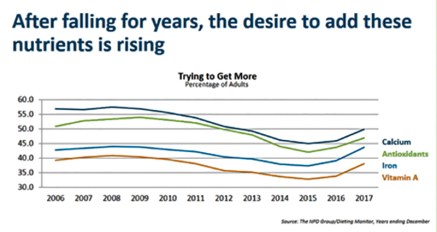
FDA hearing graph

David Portalatin said that in addition to more protein and fewer concerns among consumers about fat, consumers aso want more calcium, iron, Vit. A and antioxidants. Milk contains all and is a big source all but iron, while beef is a big source of the iron. A recent study showed that milk and other dairy foods are “densely packed” with antioxidants delivered in a more soluble way via the protein and fat found naturally in milk —  the very fat that FDA and the food police want people to eat less of and the very protein that some experts at the hearing said consumers want more of, but are not deficient in. In other words, consumers are going one way with their diets (away from flawed guidelines that have led to chronic illness) while the government may use this nutrition strategy to shepherd consumers back into the flawed guidelines obedience flock they are just now breaking free of. Screenshot by Sherry Bunting during FDA hearing webcast 

Interestingly, the four areas consumers are trying to improve their diets are found in the combination of real milk and beef in the diet.

The American Heart Association had a representative during the open comment time telling FDA they “want the standards of identity to be modernized to improve the nutritional value of food by reducing sodium and saturated fat.” (More on this in a future part of this series).

While he noted that generational cohorts are the biggest drivers of change, the renewed interest in high protein diets is, in his opinion, not necessary since “American diets are certainly not deficient in protein,” in Portalatin’s opinion.

He and other panelists tended to lump this high protein diet preference with a return to higher fat in the diet. Not one panelist recognized the revelations about low-fat dogma of 40 years contributing to the very chronic diseases the FDA strategy seeks to prevent. Every indication from this hearing is that FDA will fall in line with the Dietary Guidelines Advisory Committee in continuing to tweak all kinds of rules and regulations to get Americans to eat less fat — unconsciously — through modernized standards and reformulated foods.

The Good Food Institute — an organization representing plant-based and cell-culture imitation meat and dairy products — had legal representatives testifying on July 26 that, “FDA’s practice for the last decade or more in its guidance for ‘milk’ is that we could use the term ‘milk’ with appropriate modifiers, like almondmilk. The same has been true of butter, such as cashewbutter.”

The Good Food Institute insisted that when their foods can use a standardized term with a modifier, it allows their new – and they say healthier (but are they?) – products come to market more easily. “If that changes, it will make it harder for newer and healthier foods to come to market,” they said.

A representative for Dairy Farmers of America spoke during the open comment time saying that, “The current standard for milk should be enforced as it is. The plethora of products are borrowing the dairy industry’s nutrition profile, and those products may not be as nutritional or wholesome with FDA not enforcing the standard.”

From the Academy of Nutritionists and Dieticians, Jeannie Blankenship, said their professional members will have to “translate” whatever FDA decides on these things. “Consumers must be able to readily understand,” she said. “People with food allergies and intolerances use these standardized terms in a different manner than the general population.”

North Carolina Ag Commissioner Joe Reardon cited the standard of identity defines milk as a lacteal secretion of the mammary gland. “Plant-based beverages do not meet that definition,” he said. “If milk is on the label, then milk should be in the product. Without enforcement of this simple standard, then all standards of identity are compromised.”

He and others made it clear they are not advocating for these plant-based beverages to be removed from the market.

“We recognize they are a vital option for many consumers; however, they should be labeled correctly, without the term ‘milk,’” said Reardon. “North Carolina and other states stand ready and willing to assist FDA to enforce this standard and for the industry to come into compliance. We have heard here all day about the importance of a label, but without truth in labeling, none of the other matters.”
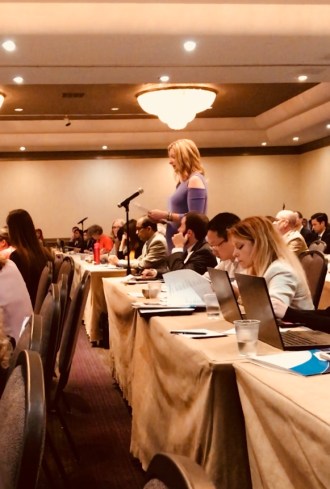
Kim Bremmer FDA Hearing (1).jpg

Kim Bremmer testified to FDA on behalf of the American Dairy Coalition about enforcement of the definition of milk. Photo provided by ADC

Speaking for the American Dairy Coalition, which recently started an Integrity Initiative, Kim Bremmer, a dairy producer from Wisconsin said “You play a vital role in giving consumers the information to make choices. Nutrition matters. I see tens of thousands of consumers in my speaking and the vast amount think some of these beverages have cow’s milk in them, and most believe they are as nutritional as milk, and they aren’t. The play on words is misleading.”

Bremmer described cow’s milk as a powerhouse of nutrition with crucial nutrients for cellular function. “No other drink packs this nutrition. There’s no comparison,” she said, explaining what she sees and hears when fourth-graders visit her farm and she watches the children connect the dots to realize the almondmilk they may be drinking at home, isn’t milk at all.

“One in five people are food insecure and one out of 10 adolescent girl are deficient in calcium. We have a problem. We must protect the integrity and identity of milk because nutrition matters,” said Bremmer.

Rob Post from Chobani was there to talk about getting a standard of identity for Greek yogurt so that schools and other institutional feeding situations could accurately quantify the protein levels. As it is now, they are standardized at the regular yogurt levels of protein even though strained Greek yogurts are 52% protein — twice that of regular yogurt.

While he said standards of identity have not kept pace with new food innovations, and he wants to see a better process, he was quick to defend the current definition of milk and dairy — and its enforcement — saying that, “It’s important to have options, but words matter to consumers and dairy means something specific. It means nutrient dense, minimal processing. It is important that this standard is preserved,” said Post.

From National Milk Producers Federation (NMPF), Tom Balmer noted that the issue comes down to “safeguarding the standards to help maintain honesty in the markets.”

“Milk, yogurt, cheese, butter. Standardized dairy terms are being coopted by others as purely a marketing gimmick, while these products lack the nutrients and attributes of dairy,” said Balmer.

“Consumers don’t realize they are being shortchanged. It’s hard to talk about ‘modernizing’ standards when current standards are not enforced. FDA may have forgotten the standard for milk, but we haven’t. Enforce the current standards and stop the confusing and deceitful marketing practices.”

International Dairy Foods Association (IDFA), representing milk and dairy processors, was mum on milk, but touted an array of expanded and modernized standards they want to see for many dairy standards. More on that in part two.

The American Dairy Coalition is urging the FDA to stop allowing the wrongful use of the word “milk” on non-milk, plant-based alternative products labels. To sign the ADC Milk Integrity Initiative petition, it is available online at http://www.americandairycoalitioninc.com/the-integrity-initiative.html

Public comments can be sent to FDA prior to the Aug. 27, 2018 deadline at the docket portal at https://www.regulations.gov/docket?D=FDA-2018-N-2381.

Or, send to: Dockets Management Staff (HFA–305), Food and Drug Administration, 5630 Fishers Lane, Rm. 1061, Rockville, MD 20852

All submissions received must include the Docket No. FDA– 2018–N–2381 for ‘‘FDA’s Comprehensive, Multi-Year Nutrition Innovation Strategy.’’

Look for part 2 this week.

-30-
Win, win and win: Turning tough challenges into abundant goodness

Philabundance partners with local dairy farms to bring Abundantly Good dairy foods to those in need.

By Sherry Bunting as published in July 20 Farmshine

PEACH BOTTOM, Pa. — Great ideas often come wrapped in tough challenges.

For Lancaster County dairy farms and Philabundance — the Delaware Valley’s largest hunger relief organization with a 30-year history of rescuing and upcycling food — the urban and rural challenges of hunger, food waste and price-depressing surpluses have converged under the new ‘Abundantly Good’ business model and brand.

wCedar-6141.jpg

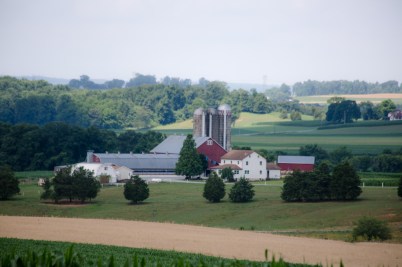
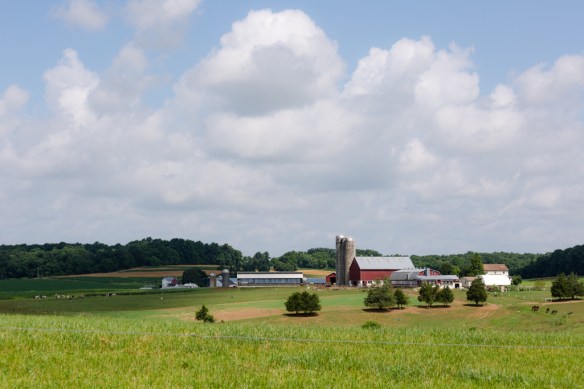
The folks at Philabundance are enthusiastic about working with Lancaster County dairy farms, like Cedar Dream(pictured) near Peach Bottom.

It’s mid-morning in July, and the day’s first milking and chores are done at Cedar Dream Farm. The 53 registered Holstein cows on this southern Lancaster County dairy farm lay comfortably chewing cud in the fan-cooled tiestall barn.

They will be turned out to pasture in the cooler overnight temperatures after the evening milking. Tended by Abner Stoltzfus, his wife Rebecca and the older of their eight children, the herd produces an RHA of 24,000M 3.9F 3.3P with somatic cell counts between 100 and 130,000. Their cleanliness and comfort tell the story.

wCedar-6342.jpg

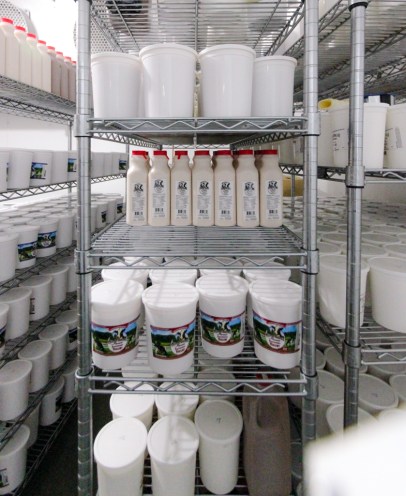
Next to the spotless and kosher-approved processing room, the chiller holds not only finished products but also clean, bright white pails of fruit puree for yogurts. I was attracted to the in-season black raspberry!

Before looking in again on the cows and heading to the fields, Stoltzfus takes time to show me the dairy processing room and the chiller full of consumer-ready milk and yogurt in the small creamery built a little over a year ago on the farm.

He offers a pint of the strawberry drinkable yogurt. Creamy, with just the tiniest hint of color from the strawberry puree. It had all the farm-fresh flavor I was thirsting for. Yum.

We talk about how co-packing for Philabundance and Sunset Farms helped launch the Cedar Dream creamery last spring.

What began for Philabundance in the past few years — utilizing PASS (PA Ag Surplus System) funds from the Pa. Department of Agriculture to reclaim surplus milk and pay the processing, packaging and transportation to turn it into cheese — is now expanding with the funding from the new retail brand, according to Monika Crosby, assistant manager of food acquisition for Philabundance.

To increase their reach, Philabundance launched the Abundantly Good brand a year ago, focusing primarily on specialty cheeses. For each pound of cheese sold through retail partners, $1.00 is returned — totaling over $9,000 so far — to buy even more surplus milk to make even more cheese, and now yogurt, for the food banks, soup kitchens, Fresh For All farm markets for eligible families, and other Philabundance clients and programs.

Crosby shares her concern about the 40% of food that is wasted yearly in the U.S., while 1 in 5 Philadelphians don’t know where their next meal is coming from.

She grew up the daughter of a dairy farmer in the New York Finger Lakes Region. When her father met Amos Zimmerman of Dairy Pricing Association during a meeting in New York, the connection between Philabundance and Lancaster County dairy farms followed.

“There is an overabundance of perfectly good milk, and yet so much of it has to be thrown out. So, we developed a business plan with Sunset Farms to utilize surplus milk to create cheese and yogurt,” Crosby says, explaining that the surplus milk goes to Sunset Farms in Ronks for cheesemaking and butter. Excess skim from butter-making goes to Cedar Dream.

wCedar-6149

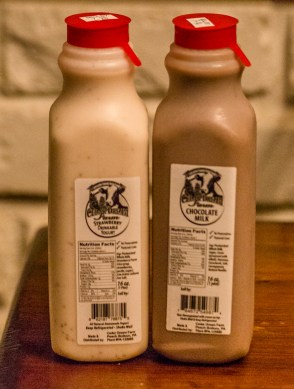
Abner Stoltzfus figures he’s made 8,000 pints of drinkable yogurt, with over half of it vanilla flavored, using surplus skim milk for Philabundance, and half from his farm’s own milk as Cedar Dream strawberry flavored drinkable yogurt (left) for the retailers selling Cedar Dream whole milk and whole chocolate milk (right). He also does other sizes, including 6-oz. bottles of milk and drinkable yogurt as well as cup-yogurt.

At Cedar Dream, the skim milk is heated to 108 degrees in the new vat pasteurizer. Yogurt cultures are added, and 12 hours later, flavoring is added. The process turns a pound of surplus skim milk into a pint of nutritious, full-bodied and flavorful drinkable yogurt — with nearly 4000 pints of vanilla made for Philabundance families since April.

This journey really began in the spring of 2017, when Philabundance used PASS funds to help divert 12 loads of surplus milk destined to be dumped. Local cheesemakers turned this into 66,000 pounds of natural, high-quality cheese for hungry Pennsylvanians, according to Crosby.

From that experience, the idea for the Abundantly Good brand was born during collaborations between Philabundance and its partners, including the Central Pennsylvania Food Bank and Chester County Food Bank, as well as the Pennsylvania dairy industry.

“We saw the great need for more high-quality dairy products… and decided to develop the Abundantly Good program to help fund our purchases of more dairy products for our community,” says Crosby.

The Abundantly Good specialty cheeses are sold to retailers like Di Bruno Brothers, Riverwards Produce, The Common Market and Third Wheel Cheese Co.

“We jumped at the chance to partner with Philabundance by selling Abundantly Good cheese, as it gave us the chance to sell something that tastes good and does good at the same time,” said Emilio Mignucci, vice president of Di Bruno Bros. in a press release. The specialty food retailer piloted the concept by carrying five varieties.

As they saw success with cheese, Philabundance went back to their farmers and learned there was excess skim milk from butter production.

“We determined that yogurt would be both delicious and nutritious for our families in need,” Crosby adds.

Stoltzfus says most of what his creamery does right now is co-packing for Philabundance, Chester County Food Bank and Sunset Farms. But he also brings a bit of his own herd’s milk in to package whole milk, whole chocolate milk, cup yogurt and drinkable yogurt under the Cedar Dream brand.

“They say it takes a full year to get started into on-farm processing. That’s about right,” says Stoltzfus, thankful for the opportunity to co-pack while he begins developing and marketing his own products. They are seeing a slow and steady increase by word of mouth in a few small local markets like the Solanco Market and East Drumore Foods.

“I want to provide consumers with a local Pennsylvania dairy product, fresh off the farm, and be happy with the product I produce,” he explains, emphasizing that this is not something that happens overnight. “I knew to be careful and not get too aggressive too fast. I want to take one step at a time, so I don’t fall.”

A former board member of Dairy Pricing Association, Stoltzfus understands the double-challenge of dairy excess pressuring farm milk prices and the plight of food-insecure families, so he was more than happy to do something that is beneficial for others.

“We have the facility to do this and are gladly doing it,” he says. “I figured we’d be focusing more on cup yogurt, but after sitting down with Philabundance, we started making the drinkable yogurt, and they seemed to really like that.”

Set up to bottle 400 to 500 pints per hour, he does about 500 to 600 pints per week with some weeks up to 3000 pints, but it’s the prep and everything else associated with having a creamery that takes time.

“I see the way things are going, the uncertainty, and I knew we better figure something out to keep us going,” he reflects.

While he likes being involved on the processing side, and sees more people exploring this option to help save smaller family farms, he’s quick to point out: “It does take some attention away from the farm and the cows.”

wCedar-6125

Copacking helps Cedar Dream creamery get established

He knows he needs to balance his time and growth, even though he’d love to take milk from every dairy farm that has contacted him as new market uncertainties emerge in his community, not just for independent producers, but also co-op members around how Sunday milk pickups are handled.

“I would love to say yes to everyone, but I am just getting started,” says Stoltzfus. “I can’t grow too fast ahead of myself. Getting established is very important.”

He is grateful to those who are helping along the way, including his lender, Ephrata National Bank, for seeing the vision in the creamery investment.

For Philabundance, it’s dairies like Sunset Farms and Cedar Dream that are a big part of the triple-bottom-line they seek with the Abundantly Good brand, according to Elizabeth Sanon, assistant procurement manager.

“This project has enabled us to provide quality dairy products that far surpass anything we’ve been able to offer to our families previously,” she says. “We are not only combating the need for better access to healthier foods… but are reducing unnecessary waste of agricultural products and creating an innovative new revenue stream for local farmers.”

Under the farmer-mantra of ‘leaving this place better than we found it,’ Sanon says that while the U.S. continues to lose family farms at a rapid rate, the number of food-insecure people continues to rise. “With Abundantly Good, we are able to create solutions within the community to address these problems.”

The hope is for the Abundantly Good brand to continue to grow in retailers and product lines to ultimately fund the free distribution of dairy products to those in need on a year-round basis.

To learn more about Philabundance, including its Fresh for All program and the Uplift and Upcycle partnerships, visit https://www.philabundance.org  or contact Kait Bowdler, deputy director of sustainability at sustainability@philabundance.org.

wCedar-6363

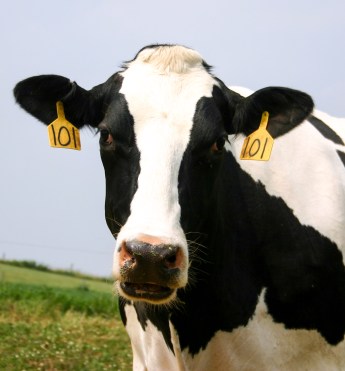
Abner and Rebecca Stoltzfus and their children milk and care for 53 registered Holstein cows and their replacement heifers. Cows spend the hot days in the fan-cooled tiestall barn and are on pasture in the cooler temperatures after the evening milking. They produce a 24,000-pound herd average with 3.9 fat, 3.3 protein.

-30-


FDA admits almonds don’t lactate, but here’s the rest of the story…

CowFace.jpg

They’re even taking her ‘moo!’ Investor-heavy high-tech startup companies are (with USDA’s help) taking her DNA to give food-grade yeast her protein-producing ability in a fermentation process to make “animal-free milk and dairy.” They’re editing her cells to grow muscle blobs in bioreactors for “animal-free boneless beef” and using her unborn bovine fetal serum as the culture media for the so-called ‘clean’ ‘animal-free’ cell-cultured meat growth. And they are taking her “moo” with website invitations to “join the ‘Moo’-vement or to get ‘moo-ving’ for all the dairy you love with none of the cows.” Meanwhile, FDA is poised — in a multi-year nutrition innovation strategy — to expand standards of identity for milk/dairy and meat/beef to accomplish nutrition innovation goals that, themselves, are being questioned and in the end may give these companies the license to steal. Photo by Sherry Bunting

FDA nutrition innovation strategy poised to ‘modernize’ how milk, beef defined as high-tech labs make cow-less versions of both

By Sherry Bunting for Farmshine, July 27, 2018

WASHINGTON, D.C. — As President Ronald Reagan famously said: “The nine most terrifying words in the English language are: I’m from the government and I’m here to help.”

Last week’s news that the Food and Drug Administration (FDA) will “help” the situation of imitation milk labels was followed by specifics from FDA Commissioner Scott Gottlieb.

He revealed in a live interview with Politico: “An almond doesn’t lactate, I will confess.”

Now there’s the sound bite everyone wants to hear, and the media and social media worlds went wild. But what does it really mean? Here’s the rest of the story and how to get involved.

Gottlieb said publicly that FDA plans to start gathering public comments before taking next steps in “redefining the rules for milk products”.

What he didn’t say in the Politico Pro Summit on July 17 is that FDA has already published a hearing and comment notice in the June 27, 2018 Federal Register for a July 26 hearing that covers three topics related to “modernizing” standards of identity, and the comment period ending August 27, 2018.

Will the government’s offer to ‘help’, in this case, result in more dishonesty and skulduggery, tricking consumers into eating what they may not otherwise choose and allowing investor-heavy startup companies to steal from farmers and ranchers, not only the identity of the products they produce, but also the very commodity-promoting checkoff dollars the government mandates they pay?

FDA already has a standard of identity for milk, and almost 100 dairy products, that it has chosen to ignore for more than a decade on any product except actual dairy milk.

Here’s the rub… If real dairy milk does not have added Vitamin D (when fat is removed Vit D is added to bring it back to full-fat levels of Vit. D), it can be deemed “mislabeled” by FDA and unable to call itself MILK.

But, if there are almonds and soybeans in your milking parlor — by all means, have at it,  label it milk — with or without Vit. D — not to mention without real milk’s levels of protein, quality amino acid profile and 9 essential nutrients.

You see, the standard of identity for milk is enforced when it comes from a cow, but not when it comes from a plant. And yet, because there is a standard of identity for milk — a nutritional and functional expectation — the plant-based knock-offs get to hijack that profile without being held to it and can selectively market from it with ‘more xxx’ or ‘free of xxx’ statements without stipulating what they are deficient in. (Example: Almond milk labels should say “88% less protein” if they are going to differentiate from the standard of identity they are hijacking).

By its own admission, FDA has maintained a non-enforcement posture on plant-based imitation beverages. Described as “enforcement discretion,” FDA has looked the other way and the dairy foods industry was either asleep at the wheel or developing imitations on the side, while these imposters were flooding the dairy case.

Meanwhile the companies investing in the imitations were free to do their market development and consumer confusion while securing space in the dairy case.

The timing of Gottlieb’s comments last week is even worse, given FDA’s launch of a multi-year nutrition innovation review as part of the agency’s nutrition innovation strategy revealed in March that seeks to expand standards of identity for products like milk and meat.

FDA meetings are happening quickly and quietly in various areas of imitation animal protein labeling and regulation. Yes, they are public meetings, but no one really knows about them.

Milk and dairy products have already been on the receiving end of identity-theft for more than a decade, and now that griddle is heating up to pancake both dairy farmers and ranchers (cattle are the target) with new plant-based mixtures, but even more horrifying are the genetically-edited cellular protein blobs or white-substance-exuding yeast grown in bioreactors yearning to be beef and milk.

There are new identity-thieves lurking about and guess what? USDA — the government — is the source of the bovine gene-edited cells and bovine gene-sequenced yeast in the heavily-investor-funded tech food startup companies that are the real focus of FDA’s recent moves.

With patents in hand — and funding from their big investors to scale up manufacturing — they seeking regulatory and labeling authority under FDA to be meat/beef and milk/dairy — without the cows.

FDA had a hearing on cell-cultured proteins July 12, and comments on regulation and labeling for this are due September 25.

A hearing on standards of identity was held by FDA on July 26 (after Farmshine press time), and comments are due August 27. (Look for more on this in next week’s Farmshine).

Dairy and beef producers need to become actively engaged in these moves by FDA because the main organizations that represent them — National Milk Producers Federation and National Cattlemen’s Beef Association — are on record stating these cell-cultured products should be subject to regulation under USDA like real meat and dairy. They are mainly seeking a level playing field in the marketplace, not opposing their classification as meat, milk, dairy.

(NMPF is vigorously defending milk’s standard of identity against plant-based imitations on nutritional grounds, but seeking a level playing field on the cell-cultured proteins).

Trust me, food and dairy manufacturing companies and investors have already hired the best and the brightest and are already involved in this FDA process — cheering for the other team.

Here’s an example: Perfect Day ‘animal-free milk’ is on the market after receiving its patent in February and raising $24.7 million in first-round startup funding from investors to scale-up manufacturing.

This company has a business-to-business (B2B) model, according to an interview with Reuters, and is already working with some of the world’s largest dairy food and beverage manufacturers. Its website states that the product is just like milk in terms of proteins, but without the cholesterol, saturated fats, lactose, and environmental impact of cattle. Just think what this portends for the dumping of even more fat-free real milk from the market.

In fact, a primary foreign investor indicated support for the Perfect Day (fake milk) startup because it aligns with United Nations Sustainability Goals for 2030. (There’s that S-word again. I hope we are paying attention to how the S-word and cattle are getting along these days). Continental Grain is a big investor in both the Memphis Meats (fake meat) and Perfect Day (fake milk) startups, while Cargill and Tyson are investors in the Memphis Meats startup.

These high-tech food sciences are attracting big high-tech investors at a rapid rate because they are viewed as “disruptor technologies,” and their websites and promotional materials hold nothing back. Milk, meat, beef, dairy – no words are off limits in their branding and marketing.

In effect, while the government forces dairy and beef producers to pay a checkoff tax for promotion of their commodities, beef and dairy — and the names of products associated with those commodities — the government is looking the other way or now potentially encouraging more identity-theft as techies enter the food space to market proteins using the dairy and beef profiles and images, without paying one dime.

As for Perfect Day, this fake-milk is made by genetically altering food-grade yeast, taking DNA from a cow and sharing its protein-producing qualities with the yeast. (Sourced from the USDA, the genetically-altered yeast are cultivated to produce ‘dairy’ protein).

This process results in a microbe that is combined with a sugar substrate (food for the microbe) to feed, grow and exude in a fermentation process the company says is like “craft-beer-style-brewing,” producing protein “building blocks” for making dairy milk, yogurt and cheese. Perfect Day’s website says: “Dairy reinvented: Sustainable. Kind. Delicious.”

The end game is to provide a ‘base dairy’ protein that looks and tastes like milk, for inclusion in manufactured dairy products like cheese, ice cream, pizza, yogurt, and to work “synergistically” with the dairy foods industry as — according to the website — “a complement to cow-based milk that takes some of the stress away from the factory-farming system, rather than replace dairy cows entirely.”

fake-meat.jpg

Enter a caption

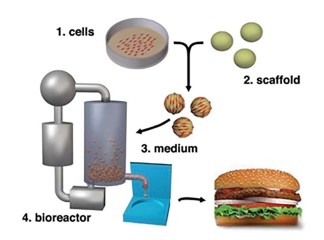
Memphis Meats and other companies on the fake meat side are doing similar things with cell-culturing to grow cellular protein blobs in laboratory bioreactors.

In each case, the ultimate goal is to decrease the need for cattle — be they dairy or beef bovines.

Think about this for a moment. Even at a 1 to 3% inclusion rate in common dairy foods or ground beef, these lab-cultured proteins and genetically-altered yeast give processors even more control over supply, demand and pricing of milk as well as boneless beef, and if standards of identity allow this, or if FDA enforcement discretion looks the other way – consumers will never know the integrity of their food has been changed.

If FDA modernizes its standards of identity to accomplish the goals as outlined by Commissioner Gottlieb — including a reduction in saturated fat consumption despite revelations that saturated fats are healthful not harmful — it is entirely possible that FDA’s new guidance could allow these protein “innovations” in standardized dairy and meat products, without being considered mislabeled and with no indication to consumers.

Gottlieb has already established FDA’s desire to accomplish certain nutritional goals by spurring innovation with more “flexible” standards of identity.

Ahead of the July 26 hearing, FDA published its intention to cover three aspects in the standards of identity discussion: 1) Protecting consumers against economic adulteration; 2) Maintaining the basic nature, essential characteristics, and nutritional integrity of food; and 3) Promoting industry innovation and providing flexibility to encourage manufacturers to produce more healthful foods.

FDA’s Federal Register notice also says the following: “Our intent is that modernizing standards of identity to improve the nutrition and healthfulness of standardized foods will promote honest and fair dealing in the interest of consumers and achieve the goals of the Nutrition Innovation Strategy.”

How can FDA pursue this course in the face of what has been revealed in the past three to four years? It appears that bringing these B2B products to market, along with the FDA nutritional innovation strategy, are happening ahead of the battleground brewing for the next round of Dietary Guidelines.

It appears they want to modernize standards of identity for dairy within less than one year, to get them in place before the current flawed dietary guidelines are challenged in the 2020 cycle, which begins in earnest in 2019.

Numerous investigations and scientific reports and studies show that the saturated fat avoidance of more than 30 years was not only never proven to be healthful, it is now shown to be harmful. And the rhetoric from the United Nations and various Sustainability projects continues to focus on cattle as being bad for the planet, despite evidence to the contrary.

FDA wants comments that specifically talk about how the agency can use standards of identity to encourage the production of more healthful foods, to take into consideration technology, nutrition science and marketing trends, and to assess what consumers expect these standards to tell them.

Is FDA about to help the food industry blur the lines of food integrity to trick people into eating according to USDA/HHS flawed set of dietary guidelines (and UN environmental sustainability assumptions)?

That would be the ultimate dishonesty, and much worse than the 10-plus years of ignoring dairy identity theft already happening daily in the supermarket dairy case. Expanding the standard of identity, depending upon how it is accomplished, would give large, powerful, multinational food corporations a true license to steal.

Last week, the American Dairy Coalition (ADC) launched a “Protecting Milk Integrity Initiative” to advocate for the proper use of federally standardized terms established for the word “milk” on product labels. ADC is a coalition of dairy, ag and livestock producers, and they are devoting a branch of their organization to work specifically on “providing clarity and consistency for consumers across the nation,” the organization said in a July 17 news release.

ADC is getting the word out that it believes the dairy industry must speak up to ensure the FDA understands how important it is, not only for the current standard of identity for milk and dairy products to be upheld, but for it to be fully enforced — restricting the use of the word “milk” on all future plant-based or alternative product labels.

They point out that the price of milk continues to decline while sales of plant-based alternatives are up 61% over the past five years with projections of more market share gains in the future.

Don’t be fooled by FDA’s admission that almonds don’t lactate. Instead of the enforcement of milk’s standard of identity that dairy farmers have been waiting for, FDA has already quietly launched its process for modernizing standards of identity to achieve specific (and flawed) nutritional goals.

To comment on Docket No. FDA-2018-N-2381 for “FDA’s Comprehensive, Multi-Year Nutrition Innovation Strategy,” due August 27, 2018, use the docket portal at https://www.regulations.gov/docket?D=FDA-2018-N-2381.

To comment on Docket No. FDA-2018-N-2155 for “Foods Produced Using Animal Cell Culture Technology, due September 25, 2018, use the docket portal at https://www.regulations.gov/docket?D=FDA-2018-N-2155 .

To mail comments for either one, reference the appropriate docket name and number in your letter and mail to: Dockets Management Staff (HFA-305), Food and Drug Administration, 5630 Fishers Lane, Rm. 1061, Rockville, MD 20852

In addition to commenting, a petition has been developed by the American Dairy Coalition’s Protecting Milk Integrity Initiative, and signatures are being collected to submit with public comments. ADC is also taking donations to raise funds to fight this cause.

More information about Protecting Milk Integrity Initiative, visit American Dairy Coalition

To learn more about the July 12 FDA cellular protein hearing (fake meat) and July 26 standards of identity hearing (fake milk), stay tuned to future editions of Farmshine for full reports ahead of the deadlines for commenting to FDA on both.

-30-

CAPTIONS

FAKE MEAT and FAKE MILK

New Harvest and Memphis Meats testifed to FDA on July 12 that cell-cultured ‘meats’ are inevitable. They showed diagrams of how gene-edited bovine DNA and culture media are combined in bioreactors to make cellular blobs they want to call ‘boneless beef’ — without the cow. Similar diagrams can be found for Perfect Day and their phrase: ‘all the dairy you love with none of the cows’ at their website perfectdayfoods.com. Screenshot of materials displayed during FDA hearing by Sherry Bunting

Global dairy thoughts Part 3: Do regulated milk checks reflect true value?

KYTour-223w.jpgBy Sherry Bunting, Farmshine, June 1, 2018

BROWNSTOWN, Pa. — To discuss the U.S. role in global dairy trade and the role of global trade in how the value of milk is, or is not, reflected in milk checks at the farm level, we first have to understand our product differences.

For starters, there are subtle differences between global skim milk powder (SMP) and domestic nonfat dry milk (NDFM), traders say they view the two as one market. Global SMP trends translate promptly to CME trends for NFDM.

Product listings describe SMP as a standardized product with a minimum 34% protein, whereas NFDM is variable, ranging as high as 38% protein. The U.S. price for NFDM normally lags the global price for SMP, in part because it lacks the standardized specifications. Thus, the lag is even more significant on a per-protein-unit basis.

The U.S. makes more SMP today than 10 years ago, but NFDM production, typically a byproduct of butter production, remains more than four times larger than SMP. Year-to-date SMP production through March trailed year-ago by 15% while NFDM production was up 15%.

According to the U.S. Dairy Export Council (USDEC), the U.S. exports 50% of its combined production of SMP and NFDM, and the U.S. has about 25% of the total export marketshare for these powders.

Butter is also different. Globally-traded European style butter is fermented (soured) before churning, mostly sold unsalted and contains 82 to 85% butterfat. U.S.-produced butter is churned from sweet cream that is not cultured, contains 80% fat, and is available salted or unsalted.

More European style butter is made today in the U.S. than 10 years ago, and it has curried favor with urban chefs for its cooking and baking properties.

Specialized dairy ingredients, like milk protein concentrate (MPC) and whey protein concentrate (WPC), are also significant globally and rely on specialized technologies and markets. The U.S. makes and exports a lot of whey products, WPC and WPI as byproducts of cheese production. These products have significant value to ingredient markets.

At a meeting in Lebanon, Pennsylvania last fall, Dr. Mark Stephenson, University of Wisconsin-Madison, indicated how some cheese plants view the whey products as primary to the cheese. Specialty plants have also come online to make MPC and MPI for infant formula, sports and geriatric beverages, and other products for dairy ingredient markets.

Another product that is important globally, and traded only on global platforms, is whole milk powder (WMP). It is a market equalizer. The global market performance of WMP gives insight about both the fat and the protein sides of the market.

China’s current demand for WMP may be driving what is now being described as a potential “acute” global shortage of butter.

Like whole fluid milk sales in the U.S., WMP sales globally represent whole milk finding one market rather than being broken down for various markets. Often, this product is purchased by countries that reconstitute it for drinking milk and flavored dairy beverages. The bakery and confection industries also utilize both SMP and WMP.

More U.S. plants are making WMP. Interestingly, USDA’s March Dairy Products Report showed production of WMP at 21.6 mil lbs — up 11% from February and a whopping 93% greater than a year ago. It was the highest level of WMP production since 1993.

GlobalThoughtsPart3_CHART#2In fact, going back through USDA records to 1983, the U.S. once made up to 700 metric tons of dry whole milk powder (Chart 2). We don’t hear about that.
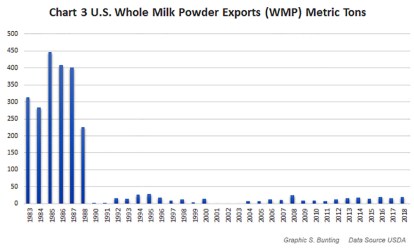
In the 1980s we also exported a lot of WMP, up to 420 metric tons of it (Chart 3). We don’t hear about that either.

GlobalThoughtsPart3_CHART#3One reason we don’t make more WMP today is we have a large and growing domestic market for cheese and butter and cream products. U.S. manufacturers want to keep the cream and not sell it overseas, whereas other dairy-producing nations — like New Zealand with its much smaller consumer population — make a lot of WMP for Asia.
China is a large, but erratic, buyer of WMP. In first quarter 2018, the U.S. exported 20% more WMP than a year ago, but the amounts are small compared to skim powders.

In fact, the drive of consumers away from margarine has led to greater sales and production of butter in the U.S. As more butter is made, and more cream salvaged for other products, NFDM production also increases as part of that model.

 As fluid milk sales decline in the U.S., more WMP can be made, and as whole fluid milk demand is restricted by dietary guidelines, more fat becomes available as a byproduct to dairy processors.

Right now, China is buying a lot of WMP and paying higher prices. So high, in fact, that Australia is seeing limitations in infant formula sales in their country due to China’s pull on powder stocks from that country.

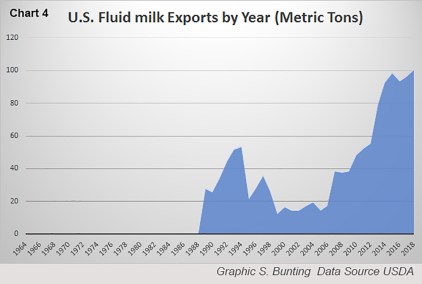
GlobalThoughtsPart3_CHART_#4One lesser-known category of exports that grew by 85% in the first three months of 2018 is UHT shelf-stable milk. China is the biggest buyer, and DFA is a primary supplier with its California Gold, a primarily 3.5% fat, shelf-stable drinking milk with a non-refrigerated shelf life of one year. This product is shipped to Walmart and other chains in China. These sales have grown significantly since 2006. (Chart 4)

(Interestingly, here in the U.S. during the first five months of 2018, major supply-chain-related absences of whole milk from supermarket shelves — while fat free and lowfat rows are stocked full — have been observed across a wide swath of the U.S., mainly east of the Mississippi, and across a variety of supermarket chains with a sort of random consistency)

With the U.S. system set to keep the cream and export as much powder as possible, problems arise when geopolitical factors interrupt that export market pipeline. This can have big consequences in a market where demand for cream vs. skim is out of whack — in part because the U.S. dairy industry’s processing, marketing, pricing, promotion and exporting schemes have been designed to work in tandem with 40 years of flawed lowfat government health guidelines.

A national dairy pricing hearing is needed to look at the reality of today’s domestic and global markets.

Are dairy farmers receiving the true value of the milk they produce? If the true value of milk components were passed through the supply-chain to the farm level more accurately, could this help encourage right-sized production growth?

Can the pricing of “growth milk” be more directly aligned to global market growth trends? We’ll explore that in a future part of this series, and it is an important question for the industry to tackle.

In Part Four, we’ll look at the differences in U.S. and global trading platforms and pricing.

 -30-

As producers struggle, cooperatives fumble: How is ‘excess milk’ determined to be a problem in deficit areas?

By Sherry Bunting, updated from Farmshine, June 1, 2018

KENTUCKY — As the calendar turns to June, the saga of lost markets has meant a transition for some, exits for others, and in Kentucky, 14 producers who still faced May 31, 2018 contract terminations with Dean Foods were given a 30-day reprieve.

“It’s down to the wire and we’re working on a hail-Mary,” says Maury Cox, executive director of the Kentucky Dairy Development Council (KDDC). “We started with 19 affected producers, and we’re down to 14. Some have exited the business and we may lose a couple more.”

According to Cox, the KDDC and other state officials are still working, leaving no stone unturned, for these 14 producers, confirming on May 28 that Dean Foods did extend their contracts to July 1.

Five of the original 19 affected producers in Kentucky have sold their cows and a few others, like Curtis and Carilynn Coombs, are in the process of incrementally downsizing their herds as the termination approaches.

In southern Indiana where seven producers were unable to find a market, Doug Leman, executive director of Indiana Dairy Producers, indicates that some are drying off cows, others are selling, and one is getting into on-farm milk processing. There are a select few that have been offered 30-day Dean contract extensions, mainly because their contract renewal dates were different, and Dean could utilize the milk.

In Kentucky, there is the added and unusual situation of an 800-cow dairy not being able to move into their new 8-robot dairy barn because the processor receiving their milk classified the second location, two miles from the main barn, as a start up instead of an existing patron’s modernization project that in total represented a modest expansion.

As the new robot barn sits empty, and many contacts made with no takers, Kentucky dairy leaders scratch their heads at the gate-keeping that is going on — wondering how is it possible that these things are happening? That in a milk deficit region, just two loads of milk from 14 former Dean Dairy Direct farms — that now have until July 1 — can’t find a home? That in a milk-deficit region, this separate situation happens to  a progressive dairy having to let their new completed barn sit empty and keep milking exclusively in the old facility, in order to keep their existing milk contract with another bottler?

All of this happening in a state that is part of the Southeast region that University of Wisconsin dairy economist Mark Stephenson says has a 41-billion-pound milk deficit in terms of production and consumers. And all of this happening in a state spanning two Federal Milk Marketing Orders (5 and 7) that regularly utilize transportation credits and diversions to move milk — bringing milk in from up to 500 miles away to meet the actual processing needs.

It doesn’t make sense. The movie playing-out in Kentucky could come to other theaters in the eastern U.S., and the previews are already being shown.

Repeated emails to Dean Foods went unanswered over the past two weeks as the company’s corporate communications director indicated by automatic reply that she is on “paid time off” until June 4.

Phone calls and emails to the communications department for the Kroger Company have also not been returned as Kroger bottles 100% of its store-brand milk at its own plants, including the Kroger Winchester Farms Dairy plant in Winchester, Kentucky, which is supplied by Select Milk Producers, Inc. and Dairy Farmers of America (DFA).

IMG-0010x(Incidentally, a billboard popped up recently on I-65 North outside of Louisville, Kentucky –picturing Holstein dairy cows grazing and proclaiming Kroger as “proud to support Kentucky farmers”. What could this mean? As noted in this report, requests to Kroger’s communications department — to understand what these billboards mean and what percentage of milk in Kentucky Kroger stores actually comes from Kentucky farms — have gone unanswered.)

Prairie Farms recently announced it is closing a plant in Fulton, Kentucky and will operate a distribution point there. Prairie Farms and DFA own or supply other milk processing assets in the state and region.

Numerous sources outside the directly affected region indicate that Prairie Farms is working with Walmart to source milk and bottling for Walmart while the Fort Wayne plant start up is delayed . Prairie Farms, Great Lakes Milk Producers and Foremost Farms are the three cooperatives, along with Walmart’s independent milk contracts, meeting the single-source loads requirement for Walmart’s new plant in Fort Wayne, Indiana.

(Author’s note: While Walmart touts the milk for its new bottling plant, once fully operational, will come from within 180 miles of the Fort Wayne plant, the plant’s reach in Great Value bottled milk distribution will be much farther — up to 300 miles away where milk that is more ‘local’ to those Walmart stores in Kentucky and southern Indiana is displaced. So far, none of the cooperatives working with Walmart have taken on this southern milk.)

With Prairie Farms, Dairy Farmers of America (DFA), and Select Milk Producers all supplying milk processing operations in Kentucky, not one has agreed to take on the Dean-dropped dairy producers as members.

New members are a problem for Prairie Farms when their own members are on a quota system, and yet, the cooperative is working with other cooperatives and Walmart to source milk to supply a consumer need that was previously sourced from the dropped herds via the Dean plants.

As for other plants, even Bluegrass Dairy and Food, a dairy powders and ingredients company — with plants in Glasgow and Springfield, Kentucky balancing milk supplies in the region — is not exclusively owned by the local Williams family who founded it in 1995. The majority of the company was purchased in 2010 by a private investment firm. Sources indicate Bluegrass cannot accept the displaced milk from independent producers because they are completely co-op supplied and balance co-op milk at the two Kentucky plants as well as a third plant in Dawson, Minnesota.

When asked if DFA is taking new members, John Wilson, senior vice president and chief fluid marketing officer wrote in an email: “Our Area Councils monitor local milk marketing and manage membership decisions as well as other local issues. Membership decisions by this group of local dairy farmers are evaluated based on a number of factors, including an available market for milk, which continues to be out-of-balance in some areas of the country.”

On the Kentucky situation, specifically, Wilson said that, “We are concerned for family farms. We recognize the dairy farmers in Kentucky and southern Indiana who have been displaced face a tough situation. While there is excess milk in the area and finding a home for this milk will be a challenge, we are working with others to determine if we can provide any assistance.”

DFA-FMMO.jpgFollow up questions about how “excess milk” is determined to be a problem in a milk-deficit area, have not been answered. (Since publication, DFA’s John Wilson replied in an email that the excess milk situation is really the region, not specifically Kentucky.” One can see why when comparing the DFA Area Council Map, above right, to the USDA Federal Order Area Map, above left…  Note how in the above DFA Area Council Map, the lines are drawn with the navy blue of DFA’s Mideast Area Council dipping straight into the maroon of the deficit Southeast Area Council right through central Kentucky, for example, and it becomes apparent that the decisions can be weighted toward surplus transport between Orders within Area Councils and between them.)
After all, milk moves in mysterious (and not so mysterious) ways.

MilkTruck#1Meanwhile, of the over 100 dairy farms in eight states affected by the Dean contract terminations, it has been the willingness of smaller regional bottlers and smaller regional cooperatives to mobilize compassion, leadership and local marketing efforts to pick up the slack.

In Pennsylvania, it was localized (PA Preferred / Choose PA Dairy) bottlers like Schneider’s Dairy and Harrisburg Dairies that picked up many of the eastern and western Pennsylvania farms, with much of the balance being picked up by New York-based Progressive Dairymen’s Cooperative, marketing with United, a bargaining co-op covering both New York and Pennsylvania. Six Pennsylvania farms sold their cows.

In addition, one New York producer shipping to the Erie, Pennsylvania plant slated for closure, made his last shipment of milk on May 31 and sold his 150-cow herd and equipment, although he is hoping to rent the freestall barn he built a year ago.

In Tennessee, at least one farm exited, and all but one remaining were picked up by the new Appalachian Dairy Farmers Cooperative that is marketing to a bottler featuring local milk.

In northern Indiana, the farms with lost markets were picked up by two regional cooperatives Michigan Milk Producers and the Ohio-based Great Lakes Milk Producers.

In addition, with the new Class I Walmart plant in Fort Wayne, and the destabilization of fluid milk sales as U.S. population growth is not making up for declining per-capita fluid milk consumption, Dean plant closings are on the horizon. Sources indicate that Dean plans to close as many as seven plants by September but that no new producer-termination letters are expected in the near-term.

This level of Dean consolidation was mentioned in quarterly earning reports. However, Dean Foods has not publicly announced specific plant closings and repeated emails and calls to the Dallas-based company were not answered.

Three plant closings later this year have been confirmed by town authorities quoted in press reports.

One is the Garelick plant in Lynn, Mass.

Another is Dean’s Meadow Brook plant in Erie, Pennsylvania. The Erie Regional Chamber reported to Erie News Now that Dean intends to sell the Erie plant and transfer its bottling to the plant in Sharpsville, Pennsylvania while purchasing a smaller property in Erie for a distribution center.

The third reported Dean plant closure of an estimated seven to be announced is the Louisville, Kentucky plant where many of the Kentucky and Indiana farms that received contract-termination letters ship their milk.

Meanwhile, as Walmart’s new milk sourcing with the “Midwest supply-chain” gets underway ahead of its new Fort Wayne plant becoming fully operational, the 90 to 100 million gallons of milk per year (roughly 800 mil. lbs) are already being moved away from regional bottling and distribution channels to consolidated sourcing and distribution — with the biggest effects at the farthest edges of the new Fort Wayne plant service area, like Kentucky, where dropped producers are unable to find milk buyers.

There just does not appear to be any market access at other plants in the region without being members of cooperatives like DFA or Select or Prairie Farms, and despite multiple attempts by state dairy leaders, none of these three cooperatives have stepped up to accept the displaced producers as members.

As noted in a May 15 Farmshine report,  the KDDC, Kentucky Department of Agriculture and the Governor’s Office of Ag Policy have all been involved in helping these farms find a solution.

It is not an issue of no processors for the milk. The issue is the gates to these processors are closed to these displaced independent producers because they are not already members of the cooperatives manning the gates.

In the most recent March/April edition of KDDC’s Milk Matters newsletter, president Richard Sparrow talked about the situation for these Kentucky dairy farms as “operating in a very limited, if not closed market, with few or maybe no options.”

In his Milk Matters president’s corner, Sparrow offers this commentary:

“It is a really sad commentary on the state of our dairy industry that all the major fluid milk processors in Kentucky have a large percentage of their day-to-day milk supply coming from farms hundreds of miles outside our state’s boundaries. Yet, at the same time, Kentucky dairy farm families can’t find a home for their milk,” writes Sparrow. “This situation did not happen overnight. It is not an oversupply problem or a quality problem. It is a marketing problem.”

KDDC executive director Maury Cox said in a phone interview that he did not want to be negative. However, when he looks at the whole picture of the market, the increased hauling and marketing fees, the quota programs and base-excess programs in this milk-deficit region, the amount of milk being sold $1.00 or more below mailbox price, and the effect of potentially losing these producers upon the infrastructure for remaining producers, he admits that it is difficult to see light at the end of the tunnel.

“They are putting us out,” he says. “I think we are looking at the complete demise of Kentucky’s dairy industry. I think that is what we are seeing.”

-30-

Fort Wayne bottling startup delayed, How Walmart may shape dairy landscape

By Sherry Bunting, edited from Farmshine and Farmers Exchange May 18, 2018

GreatValueMilk(WalmartPhoto).jpgFORT WAYNE, Ind. — Bottling at Walmart’s first-of-its-kind milk plant in Fort Wayne, Indiana will be delayed.

“We’ll begin bottling later this summer and will kick in to full production later this year,” notes Walmart spokesperson Molly Blakeman in an email response.

Until then, she said, “we have a plan in place to ensure there are no disruptions in the supply chain for customers.”

Described earlier as a 250,000 square-foot plant to bottle Great Value and Member’s Mark milk for 600 Walmart and Sam’s Club stores, Blakeman confirmed: “Once it becomes operational and once fully utilized, it will be one of the largest fluid milk plants in the U.S.”

Processing capacity was not disclosed, but Blakeman did discuss milk sourcing.

“By operating our own plant and working directly with the dairy supply chain in the Midwest, we will further reduce our operating costs and pass these savings on to our customers, so they can save money,” she related.

“We are working with three milk cooperatives and a number of independent farmers. Each farm that is supplying milk to our facility is within 180 miles of the plant,” noted Blakeman, explaining that farms terminated by Dean Foods that are “closer to Fort Wayne have signed contracts with the cooperatives to work with Walmart.”

She indicated the plant will serve stores “throughout most of Indiana, Michigan, Ohio and parts of Illinois and Kentucky.”

Beyond that, she confirmed: “Dean Foods remains a very large fluid milk supplier to many (Walmart) stores.”

When questioned about reports that Walmart is already eyeing sites for future plants, Blakeman said they want to be successful with this plant before seeing if other opportunities exist.

“Walmart’s goal is to produce the highest quality and freshest-tasting fluid white milk and chocolate milk possible — and deliver a great value on that purchase,” Blakeman stated.

Meanwhile, the milk price wars among supermarkets, discounters and big box stores have reached new lows of 67 cents per gallon in states without loss-leader protection — including Indiana, Kentucky, Michigan, Ohio and Illinois, the states to be served by the new Walmart plant.

Does Walmart accept these below-cost retail milk prices as a cost of customer acquisition and loyalty?

Blakeman cited the Federal Milk Marketing Orders (FMMO): “Any loss Walmart takes on milk cannot be passed on to the producer because of how our milk payments are regulated by the FMMO. We, as a non-coop processor, have a minimum milk price that is set by the government that we have to pay our producers and cooperatives.”

Furthermore, noted Blakeman, “Walmart will not do well in this plant if our dairy producers do not do well. We will provide a dedicated market for their milk, so they can focus on milk quality and animal care.”

She notes that Walmart understands the role of quality.

“We have strict policies in place in regard to animal welfare,” Blakeman explained, noting full support for the National Dairy Farmers Assuring Responsible Management (FARM) program initiated by National Milk Producers Federation, a milk cooperative membership organization, and Dairy Management Inc., an organization funded by the mandatory milk promotion checkoff.

At a link provided by Blakeman (https://corporate.walmart.com/policies), Walmart states that it is “committed to continuous improvement and aspires to achieve the globally-recognized Five Freedoms of animal welfare for farm animals in our supply chain.”

When asked how Walmart’s milk-sourcing addresses consumer desires for locally-produced milk, Blakeman put the focus on the plant.

“The farms and coops we are sourcing from are local and family-owned producers,” she said. “Milk being supplied to our plant comes from no further than 180 miles away.”

Walmart also seeks to work with single-source loads instead of commingled farm milk, and their efforts to work more directly with the milk supply chain go beyond the area served by the Fort Wayne plant.

A number of reports have surfaced among industry sources that some of Walmart’s milk-source will make its way to Dean Foods’ plants in Pennsylvania that bottle a mix of in- and out-of-state milk and where Walmart’s Pennsylvania milk dealer license is associated.

“The sourcing strategy in Pennsylvania remains unchanged since the Fort Wayne plant is not supplying any of our stores in Pennsylvania,” said Blakeman when asked about this potential development. She declined to address questions about the milk sourcing strategy further east.

In 2013, Walmart acquired a Pennsylvania milk dealer license from the Pennsylvania Milk Marketing Board listed for six fluid milk bottling plants owned by Dean Foods — one in New Jersey and five in Pennsylvania — including plants that cut half of their dairy farm suppliers, 42 in Pennsylvania, four in Ohio and one in New York.

In Pennsylvania, the 80-year-old milk marketing law authorizes the Pennsylvania Milk Marketing Board (PMMB) to set retail and wholesale milk prices at levels to cover retailer and processor cost-recovery plus a profit margin.

The PMMB also sets a producer-over-order premium that is only followed back to the farm level on milk that meets three criteria — produced and bottled in Pennsylvania and sold to stores or warehouses within Pennsylvania’s borders.

That premium was reduced from $1.60 per hundredweight of milk to 75 cents in January due to pressure from out-of-state milk sourcing that allows retailers and processors to keep the producer premiums.

Tennessee has a loss-leader law for milk. While not as robust or lawyered-up as Pennsylvania’s complex system, the provision keeps retail milk prices from going too low.

In addition, Pennsylvania has a state logo (PA Preferred) plants can apply for, and if qualified, use the logo to signify the milk was produced on farms in Pennsylvania. Efforts are underway in Tennessee to see if something like this can be achieved, and the state already has bottlers doing local marketing.

Producers who received Dean letters in Pennsylvania and Tennessee were largely able to find new milk contracts with bottlers that source and advertise their milk using local marketing strategies, but even in those states, some of the affected farms ultimately had to sell their cows.

While a few farms in each affected state sold cows and exited the dairy business, most who found markets, found them with smaller bottlers or smaller cooperatives. However, 14 in central Kentucky, 7 in southern Indiana , 1 in Tennessee, 2 in Ohio and 1 in western New York, have not. (Update since publication: Dean Foods did give a 30 day extension until July 1 to the Kentucky producers and a select few in southern Indiana whose contract renewal dates differed.)

As reported previously, of the 25 Indiana farms facing Dean contract terminations on May 31, those in northern Indiana have largely been resolved with offers from two cooperatives — Michigan Milk Producers and Great Lakes Milk Producers — while the southern Indiana farms are having more difficulty, according to Doug Leman, executive director of Indiana Dairy Producers.

“We have had contacts with some of the affected Indiana farms and are looking for opportunities for them,” said Doug Brechler for Great Lakes Milk Producers. “Like the affected farms, we are still making decisions. We can only take the milk we have a market for.”

Brechler confirmed that Great Lakes Milk Producers is one of several entities that will be supplying the Fort Wayne Walmart plant. “We’re thankful to be one of the suppliers and look forward to working with Walmart and happy to be a part of providing them with high quality milk and service.”

Brechler and Leman see the new Walmart plant as an opportunity for milk producers in the Mideast milk marketing area even though the current situation in milk markets is difficult at this time.

The farms in Kentucky, southern Indiana, Ohio and western Pennsylvania having trouble finding new milk buyers are on the southern and eastern ends of the area to be served by the new Walmart plant and on the fringes of the Southeast and Northeast regions that are considered milk-deficit. (Update since publication, some of the remaining western Pennsylvania farms were picked up by Schneider’s Dairy, a PA Preferred milk bottler, that has taken on at least 8 of the 16 western Pennsylvania producers dropped by Dean).

These eastern deficit regions were noted recently by University of Wisconsin dairy economist Dr. Mark Stephenson in a “changing dairy landscapes” presentation at the Heartland Dairy Expo in Springfield, Missouri. Stephenson said getting milk from surplus regions to deficit regions is a “tricky challenge.”

Most of the farms still seeking new milk buyers are not large enough to be “single-source-loads,” and they are outside of the 180-mile sourcing distance for the Fort Wayne Walmart plant. Yet the Walmart store brand in their area will be supplied by the new plant instead of the regional Dean plants these farms had long supplied.

According to state officials and Federal Order reports, there are other processors operating in the region, and supplemental milk is regularly brought in from outside the area to serve their needs.

In Kentucky, for example, two cooperatives operating across a wider region are the gatekeepers to these plants, and they have previously indicated they will not accept new members.

Maury Cox, executive director of the Kentucky Dairy Development Council is concerned that losing the 14 Kentucky farms could damage the dairy infrastructure and unravel the state’s significant dairy industry.

“It’s down to the wire and we’re working on a hail-Mary,” says Cox. “We started with 19 affected producers, and we’re down to 14. Some have exited the business and we may lose a couple more.”

He says the KDDC, Kentucky Department of Agriculture and the Governor’s Office of Ag Policy have all gotten involved helping these farms find a solution before their last pickup.

Both Leman and Cox share the concern that if the southern Indiana and central Kentucky farms are lost, other farms in the region — both independent and cooperative – will be more vulnerable in terms of future milk markets and transportation costs.

-30-

Pa. Gov. Wolf names Barley to PMMB, Senate confirmation hearings in June

DairyFarm(EasternLancCo)7138w.jpg

By Sherry Bunting from Farmshine, May 25, 2018

HARRISBURG, Pa. — The Pennsylvania State Senate will take up consideration and confirmation of two new appointments from Governor Tom Wolf for the Pennsylvania Milk Marketing Board (PMMB)

The Governor’s appointment of Lancaster County farmer and dairy producer Rob Barley of Conestoga and education technology consultant Carol Hardbarger, Ph.D., require confirmation by the state Senate.

That process is anticipated for June and begins with a Senate hearing via the Senate Ag Committee, which could be scheduled as early as June 6.

RobBarley (1)

Rob Barley

While the Pennsylvania Milk Marketing Law does not specify two “farmer” representatives and one “consumer” representative, the familiar practice over the years is for the 3-member board to be comprised in this manner. Rob Barley has been nominated by the Governor, pending confirmation by the Senate, to fill the expired “farmer” seat of PMMB chairman Luke Brubaker, also a Lancaster County dairy producer.

According to the Milk Marketing Board website, Brubaker was first appointed by Gov. Tom Ridge in 1997 and re-appointed by Governors Ed Rendell and Tom Corbett. Brubaker’s third term expired in 2016.

“I am supporting Rob Barley’s nomination and think he will do a great job in this position, given the current challenges for dairy today,” said Senator Scott Martin of Lancaster in a phone interview Monday. “Even thought Rob comes from a larger dairy farm, I have already heard from many smaller farms who support his nomination because they see that Rob understands their plight.”

The PMMB completed the second of two listening sessions last week on ideas presented by the Pennsylvania Department of Agriculture through a petition by Ag Secretary Russell Redding as well as ideas presented by the public.

The dairy farming community has brought concerns over the past 10 to 15 years about the transparency of the PMMB over-order premium and other regulatory and statutory aspects of the Milk Marketing Law, as well as questions about the modern-day impact of this unique system not found in other states at a time when milk moves coast to coast and around the world.

“This (appointment) is just one step in us looking at the dairy issue and how it impacts our communities and our local farmers,” said Sen. Martin. “We can’t continue to allow expired positions to go as long as it has in this case. We need to show that we care about these issues, and get this confirmation done.”

Martin notes he is “glad the Governor nominated these individuals for the farmer and consumer representation. We need to get them confirmed and move forward to address the dairy issues.”

Barley operates Star Rock Farms, a diversified dairy, livestock and cropping enterprise, with his brother Tom and cousin Abe. They were recognized as 2017 Mid-Atlantic Master Farmers. Among other involvements, Barley has served on the board of the Lancaster County Ag Council and the township planning commission. He has also served as president of the Dairy Policy Action Coalition and has testified in past years before both the Senate and House Ag Committees when various bills were considered to address transparency in the PMMB pricing system.

If confirmed by the Senate, Barley would fill the expired seat of Luke Brubaker, who has served on the Milk Marketing Board for 21 years, including the past nine as chairman.

Dr. Hardbarger, an education technology consultant, earned her degrees in agriculture and education at Penn State University. She is a former assistant professor at Cornell and has applied her specialized skills to various positions in public and private education with interest in technology and resource utilization, professional development, and grant and proposal writing.

If confirmed by the Senate, Hardbarger would fill the expired board seat of Lynda Bowman, a Lancaster resident who was appointed by Governor Tom Corbett in 2011. She previously served as secretary of the PMMB and is a past president and lifetime member of the International Association of Milk Control Agencies.

The third member of the board unaffected by these appointments is Jim Van Blarcom, a farmer and dairy producer from Columbia Cross Roads, Bradford County. He was appointed by Gov. Tom Corbett in June of 2014.

To support the Governor’s appointments to the PMMB, contact your state Senator. Also contact the Senate Ag Committee chairman Elder Vogel at 717.787.3076 and Senate President Joe Scarnati at 717.787.7084 by June 6. To locate your state Senator, use this guide

-30-

Start your engines… the milk’s a’chillin’

By Sherry Bunting, May 25, 2018

kim-minich-684x1024x

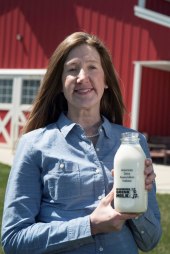
Photo credit ADAI

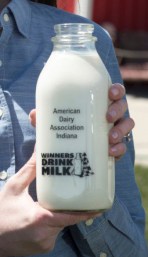
INDIANAPOLIS, Ind. — Just as those Indy Cars are fueled to perfection for 500 miles at blistering speeds of 215 to 225 mph, that famed Bottle of Milk fuels the checkered-flag dreams of winners at the finish line of the Indy 500.

It’s the honor of the Milk People (aka dairy farmers) to get it there.

While I didn’t meet this year’s Indy 500 Milk Woman — I did meet her husband and children during a visit to the farm last March while passing through Northern Indiana.

Kim Minich, Triple M Dairy, LaPorte, was the rookie last year when Milk Man Joe Kelsay, Kelsay Farms, Whiteland, had the honor of delivering the “coolest trophy in sports.” This year, Kim is the veteran, and her rookie understudy is Andrew Kuehnert, Fort Wayne. They all hail from six and seven generation Indiana dairy farms.

kim-minich-684x1024.jpg

Photo credit ADAI

Last year, as the ‘rookie,’ Kim learned the ropes for this year’s 102nd big race at the Indianapolis Motor Speedway, where legends are born, speed and tradition rule, and milk always wins!

During my brief March visit to Triple M Dairy where Kim and her husband Luke are part of the dairy farm that has been in his family since 1909, their children Anna, Kate, Mary, Will and Calvin were looking forward to May. They talked of how exciting it was to see Mom’s rookie year as Milk Woman in 2017 … How it felt like the dairy farmers were celebrities like the Indy car drivers — two long and storied traditions brought together when three-time Indy 500 winner Louis Meyer requested buttermilk to quench his thirst after his second win in 1933.

Indy500-4137According to American Dairy Association Indiana (ADAI), Meyer was then photographed in Victory Lane drinking milk after his third win in 1936. Milk was presented off and on during the next several years until, in 1956, the Bottle of Milk was made a permanent part of the post-race celebration by Indianapolis Motor Speedway owner Anton “Tony” Hulman.

Today, the milk choices of the drivers are kept cold in a secure “Winners Drink Milk” cooler.

The drivers are polled ahead of time on their milk preferences — whole milk (3.5%), 2%, 1% or fat-free, and the cooler is stocked with these choices, so the ‘milk people’ are ready.

For this year’s race, 17 drivers chose the whole milk option, 10 chose 2%, 4 chose fat-free and 2 said any milk was fine with them!

Hoosier driver Ed Carpenter chose to up the ante with a request for the throw-back choice of Louis Meyers: Buttermilk. That could be a lucky move as he is considered a strong contender going into the race scoring a pole position.

Tomorrow, as always, the milk will be kept under lock and key in a secret location with one of the Milk People keeping a watchful eye at all times. This year, in fact, the Milk People will be the first to enter the Indianapolis Motor Speedway grounds at 5 a.m., Winners Drink Milk cooler in tow.

Minich5414wRecalling her mom’s rookie year in 2017, Anna says “they looked like the secret service in sunglasses guarding the milk cooler!”

In 2016, the 100th running ended with a milk toast by spectators. The children wonder what milk drama will unfold this year.

“The bottle of milk is the star,” says Kim’s husband Luke. “When they start making their way toward the winner’s circle with that cooler, and you hear the crowd chanting ‘It’s the milk,’ as a dairy farmer, that’s pretty cool.”

Each year the ADAI selects a dairy producer to represent Indiana’s 1100 dairy farms as the Milk Man or Milk Woman.

People flocking through the gates want to talk to the Milk People (aka dairy farmers), and for weeks ahead of the big day, they have opportunities to tell the story of milk and dairy farming. They even co-host the Fastest Rookie Luncheon earlier in the week.

Kim married into dairy farming, and in one pre-race-day interview, she explained how she grew up in the Indianapolis suburbs and would watch the Indy time trials with her father.

Minich5418wToday in her career as a nurse-practitioner, Kim says she has a big appreciation for the milk-side of the big race and appreciates the opportunity to tell others about the nutritional goodness of milk and dairy products as well as the life their family lives — like other dairy farm families across the country — caring for the animals and the land.

The children are passionate about the farm too. They have a growing array of 4-H projects that make your head spin: Cattle, chickens, rabbits, goats, horses. In fact, while the dairy farm is home to 1000 mainly Holstein milk cows, Luke and Kim’s older children each have a few of their own breed — Anna with Jerseys, Kate with Brown Swiss, Mary with Shorthorns, and Will with Ayrshires. They love their chores and are happy to show visitors, like me, around.

“This is a great way to raise a family and produce a quality product for other families to enjoy,” says Luke on a brisk March day at the farm.

His wife Kim could not agree more, saying in pre-race interviews that being part of the dairy farm “has been absolutely wonderful, and as a nurse practitioner, I’m able to talk to my patients about the importance of dairy.”

As for her job tomorrow as the provider of the Indy 500 Bottle of Milk, “It’s a great honor to do this,” says Kim. “It’s exciting to meet the drivers and to represent our dairy farmers and what we do.”

web2016WinnersDrinkMilk-46As the sun rises tomorrow, drivers and crews will be getting ready, spectators will be pumped, our nation’s service men and and women will be honored, anthems will be sung and tributes given… and after 500 miles of exhilarating speed, the winner drinks milk!

So chill your milk, and get ready. The thrill of the 102nd Indy 500 is hours away.

Here’s a video teaser from the 100th Indy 500! Wait for it… The powerful and patriotic blend of freedom and speed that ensues after the recognition of our military, the moment of silence for fallen heroes, the singing of America the Beautiful, the National Anthem followed by the Blue Angels flyover, the singing of Back Home in Indiana, the anticipated “Gentlemen Start Your Engines”, the breaking free of the pace cars as the field of Indy cars passes the paddock with Old Glory in tow!


-30-

Rep. Marino introduces Whole Milk Act

Seeks to make school milk great again by making it whole again

By Sherry Bunting, reprinted from Farmshine May 4, 2018

d3938-1 (1).jpg

Peggy Greb, USDA ARS

WASHINGTON, D.C. — It has been talked about for years, and the evidence has been put before USDA and the Dietary Guidelines Advisory Committee even before the 2015 cycle began, but while the caps on cholesterol were removed, freeing the egg industry to promote the healthiness of eggs, the caps on saturated fat were left where they are, despite the same body of research and investigation showing just how flawed the 30-plus years of deteriorating dietary advice were from the beginning.

Meanwhile, schoolchildren continue to be served only fat-free and lowfat milk, and this means a huge lost opportunity to serve children the best tasting best nutrition available while improving the loss of milk markets and value affecting dairy farmers across the nation.

Tom-Marino.jpg

Congressman Tom Marino (PA-10th)

In fact, by at least one estimate, the move by the Obama administration to reduce flavored milk from lowfat (1%) to fat-free, alone, resulted in lost sales of 288 million cartons of milk since 2014 — not to mention milk on the school lunch tray ending up in the trash.

Congressman Tom Marino, representing Pennsylvania’s 10th legislative district seeks to put an end to this loss of dairy nutrition and markets. Last Thursday, April 26, he introduced The Whole Milk Act, H.R. 5640, which was referred to the Committee on Education and Workforce. Rep. Virginia Foxx of North Carolina chairs this committee, and G.T. Thompson of Pennsylvania, who serves as vice chair of the Ag Committee, also is a member of the Education and Workforce Committee.

In fact, Rep. Thompson later signed on to become an original cosponsor of Marino’s Whole Milk Act.

Rep. Thompson has a separate bill as well, which was introduced last year to codify the small administrative step taken by Secretary Sonny Perdue last fall, allowing 1% lowfat flavored milk to be served in schools instead of the previous rule of fat-free-only. Choices for white milk were already at 1%. Not much forward movement has been seen in the School Milk bill introduced by Thompson.

Marino’s H.R. 5640 affects the unflavored milk offered by schools. It seeks to amend the Richard B. Russell National School Lunch Act to allow schools that participate in the National School Lunch Program to serve unflavored whole milk.

Rep. Marino also sent a letter to Secretary Perdue last week, asking USDA to update guidelines to the National School Lunch Program to allow schools to sell unflavored whole milk during lunch.

“Under the Obama Administration, schools participating in the National School Lunch Program were barred from selling unflavored whole milk and could only sell 1% unflavored milk,” said Rep. Marino in a statement.

“When the Obama Administration changed the National School Lunch Program to allow only 1% unflavored milk to be sold during school lunches, they claimed to be doing a service for our school children,” Marino’s statement indicated. “We saw the complete opposite, children stopped drinking milk in school, and food waste went up.”

Marino referenced the “Numerous studies that have shown consuming unflavored whole milk to be a good way to prevent childhood obesity and help your body absorb more vitamins. This bill will not only help our children get the proper nutrition they need to lead a healthy lifestyle, but will also help America’s dairy farmers who have been struggling with stagnant milk prices.  I strongly urge my colleagues in the House to support this bill.”

While this bill will not, by itself, correct the issues with milk and dairy in the National School Lunch Program, with its questionable rules on the percentage of lunch calories that are allowed to come from fat, the truth is that if this bill is taken up by the committee and is voted on, passed and signed by the President, it does send a strong message that the needle must move on this issue sooner, rather than later.

Early this week, Nina Teicholz, author of The Big Fat Surprise and founder of the Nutrition Coalition, tweeted her support for H.R. 5640.

“This bill is supported by the science!” writes Teicholz. “Never was there any science (to begin with) to show that kids should restrict their consumption of saturated fats; fats, nutrients are needed for growth.”

The Nutrition Coalition echoed, stating that H.R. 5640, The Whole Milk Act, “is supported by peer-reviewed science showing whole-fat milk is equal to or better for kids than skim.”

In fact, at issue is that while both skim and whole milk contain the 9 essential vitamins found in milk, those 9 essential vitamins do no child any good in their school lunch or breakfast if they don’t make their way from the carton to the belly and end up instead in the trash.

One thing is for sure. Whole milk tastes better. Giving schools this choice allows whole milk, at just 3.25 to 3.5% fat, or even 2% to be the more nourishing choice because it is more likely to be consumed. With better tasting milk at school and the satiety of these healthy fats, children can think better, and this would be a positive step toward turning around the epidemic of childhood obesity and diabetes.

Nina Teicholz-27

With this graph showing the rise in obesity as the Dietary Guidelines worsened from the McGovern food pyramid through today, Big Fat Surprise author Nina Teicholz told PA Dairy Summit attendees in February that this graph, itself, does not show causation, but she revealed the growing number of studies that have proved it as well.

A growing number of cardiologists are already making this recommendation to patients as the veil has been lifted to reveal that consuming fats is not what is making us fat. (See Chart 1).

Chart 2Meanwhile, Teicholz shows that, “The introduction of skim milk is arguably what turned kids away from milk altogether (because it tastes bad); then kids turn to sugar-filled options instead,” she writes on Twitter. “The drop in milk consumption is driven by the decline in whole milk.” (See Chart 2).
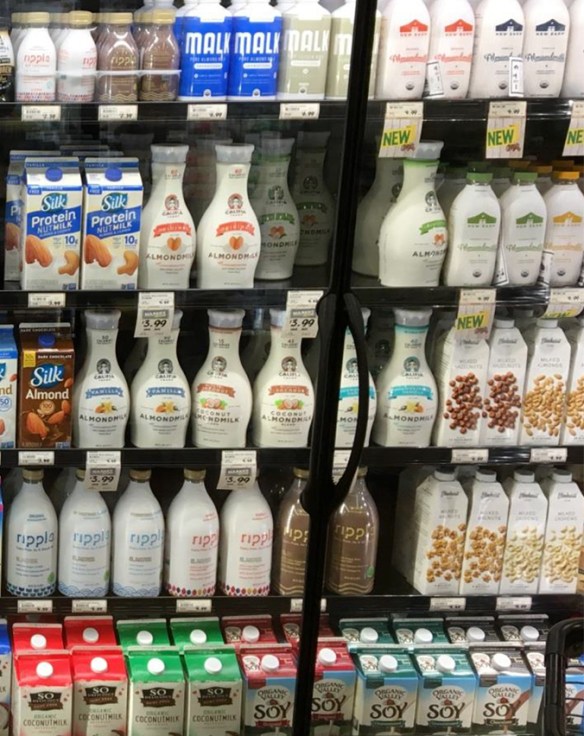
In a separate letter to Agriculture Secretary Sonny Perdue, Rep. Marino notes that “The Healthy, Hunger-Free Kids Act of 2010 required USDA to update federal nutrition standards for school meals. This update included schools only being able to offer one cup of fat-free or I% milk. These changes have led to a decrease in milk consumption and a significant increase in food waste in schools. Additionally, these guidelines have negatively impacted America’s dairy farmers who have been suffering from low milk prices and a significant decrease in the purchase of fluid milk.”

He notes that not only is milk the number one source of 9 essential nutrients, “it also provides  significant health benefits. For instance, Conjugated Linoleic Acid (CLA), a fatty acid found in milk, has been shown to reduce the risk of cancer and is a great source of protein,” writes Marino. “Furthemore, if children do not drink milk, it is very difficult for them to get sufficient amounts of three of the four major nutrients lacking in most children’s diets: calcium, potassium, and Vitamin D.”

Marino notes that the bonus is that “increased milk sales would help America’s dairy farmers who have been impacted by stagnant milk prices.

There are several ways we can all help support Rep. Marino’s Whole Milk Act.

First, contact your cooperative board members and ask them to let National Milk Producers Federation know that the dairy producers they represent want this bill supported. Contact organizations you are a member of, including your state Farm Bureau and the American Farm Bureau Federation and state and national breed associations, for example.

Most importantly, contact your representative in the U.S. House and ask them to cosponsor and support H.R. 5640 The Whole Milk Act. If you don’t know who to call, enter your zipcode here to find out who represents you

Also, call the U.S. House of Representatives at 202-225-3121 and let them know that H.R. 5640 is important for the health and well-being of our schoolchildren.

In addition, check this link to the Education and Workforce Committee and look for members who may be from your state, contact them, and the Committee chairwoman as well. Ask them to put this bill on the committee’s agenda. Its passage must begin in this committee.

Also, write to Agriculture Secretary Sonny Perdue or contact the USDA with your support for the letter Rep. Marino has sent in conjunction with introducing H.R. 5640 The Whole Milk Act. USDA is key to making school milk great again by making it whole again.

Finally, contact Rep. Marino’s office and thank him 202-225-3731.

Follow H.R. 5640, The Whole Milk Act, at this link.


-30-

Caption

TomMarino

At the Farm Bill hearing during the Pa. Farm Show in Harrisburg in January, Rep. Tom Marino was part of the panel. While he does not serve on the Ag Committee, he has attended this hearing the past two years it was held. He spoke from the heart and admitted he is not the most well-versed in agriculture and since he does not sit on the ag committee, has less influence on these things, but he said he comes home late at night from Washington and sees the lights on at the dairy farms in his district, sees the activity going on on the farms, sees what people put into producing a quality product and hears from constituents on these issues of school milk — brought up at Farm Show hearings also. He said at the 2018 hearing that he is tired of seeing things that don’t make sense and he said if the government is involved in these things, they better be getting it right or they should not be involved. Last week, Rep. Marino introduced The Whole Milk Act, H.R. 5640, to bring whole milk back to the National School Lunch Program. Photo by Sherry Bunting


Flashback: two NY/NJ dairy plant owners shift assets from regulated ‘commodity’ dairy milk to freedom of branded non-dairy ‘milk’

nondairymilk.jpgAuthor’s note: Below are two articles from two interviews August 2016 and November 2017 with two separate owners of two separate plants in the New York / New Jersey metropolis that were closed or sold in the past two years. Today, the Schwartz family (Elmhurst Dairy, Queens, NY) and Catalana family (Cumberland Dairy, Bridgeton, NJ) are involved in developing and launching new non-dairy plant, nut and grain based beverages in the supermarket dairy case. This trend toward making plant-based versions of animal protein products is also becoming a problem for the meat industry.

For dairy milk, the root of the issue is the alliance between USDA and the anti-trust-protected national-footprint milk cooperatives. First, USDA designates dairy milk as a “commodity” with an FDA standard of identity that is only enforced on dairy milk, not on plant-based ‘milks.’ USDA also runs the federal order milk pricing system on fresh fluid milk. USDA also dictates what schoolchildren are permitted to drink, currently allowing only fat free or 1% milk, despite scientific proof to the contrary that whole milk (3.25% fat) is the most healthy value. USDA also dictates what the dairy promotion boards may and may not do to promote fresh fluid milk using money the USDA mandates every farmer must have deducted off their milk checks for said promotion. USDA and the promotion boards push the lowfat agenda despite it being proven to be less healthy than full-fat dairy.

In their separate situations, Henry Schwartz and the Catalana brothers got out of commodity dairy milk and are developing and launching plant-based beverages with free rein in the supermarket “dairy” case.

BELOW ARE THEIR STORIES…

Story #1 – By Sherry Bunting, reprinted from Farmshine August 2016

New York City’s last milk plant, Elmhurst Dairy, closes doors

JAMAICA QUEENS, N.Y. —  He says the commodity milk category is ‘unsustainable’ and that the future lies in new brands.

At 82, Henry Schwartz has witnessed the evolution of dairy. Food and farming look very different today compared to when he was six years old, spending his youth on the family’s former dairy farm and in their milk plant.

His family’s Elmhurst Dairy was the combination of two dairy farms and milk plants in Queens County, New York — one owned by his paternal grandparents, the other by his maternal grandmother.

The farms have been gone since 1948, and in October (2016), the Elmhurst Dairy plant in Jamaica, Queens, New York, will close its doors too.

With this closure of New York City’s last fluid milk plant, a long and storied series of chapters in the milk business will end.

But with every end, comes a beginning, and Henry Schwartz sees light at the end of his tunnel.

“I’m not depressed anymore,” he said in a telephone interview with Farmshine. “We have other businesses that are related to dairy, and they are successful. We will be bringing out new products under the Elmhurst name.”

Henry referenced the family’s Steuben Foods, Inc. plant near Buffalo, N.Y. where 600 people are employed. Its aseptic packaging spawned a new line of beverages in June of 2015, called Elmhurst Naturals — an offshoot of Henry’s son Cyrus’ business Dora’s Naturals. (Examples include Banana Water and Mango Water). Henry also referenced the family’s Mountainside plant near Roxbury, N.Y., where filtered milk with a longer shelf life has been bottled since 2006.

With both plants already expanded into aseptic packaging and Natural market lines, the next sequence, said Henry, will be further expansion at Steuben into grain, nut and seed beverage products already set to generate half a billion in sales.

Henry was quick to give heartfelt thanks “to a great many people who worked so hard for so long to see that we succeeded.”

He also cited the “enormous economic impact” the company has had in the area through the dairy business.

But, he said, in order to continue to have positive economic impact, things had to change. They had to break free of commodity milk.

“The future of the milk business is value-added,” said Henry. “The milk business as I knew it is unsustainable. Nobody talks about the price of milk anymore, they talk about all of these other things. They talk about quality and services. That is the evolution and an indication that we do not have a totally sound business model in (conventional) milk, so we are trying to diversify in the marketplace.”

When asked whether brand marketing within the conventional dairy milk category can help save this seemingly “unsustainable future,” Henry commented that there are “outstanding people in the marketplace coming out with cutting edge new products.”

He mentioned what fairlife has done to bring out what is basically milk and to market it as a brand.

He mentioned what Chobani did to “take limited assets and build a billion dollar company inside of seven years on branding an old-style yogurt right in front of our eyes.”

He talked about how Daisy revived the sour cream category by specializing in it and branding it.

And he mentioned other products, like the genesis of Lactaid milk right out of Atlantic City and later sold to Johnson and Johnson.

He also mentioned Organic milk as a branded category that “started from scratch into a billion-dollar category.”

“We can create with milk and dairy products tremendous success stories and brands if we are willing to work at it,” Henry elaborated. “In many ways, our Steuben Foods — operating as an offshoot of Elmhurst but now much bigger — is doing that.”

Yes, the Schwartz family of businesses, including Dora’s Naturals started from scratch by Cyrus, is transforming itself according to the wishes of the urban New York City consumers.

Henry’s word of wisdom to the dairy farmers who ship milk to the New York City plant that is closing? “Diversify.”

It was obvious after a 45-minute conversation that he has a soft-spot for dairy farming. But his family’s younger generation is following the trends. They value the economic contribution to the community and dairy legacy of the generations before them, but they see even more economic opportunity and job creation in diversifying their efforts into a variety of beverages and breaking free of the commodity-milk market.

Henry could barely bring himself to call them all ‘milk,’ but he had enthusiasm as he talked of the future. He said that “exciting new products” — derived from grains, nuts and seeds — will be the wave of the future as the family diversifies into branded plant-based beverage businesses, which their website refers to as ‘grainmilk’ and ‘nutmilk’.

Already one of the largest Organic dairy milk processors in the nation under contract for Horizon and other brands, the Schwartz family’s Steuben Foods and Roxbury plants will continue in dairy milk, but Steuben will also branch out into the newer non-dairy beverage categories as well.

Henry said the Roxbury plant is expected to expand opportunities in both the dairy and non-dairy fields also. He said the family has many interesting and proprietary product concepts in store.

“We will continue to be a large milk handler,” he said. “We will also be doing a lot in grains and nuts and seeds. Part of our future will be cow’s milk. That will certainly continue. I have had my whole life in it. There is a bright future ahead and the continuation of something our family started over 130 years ago when my great-grandfather opened the first family farm plant in Middle Village in the 1880s. We are pleased to continue in this milk business, but that continuation will look different in the future than it did in the past.”

The Jamaica, Queens property — where the ubiquitous red barn and silo label of Elmhurst Dairy now fades — will become the site of any one of a number of projects Henry said his family is currently working on.

“I spent a good deal of my youth at my grandmother’s farm plant, Juniper Valley Dairy, where she milked 200 cows, bottled the milk and delivered it until 1948. She was the last farm in Queens County,” he said. Meanwhile, his paternal grandfather’s dairy farm spawned the original Elmhurst Dairy plant, which was started by Henry’s father and uncle at their father’s dairy farm in nearby Middle Village.

“They got all of that together here in Jamaica, Queens in 1948, where we are the last milk plant in the area. Now that it is closing, we expect to make use of the land in a way that is more beneficial to ourselves and to the community,” said Henry.

“It is an evolution of what was once dairy farms that became a dairy company and now is going into other fields that will be beneficial,” he added.

“Yes, it is sad. I spent 76 years, my whole life in it. When I saw the end coming, I was initially upset. But now I realize it is for the best. Even though it is a big change, we are going to use the property in a way that will be good for the community, and we will continue in the milk business near Buffalo, New York, through other forms — both cow’s milk and with grains, nuts and seeds,” he said.

Bottom line according to Henry Schwartz: The future is very much agriculture-based but not 100 percent dairy-milk based. That can be said of the future for the Schwartz family in the post-dairy era as it can be said of the urban food and beverage marketplace of New York City for which they are building new brands and expanding in plant-based beverages.

————-

Story #2 – By Sherry Bunting, reprinted from Farmshine, November 2017

DFA buys Cumberland Dairy, New Jersey’s last independent fluid milk processor

BRIDGETON, N.J. — Cumberland Dairy, the last independent fluid milk processor in New Jersey, was acquired by Dairy Farmers of America, Inc.  The plant has been co-op supplied through Land O’Lakes and its predecessors Atlantic and Interstate as well as Maryland-Virginia milk cooperatives, since its founding, according to president Carmine Catalana IV.

In a phone interview with Farmshine Tuesday (Nov. 7), Carmine said they are moving forward with their current milk supply, which includes a few DFA members commingled on local milk routes.

He acknowledged that the Bridgeton, New Jersey company had interest from other buyers, but that a big consideration in accepting DFA’s acquisition offer — at an undisclosed price – was that Carmine and his brothers would continue in the leadership of the company with the backing of the nation’s largest milk cooperative.

Cumberland Dairy, founded in 1933 by Charles Catalana, is run today by third generation brothers Carmine IV, Frank and David.

The business will continue to operate as Cumberland Dairy, and the (180) employees will retain their current positions, according to DFA’s public announcement of the acquisition. The announcement stated further that, “The Catalana family and existing management team will continue to manage all day-to-day operations, including customer relationships, milk procurement and production.”

“We have the opportunity to move the company forward with the blue-chip customers we serve, and other benefits are sure to come with the backing of a national milk cooperative with 13,000 dairy farms behind them,” said Carmine.

In its press release last Thursday (Nov. 2, 2017), DFA described Cumberland Dairy as a company “proudly serving some of the nation’s top quick-service restaurants, convenience and grocery chains, wholesale food distributors, fine-casual restaurants and dessert concepts to a variety of customers,” stating that the acquisition aligns with DFA’s strategy… to expand into extended shelf life processing.

“DFA approached us because we are one of several extended shelf life (ESL) plants, and they were looking to enter this marketplace and acquire our technology and customer base,” Carmine told Farmshine.

Since the mid-1980s, the plant has been doing ultra high heat pasteurization ESL products in ultra clean packaging to deliver shelf life over 75 days for refrigerated liquid dairy products.

Their ESL process is different from the UHT aseptic packaging that DFA currently uses on the West Coast to package California Gold — a primarily 3.5% fat shelf-stable drinking milk with a non-refrigerated shelf life of one year — which is shipped to Walmart and other chains in China. Those fluid milk sales to China have grown every year since 2014.

“We have not taken the big financial and technology step into the aseptic shelf-stable non-refrigerated dairy market,” said Carmine. But, over the last 30-plus years, the Catalanas have been innovators in the ESL space, before the concept of extended shelf life had a name or an acronym.

DFA noted in an email response that upgrades for aseptic shelf-stable technology may be considered for export from this East Coast plant.

Carmine notes that once his family had implemented an ESL process with a flavor close to fresh milk, “we stopped doing the regular pasteurized milk as a relatively small player, and sold our roots off to a customer, and did nothing but ESL,” Carmine said as he explained the company’s evolution of moving away from conventional milk bottling toward producing their own ESL liquid dairy products under the Freshlife brand and especially into co-packing for private labels.

For example, they do milk and dairy products for Rosenberger’s and other dairies, like Rutters, Schneiders, Wawa, Gallikers, Turkey Hill, and Turner Dairies. While they do everything liquid and refrigerated — from skim milk to heavy cream to dessert mixes — the emphasis is on the ESL products like egg nog, half-and-half and other cream products.

Cumberland Dairy also makes McDonald’s milkshake mix, Rita’s frozen custard, Shake Shack sakes and Kohr Bros. frozen custard, to name a few. In fact, the company’s website shows photos marking when the company began making milkshake mix for “that new drive-in restaurant in the area called McDonald’s” in 1971.

“Most of what we produce has someone else’s label on it,” said Carmine. “We do these products for other dairies, these family businesses that we hold dear as our customers.”

He sees a bright future for the products they currently manufacture. “We have had some conversations with DFA about where this portion of the business is going and how it has continued to grow,” Carmine related. “We felt like this was not something we had the ability to do on our own, and that in DFA, with that many dairy farmers behind them, we had the best partner for the future.”

In an official statement, Carmine said that, “A future with DFA means that we can continue to focus on our values as a company while accelerating our opportunities for growth. This is a very exciting time for the entire Cumberland Dairy family, and we look forward to this next chapter with DFA.”

For DFA’s part, the acquisition “represents a commitment by our farmer-owners to expand our investments in processing and to continue to grow the U.S. dairy industry,” said DFA president and CEO Rick Smith in a DFA press release.

“There are not many independents dairy plants left in this business,” Carmine reflects. “We were the last independent fluid milk processor in New Jersey.”

The Catalana family’s sister business — Innovation Foods LLC, founded by the Catalanas in 2008 — is not included in this transaction with DFA. It will remain independent and wholly-owned by the family, according to the announcement.

At the Cumberland Dairy website, the Catalana family’s retained Innovation Foods LLC is described as “producing high-acid beverage products for our partner NextFoods under their GoodBelly brand.” According to their website, NextFoods, Inc. was founded by Steve Demos, the founder and former president of WhiteWave (makers of Silk soymilk, almondmilk, etc) along with Todd Beckman, a former vice president of business operations at WhiteWave. Their website explains that Demos and Beckman built their NextFoods team to include many who worked at WhiteWave where they helped launch Silk Soymilk “into the stratosphere.”

-30-